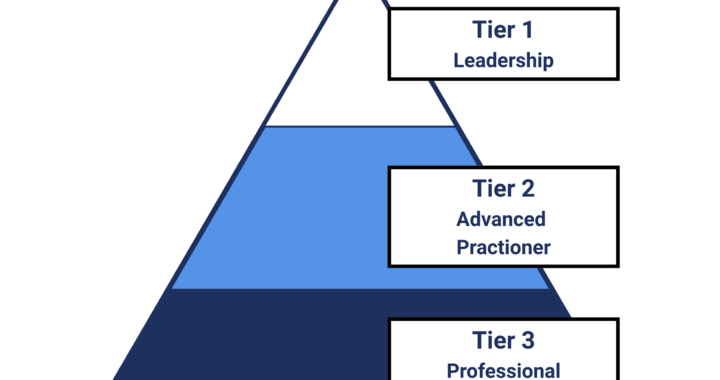
Our Professional Development Framework

Our Professional Development Framework

Ultimate Youth Worker

Professional Development Framework

Our Professional Development Framework provides a structured pathway for ongoing workforce development within the youth work sector. Entry-level qualifications such as the Diploma of Youth Work equip practitioners with foundational competencies for engaging and supporting young people in service environments. These qualifications ensure workers can operate safely and effectively within organisational frameworks and legislative requirements. However, professional youth work practice requires continued development beyond these foundational competencies.

Youth workers frequently encounter complex social, emotional, and organisational challenges that require deeper knowledge and reflective capacity. Practitioners must be able to interpret theory, apply ethical reasoning, and adapt their practice to changing contexts and diverse youth experiences. These capabilities are typically developed through continued professional learning and reflective engagement with practice. As a result, structured professional development pathways are essential for strengthening practitioner capability.

The Ultimate Youth Worker framework responds to this need by providing a clear progression across three tiers of professional development. Each tier supports practitioners to deepen their knowledge, refine their skills, and expand their professional responsibilities. The pathway aligns broadly with increasing levels of capability reflected in the Australian Qualifications Framework. Through this structure, Ultimate Youth Worker contributes to the ongoing professionalisation and strengthening of the youth work sector.

Seven Eyed Supervision Training

Tier 3 โ€“ Professional Practitionerโ€‹

Aligned to AQF Level 7

Tier 3 focuses on strengthening the professional foundations of youth work practice beyond the technical competencies developed through vocational training. Youth workers at this stage are developing a deeper understanding of the values, theories, and social contexts that shape youth work practice. Topics explored at this level include youth work theory, youth participation, ethics, social justice, and reflective practice. These areas reflect the kinds of learning commonly associated with degree-level youth work education.

Engaging with theory allows practitioners to better understand the social and developmental experiences of young people. Sociological perspectives, youth development theory, and critical frameworks provide tools for analysing complex social situations. These perspectives help practitioners interpret young peopleโ€™s experiences within broader social, cultural, and institutional contexts. As a result, youth workers become better equipped to respond thoughtfully to the needs of the young people they support.

Reflective practice is central to professional youth work at this level. Practitioners are encouraged to critically examine their own assumptions, decisions, and interactions with young people. This process strengthens professional judgement and supports ethical decision making in complex situations. Tier 3 therefore supports youth workers to move from technically competent practice toward reflective and theoretically informed professional practice.

Tier 2 โ€“ Advanced Practice

Aligned to AQF Level 8

Tier 2 focuses on the development of advanced youth work practice within complex service environments. Experienced practitioners frequently work with young people facing trauma, mental health challenges, homelessness, family violence, and other intersecting vulnerabilities. These contexts require practitioners to draw on advanced knowledge and intervention skills. Training at this level therefore addresses areas such as trauma-informed practice, crisis intervention, and complex case management.

Advanced practice requires the ability to integrate multiple theoretical and practical approaches. Practitioners may draw on trauma theory, strengths-based practice, narrative approaches, and systems thinking when working with young people. These frameworks help practitioners develop more nuanced responses to complex client needs. As a result, youth workers are better able to support meaningful and sustainable outcomes for young people.

Developing advanced practice skills also strengthens practitionersโ€™ capacity to contribute to program development and organisational learning. Experienced youth workers often take on responsibilities related to program design, evaluation, and service improvement. These activities require strong analytical skills and an ability to translate theory into practice. Tier 2 therefore supports practitioners to move from competent practice toward advanced, critically informed professional practice.

Tier 1 โ€“ Leadership and Supervision

Aligned to AQF Level 9

Tier 1 focuses on preparing experienced practitioners to take on leadership and supervision roles within youth work organisations. As practitioners progress in their careers, they often become responsible for guiding staff, shaping practice standards, and supporting workforce development. Effective leadership in youth work requires both strong professional values and well-developed organisational skills. Training at this level therefore focuses on leadership, supervision, and organisational development.

Supervision plays a critical role in maintaining ethical and reflective youth work practice. Leaders must be able to support practitioners through complex cases, facilitate reflective conversations, and guide ethical decision making. These responsibilities require a deep understanding of professional practice as well as strong interpersonal and mentoring skills. Through supervision, leaders help maintain high standards of practice across youth work teams.

Leadership training also addresses the broader organisational and sector context in which youth work operates. Topics such as workforce wellbeing, organisational culture, risk management, and strategic leadership are explored. These capabilities enable leaders to create environments that support effective and sustainable youth work practice. Tier 1 therefore supports experienced practitioners to become leaders who contribute to the growth and professionalisation of the youth work sector.

Our Professional Development Framework

If Your Organisation Needs Great Training Contact Us

Contact Form Demo

Aaron Garth

Aaron Garth

Aaron Garth is a Melbourne-based youth worker, social worker, and mental health practitioner with over two decades of experience supporting young people across Australia. As Executive Director of Ultimate Youth Worker, he leads a team dedicated to training, coaching, and developing professionals in the youth sector. A graduate of RMIT University and current PhD candidate, Aaron has worked across some of the most challenging areas of youth services โ€” from homelessness and mental health to drug and alcohol outreach and residential care. He is a sought-after speaker, educator, and advocate for a more professionalised youth workforce, and has taught at institutions including RMIT, Chisholm Institute, and Eastern College Australia. Aaron's work is driven by a simple belief: when youth workers are better supported, young people get better outcomes.


More Posts - Website

Follow Me:Add me on FacebookAdd me on LinkedInAdd me on PinterestAdd me on YouTubeAdd me on Instagram

CHILD SAFETY MANDATORY REPORTING Supervision

What Makes an Ultimate Supervisor?

In youth work, supervision is one of the most underrated tools we have to build strong, capable, and resilient practitioners. Itโ€™s more than just a regular meeting or a compliance tick-box. Good supervision keeps youth workers grounded. Great supervision keeps them growing. But what actually makes someone an Ultimate supervisor in the youth work space?

Here are the key elements we believe separate a competent supervisor from an Ultimate one.

An Ultimate Supervisor Keeps the Focus on the Young Person

At the core of youth work is the young personโ€”we all know this. An Ultimate supervisor helps you stay connected to that centre, even when organisational pressures or burnout try to drag you away from it.

They’ll ask questions like: โ€œHow did that interaction support the young personโ€™s growth?โ€ or โ€œWere we holding power or sharing it?โ€ These are the types of reflective prompts that make you stop and refocus your practice on what matters most.

In a world where outcomes, data, and documentation can feel overwhelming, supervision can be a reminder: itโ€™s the relationship with the young person that matters most. An Ultimate supervisor helps you come back to that truth every time.

An Ultimate Supervisor Creates Space for Reflection, Not Just Reporting

Consultancy

Too often, supervision becomes a catch-up meeting or a compliance check.ย An Ultimateย supervisor flips the script. They create a space for reflectionโ€”a time where you can breathe, think, and unpack whatโ€™s really going on in your work.

This reflective space isnโ€™t just for venting. Itโ€™s guided, intentional, and often based on established models of practice like Gibbs’ Reflective Cycle or the Seven-Eyed Model. Youโ€™re not just talking about what happenedโ€”youโ€™re exploring your feelings, your decisions, your ethics, and your learning.

Weโ€™ve worked with youth workers who say, โ€œSupervision is the only hour a month thatโ€™s reallyย for me.โ€ Thatโ€™s what Ultimate supervision feels like: a pause button in a fast-moving world, helping you reconnect with your passion, principles and professionalism.

An Ultimate Supervisor Understands the Realities of the Work

The best supervisors are those who know the fieldโ€”not just in theory, but in practice. Theyโ€™ve worked in youth refuges, supported young people through crises, and written case notes at midnight.

Because they understand the messiness of the work, they can hold space for it. They wonโ€™t judge you for feeling frustrated after a difficult client session or for struggling with system barriers. Instead, theyโ€™ll help you process those experiences with insight and compassion.

Credibility matters. When your supervisorย getsย what itโ€™s like to do youth work, youโ€™re more likely to engage deeply in the process. That shared language and lived understanding builds trustโ€”and trust is the foundation of every great supervision relationship.

An Ultimate Supervisor Challenges You (In a Good Way)

Supervision isnโ€™t just about supportโ€”itโ€™s also about stretch.ย An Ultimateย supervisor doesnโ€™t just tell you youโ€™re doing a good job. They help you grow.

That might look like gently challenging your assumptions. It might mean unpacking a conversation you didnโ€™t feel great about, or helping you see blind spots in your practice. They donโ€™t shame youโ€”but they donโ€™t let you stay stagnant either.

One supervisee told us,ย โ€œMy supervisor always asked the questions I didnโ€™t want to answerโ€”but needed to.โ€ย Thatโ€™s the sweet spot. A great supervisor is both mirror and mentor, reflecting back whatโ€™s happening and encouraging your next step forward.

An Ultimate Supervisor Connects You to Your Ethics

Youth work is a profession. And like any profession, we need goals, learning plans, and pathways forward.ย An Ultimateย supervisor doesnโ€™t just help you survive the day-to-dayโ€”they help you build the future.

They ask about your professional development. They check in on the goals you set three months ago. They encourage training, further study, or stretch opportunities in your organisation. They help you map your strengths and find ways to build on them.

Supervision should feel like a springboardโ€”not just a safety net.ย An Ultimateย supervisor walks with you as you become a more capable, confident, and intentional practitioner.

An Ultimate Supervisor Encourages Your Growth and Career Pathway

Youth work is a profession. And like any profession, we need goals, learning plans, and pathways forward. An Ultimate supervisor doesnโ€™t just help you survive the day-to-dayโ€”they help you build the future.

They ask about your professional development. They check in on the goals you set three months ago. They encourage training, further study, or stretch opportunities in your organisation. They help you map your strengths and find ways to build on them.

Supervision should feel like a springboardโ€”not just a safety net. An Ultimate supervisor walks with you as you become a more capable, confident, and intentional practitioner.

An Ultimate Supervisor Models the Practice They Teach

Finally, a great supervisor leads by example. They model boundaries, self-care, and ethical decision-making. Theyโ€™re transparent about their own growth, and they acknowledge when they donโ€™t have all the answers.

You donโ€™t want a perfect supervisorโ€”you want a real one. Someone who can admit when the work is hard. Someone who practices what they preach. Someone who shows that itโ€™s possible to be humanย andย professional in this sector.

When your supervisor models reflective, ethical, passionate practice, it gives you permission to do the same.

Supervision that Supports and Sustains

In our experience, great supervision is what keeps youth workers in the field. Itโ€™s what helps us show up with passion, purpose, and professionalismโ€”even on the hard days.

Atย Ultimate Youth Worker, we believe that supervision should be reflective, relational, and real. Not just another meetingโ€”but a place where your practice grows, your burnout fades, and your purpose gets reignited.

If youโ€™re looking for that kind of supervision, weโ€™d love to hear from you.

Download our free tool

Choosing a supervisor is a big deal. Before you commit, make sure theyโ€™re the right fit for you. โ€œ10 Questions to Ask an External Supervisorโ€ will help you: โœ”๏ธ Cut through the fluff โœ”๏ธ Get clarity on what you need โœ”๏ธ Start your supervision journey with confidence

Ready to Feel Supported in Your Work?

You give everything to your role โ€” but whoโ€™s supporting you? Whether you're feeling burnt out, just starting out, or ready to take your practice to the next level, weโ€™re here to help. Book a FREE discussion call and find out how professional supervision can help you reflect, refocus, and reignite your passion for youth work.
Aaron Garth

Aaron Garth

Aaron Garth is a Melbourne-based youth worker, social worker, and mental health practitioner with over two decades of experience supporting young people across Australia. As Executive Director of Ultimate Youth Worker, he leads a team dedicated to training, coaching, and developing professionals in the youth sector. A graduate of RMIT University and current PhD candidate, Aaron has worked across some of the most challenging areas of youth services โ€” from homelessness and mental health to drug and alcohol outreach and residential care. He is a sought-after speaker, educator, and advocate for a more professionalised youth workforce, and has taught at institutions including RMIT, Chisholm Institute, and Eastern College Australia. Aaron's work is driven by a simple belief: when youth workers are better supported, young people get better outcomes.

More Posts - Website

Follow Me:Add me on FacebookAdd me on LinkedInAdd me on PinterestAdd me on YouTubeAdd me on Instagram

Article: Toward a youth work profession

Article Review: Michael Emslieโ€™s โ€œToward a Youth Work Professionโ€

For decades, youth workers across Australia and beyond have asked an important question: Is youth work a profession? In his seminal 2013 article, โ€œToward a Youth Work Professionโ€, academic and practitioner Michael Emslie argues that the answer is yesโ€”if weโ€™re willing to do the work from within the sector. Emslie explores the idea that professionalization is not just a structural or economic change, but a cultural and philosophical one. He believes that unless youth workers define their own practice, we risk being shaped by bureaucratic systems that donโ€™t reflect our values. At Ultimate Youth Worker, this message lands powerfully, because we believe youth work should always be principled, passionate, and professionalโ€”on our own terms.

Emslie identifies a persistent theme in the sector: youth workers want legitimacy, respect, and recognition, but often lack the structures to achieve them. He explains that youth work remains one of the only helping professions without clearly defined standards, national registration, or strong representation. According to Emslie, this weakens our ability to advocate for better pay, working conditions, and influence in multidisciplinary settings. Yet the desire for professionalization remains strong, precisely because it promises these improvements while also strengthening our occupational identity. His point is clear: if we want to secure our future, we must build it ourselves.

Drawing on the sociology of professions, Emslie contrasts two paths to professionalization: one from within the sector (led by practitioners), and one from above (led by governments or employers). The former empowers youth workers to define their own ethical standards, practice frameworks, and priorities. The latter risks co-opting youth work for managerial purposes, such as cost-efficiency and risk management. Emslie warns that if youth workers do not take the lead, others will do it for usโ€”and not necessarily in ways that benefit young people or reflect our unique practice. At Ultimate Youth Worker, we echo this concern: weโ€™ve seen what happens when practice is dictated by compliance, not compassion.

Emslie supports his argument with international examples, showing how other countries have progressed the professionalization agenda. He highlights the UKโ€™s development of national occupational standards and an institute for youth work, and Canadaโ€™s comprehensive system of provincial youth care associations. He also notes efforts in Europe, New Zealand, and the United States to create ethical codes, credentialing systems, and national conferences. These examples provide both inspiration and a challenge: if others have managed to professionalize youth work, why hasnโ€™t Australia? For us, these stories are fuelโ€”we see whatโ€™s possible when youth workers unite and push for sector-wide reform.

The article doesn’t just describe what has happened; it offers practical strategies for change. Emslie proposes forming national associations, developing ethical codes, and building clear career pathways. He emphasizes that these structures must be designed by youth workers, not imposed by external bureaucracies. At the same time, he acknowledges the importance of collaboration with other stakeholdersโ€”such as unions, universities, peak bodies, and governmentsโ€”to gain legitimacy and funding. This balanced approach is realistic and strategic, showing that we can lead without isolating ourselves from the broader system.

A key part of Emslieโ€™s argument is that professionalization should serve young people, not just workers. He challenges us to articulate what good youth work looks like, and to build standards that support that vision. This means defining our values, identifying what knowledge youth workers need, and supporting continuous professional development. Emslie believes that doing this will not only protect the profession from erosion, but also improve outcomes for the young people we serve. At Ultimate Youth Worker, this is the heart of our workโ€”we believe professionalism should always be about creating better, more ethical, and more effective support for young people.

Of course, Emslie is not naรฏve about the obstacles. He acknowledges that some in the sector fear professionalization will become elitist or bureaucratic. Others worry that it will exclude passionate workers without formal qualifications, or stifle creativity and innovation. But Emslie argues that professionalization, when led by practitioners, can protect diversity and innovationโ€”not diminish it. Rather than gatekeeping, it can create shared values, promote ethical practice, and support quality care across the board.

Emslie also tackles the economic reality: yes, professionalization can come with costs, such as fees for training or association membership. But not professionalizing has a cost tooโ€”one paid in poor wages, job insecurity, and lack of voice in policy spaces. Youth work continues to lag behind other professions like teaching and nursing, not because the work is less important, but because we havenโ€™t yet built the structures to advocate for ourselves. Emslie reminds us that if we want better conditions, we need a united and professional voice to demand them. This is why weโ€™ve built our supervision and training programs at Ultimate Youth Workerโ€”to equip the field for that next step.

Another concern Emslie addresses is the fear that regulating youth work could reduce its radical or โ€œedgyโ€ character. He counters this by referencing philosopher Alasdair MacIntyre, who argues that the integrity of a practice is protected, not diminished, by virtuous institutional structures. Good professionalization doesnโ€™t flatten the uniqueness of youth workโ€”it celebrates it and protects it. The challenge is to define what good youth work really is, and then build structures that uphold it. This is a challenge we are ready to take on, and we believe many in the sector are too.

In his conclusion, Emslie lays out a roadmap for action. He urges youth workers to build coalitions, create professional associations, and develop ethical codes and credentialing processes. He suggests working within existing structures (like Professions Australia or AHPRA) or, if needed, creating our own. Importantly, he advocates for establishing an international youth work federation, much like the International Federation of Social Workers, to unite practitioners across the globe. These are bold ideas, but they are grounded in realism and informed by global practice.

Ultimately, โ€œToward a Youth Work Professionโ€ is more than a theoretical pieceโ€”itโ€™s a strategic call to action. It challenges youth workers to step up and claim our profession, while also providing a clear, practical guide for how to do so. For us at Ultimate Youth Worker, it reaffirms our mission: to support the development of a youth sector that is deeply principled, genuinely passionate, and uncompromisingly professional. If we want to build a future where youth work is respected, resourced, and resilient, then professionalization isnโ€™t optionalโ€”itโ€™s essential.

Mic Emslie

Michael Emslie is a lecturer in the Youth Work and Youth Studies degree in the Social Work and Human Services discipline in the School of Global, Urban and Social Studies at RMIT University.

Michael’s extensive education, work experience and research demonstrates a long held passion and deep commitment to explore, pursue and promote good practice in human service and in particular youth work. Michael is particularly interested in questions concerning how practice is thought about, known, done, and supported in these fields.ย 

Aaron Garth

Aaron Garth

Aaron Garth is a Melbourne-based youth worker, social worker, and mental health practitioner with over two decades of experience supporting young people across Australia. As Executive Director of Ultimate Youth Worker, he leads a team dedicated to training, coaching, and developing professionals in the youth sector. A graduate of RMIT University and current PhD candidate, Aaron has worked across some of the most challenging areas of youth services โ€” from homelessness and mental health to drug and alcohol outreach and residential care. He is a sought-after speaker, educator, and advocate for a more professionalised youth workforce, and has taught at institutions including RMIT, Chisholm Institute, and Eastern College Australia. Aaron's work is driven by a simple belief: when youth workers are better supported, young people get better outcomes.

More Posts - Website

Follow Me:Add me on FacebookAdd me on LinkedInAdd me on PinterestAdd me on YouTubeAdd me on Instagram

Online Professional Development: A new phase for Ultimate Youth Worker

In today’s fast-paced and ever-evolving world, the role of a youth worker is more vital than ever. These dedicated professionals play a crucial role in empowering young people, supporting their development, and guiding them towards a bright future. Recognising the need for high quality continuous growth and professional development opportunities, the team at Ultimate Youth Worker, is thrilled to announce the launch of our online professional development platform. This innovative initiative aims to equip youth workers of all levels with the necessary skills, knowledge, and resources to excel in their careers and make a lasting impact on the lives of the young people they serve.

Flexibility and Convenience: Traditional methods of professional development often present challenges for busy youth workers who juggle multiple responsibilities. With the introduction of online professional development, youth workers can now access training and resources at their own convenience. Whether you’re a full-time professional, a part-time worker, or even a student, the flexibility offered by our online courses allows you to learn at your own pace, fitting in sessions around your existing commitments.

Expert-Led Courses: The online professional development platform by Ultimate Youth Worker brings together a team of youth work educators and experienced youth work practitioners to design and deliver comprehensive courses. These experts possess a deep understanding of the challenges faced by youth workers and have tailored the courses to address these specific needs. With a focus on evidence-based practices, these courses cover a wide range of topics, including case noting, trauma-informed care, mental health support, youth engagement strategies, cultural competence, and ethical considerations. By enrolling in these courses, youth workers can gain invaluable insights and practical skills to enhance their professional practice form some of the best in the business.

Interactive Learning Experience: The online platform offers an engaging and interactive learning experience that goes beyond traditional lecture-style formats. Through the use of multimedia resources, such as videos, case studies, quizzes, and discussion forums, participants can actively engage with the material and collaborate with fellow learners. This interactive approach fosters a sense of community among youth workers, allowing them to share ideas, seek advice, and learn from each other’s experiences. Additionally, participants receive ongoing support and guidance from the instructors, ensuring that they receive personalized attention and can apply their learning effectively.

Affordable and Accessible: Ultimate Youth Worker is committed to making professional development accessible to all youth workers, regardless of their financial situation or geographical location. By moving their training online, we have significantly reduced the cost associated with in-person workshops and conferences. The online courses are offered at affordable rates, enabling more youth workers to access high-quality training and resources. Moreover, the platform can be accessed from anywhere with an internet connection, eliminating the barriers of travel expenses and time constraints.

Recognised Certification: Upon successful completion of the online courses, participants receive a recognised certification from Ultimate Youth Worker. This certification not only validates their professional development but also enhances their career prospects. Employers and organisations in the youth work sector value the commitment to ongoing learning and the acquisition of new skills provided by Ultimate Youth Worker, making our certification a valuable asset for career advancement.

With the launch of Ultimate Youth Worker’s online professional development platform, youth workers have gained a powerful tool to advance their careers and expand their impact on the lives of young people. The flexibility, expert-led courses, interactive learning experience, affordability, and recognized certification offered by this platform make it an ideal choice for anyone working in the youth work sector. By investing in professional development, youth workers can stay up to date with best practices, build their professional network, and ultimately provide the highest quality support to the young people they serve.

Check out our courses below.

ย 

Courses for YOU!

  • Newest
  • Oldest
  • Price high
  • Price low
  • Most Viewed
  • Overall Rating
Aaron Garth

Aaron Garth

Aaron Garth is a Melbourne-based youth worker, social worker, and mental health practitioner with over two decades of experience supporting young people across Australia. As Executive Director of Ultimate Youth Worker, he leads a team dedicated to training, coaching, and developing professionals in the youth sector. A graduate of RMIT University and current PhD candidate, Aaron has worked across some of the most challenging areas of youth services โ€” from homelessness and mental health to drug and alcohol outreach and residential care. He is a sought-after speaker, educator, and advocate for a more professionalised youth workforce, and has taught at institutions including RMIT, Chisholm Institute, and Eastern College Australia. Aaron's work is driven by a simple belief: when youth workers are better supported, young people get better outcomes.

More Posts - Website

Follow Me:Add me on FacebookAdd me on LinkedInAdd me on PinterestAdd me on YouTubeAdd me on Instagram

Thinking Critically About Youth Work

Podcast 043: Thinking Critically About Youth Work – Part 2

Thinking Critically About Youth Work

In todays episode of the Ultimate Youth Worker Podcast, โ€œThinking Critically About Youth Work: Part Twoโ€, Aaron continues to speak with Dr. Brian Belton about the need for youth workers to be critically reflective about who we are as professionals.

Taking our conversation up to the next level we speak about the need for supervision to help youth workers become more critically reflective. We talk about why we need this for the benefit of the profession and for the young people we support.

Thinking Critically About Youth Work: Part 2

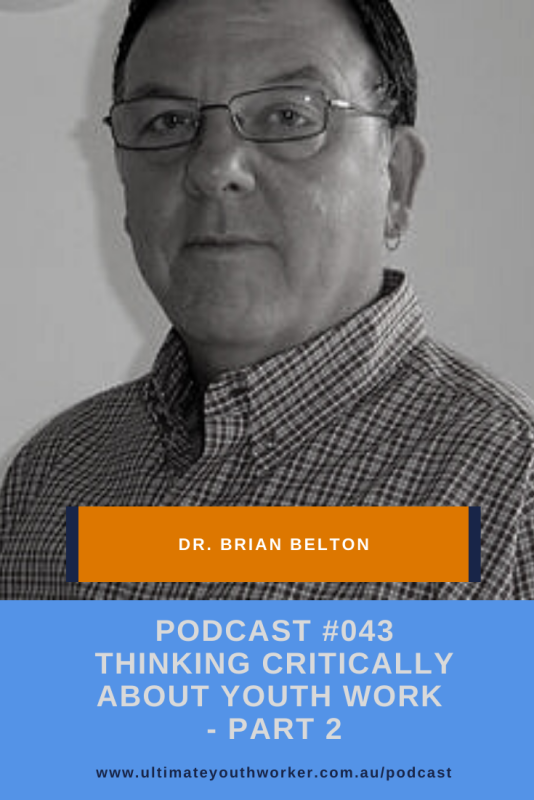
Dr. Brian Belton

Brian Belton (FB: @Dr. Brian Belton LI: @Brian Belton) is an international consultant and academic specialising in youth work, supervision and identity studies. Previously he was the Director of International Education, Research and Training at the YMCA George Williams College, London.

Coming from an East London/Gypsy family, Brian played a leading role in the youth gang life of that area in the late 1960s/early 1970s.ย  While attending Burke Secondary Modern School, Plaistow, he had his brushes with the law (at times more of a large broom). However, with the guidance of Jesus (and a couple of tough but fair coppers) he entered youth work as a volunteer and part-time practitioner in the docklands of the late 1970s.

While working in youth work related situations around the world, including Israel, the Falkland Islands, Germany, the USA, Thailand, Hong Kong, Zambia, South Africa, China and Canada, Brianโ€™s interest in identity and ethnicity flourished and today he is an internationally recognised authority on Gypsy Ethnicity, and the rights of Roma in Europe, having written widely on that subject, delivering papers most recently in the USA, Austria, Greece, Sweden and Slovenia as well as around the UK.ย  In has recently concluded a three year research programme focusing on the social exclusion of Roma with partners in Spain, Germany and Turkey.

Gaining his professional qualification from the YMCA College and went on to became a Senior Youth Worker in Bethnal Green, employed by the ILEA before achieving a BSc at City University.ย  Returning to the ILEA he took charge of a major community project in Islington. Spending some time as an area youth officer, Brian successfully completed Masters studies at the University of Essex.

On joining the staff of the George Williams College he started his doctoral work, and gained a PhD in 2000

Currently Brian is developing a growing, worldwide network of practitioners and academics concerned with the exploration of youth work and is starting a project looking to develop a profile of youth work across European Commonwealth Countries, in association with the Commonwealth Secretariat.

Please enjoy this podcast!

Check out the match: CLICK HERE

What was your favourite quote or lesson from this episode? Please let me knowย in the comments.

SCROLL BELOW FOR LINKS AND SHOW NOTESโ€ฆ

SELECTED LINKS FROM THE EPISODE

SHOW NOTES

You’re listening to the Ultimate Youth Worker Podcast with your host, Aaron Garth [00:20]

Why youth workers need to think critically [00:30]

Asking questions is so important for critically reflective [02:30]

Two camps of youth worker supervisees [03:00]

Youth workers who look after other peoples children and can’t reflect on their practiceย  and are perplexed and angry [03:30]

This is distressing and is not really talked about in ethics statements [04:45]ย 

Supervision is core to ethical youth work practice [05:45]

The Munro Report [06:40]

Royal Commission into Institutional Responses to Childย  Sexual Abuses – Final Report Recommendations [08:00]

Where is the accountability in ethics? [08:45]

The price of being a professional [10:00]

The struggle of supervision [12:00]

Yes, you should be checked up on, and supported [13:30]

We aren’t able to do everything and we shouldn’t [15:30]

If you are not taking supervision you are simply not professional [17:00]

Supervision is about being open, honest and kind [19:00]

Youth work doesn’t begin and end at the white cliffs of Dover [20:30]

Youth work is not dying but it is changing [23:00]

Youth works gift is walking benignly with young people [25:10]

We need to be true to ourselves to be the critically reflective profession we need to be [26:50]

Adventure, chances and the mountain top [30:00]

SOME QUOTES FORM THE EPISODE

“Most youth workers Iโ€™ve come across seem to act like 3rd rate teachers, clueless social workers, amateur psychiatrists (kiddie curers) or jaded child minders”. – Julian, paediatric nurse

“If we’re not thinking about it who is? It’s going to be those other professions. It’s going to be the paediatricians, and the social workers, and the psychologists, and the police and everyone else. And they will probably look at us with a bit of ire there, that we are trying to do so many things. We’re Jacks and Jills of all trades, but what are we really mastering?” – Aaron Garth

Maybe you’re right. Maybe we should be more critically reflective about asking people to be critically reflective” – Brian Belton

Looking after other peoples children, whatever I am doing with them, they are other peoples children;ย  And I am not capable of thinking about what I am doing. I am just doing… and I do my best. The moment you question me about that, one, I am perplexed, wondering why you asked me. Two, I’m a little bit angry that you asked me. – Brian Belton

You see thats what I find quite distressing on two levels. On a safeguarding level, what are you doing and what you hiding and why do you feel that way? and on another level it feels unfortunate that that person is in a place where they can’t think about what they are doing for whatever reason” – Brian Belton

“It is core to the reflective activity of youth work, supervision” – Brian Belton

“If there is no accountability and there is no way someone can be de-barred from practicing then there is no ethics. You cant have a code of ethics with no agreed accountability” – Brian Belton

“You Should be checked up on. You should want to be checked up on” – Brian Belton

“[Supervision] is the sharing ofย  practice so we can do what we do better” – Brian Belton

“If you are not taking supervision you are simply not being professional” – Brian Belton

” If you’re not prepared to come and think about what you are doing with other peoples children and look at what you are doing openly and be enthusiastic to do it. I know it’s difficult. I know it’s hard. But, its part and parcel of what you do. and if you cant do it, or you refuse to do it, for whatever reason then you shouldn’t be doing this work” – Brian Belton

“Unless we are not talking about supervision, we are remiss” – Brian Belton

“Actually, there are more youth workers on the planet than any other time in history” – Brian Belton

“We are pretty good at having a whinge as youth workers. It’s easy for us to do. Perhaps the harder but more productive thing is to be critically reflective and ask a few questions of ourselves” – Aaron Garth

“You can demand applause and demand appreciation, but it ain’t going to come” – Brian Belton

“Joy will get us through. Fear will destroy us” – Brian Belton

PEOPLE MENTIONED IN THE PODCAST

Thanks for Listening!

To share your thoughts:

  • Share this cast with a friend or colleague.
  • Leave a note in the comment section below.
  • Share this show on TwitterFacebook, or Pinterest.

To help out the show:

  • Leave an honest review on iTunes. Your ratings and reviews really help the podcast and we read each and every one.
  • Subscribe on iTunes.
Aaron Garth

Aaron Garth

Aaron Garth is a Melbourne-based youth worker, social worker, and mental health practitioner with over two decades of experience supporting young people across Australia. As Executive Director of Ultimate Youth Worker, he leads a team dedicated to training, coaching, and developing professionals in the youth sector. A graduate of RMIT University and current PhD candidate, Aaron has worked across some of the most challenging areas of youth services โ€” from homelessness and mental health to drug and alcohol outreach and residential care. He is a sought-after speaker, educator, and advocate for a more professionalised youth workforce, and has taught at institutions including RMIT, Chisholm Institute, and Eastern College Australia. Aaron's work is driven by a simple belief: when youth workers are better supported, young people get better outcomes.
More Posts - Website

Follow Me:Add me on FacebookAdd me on LinkedInAdd me on PinterestAdd me on YouTubeAdd me on Instagram

Critical Youth Work

Podcast 042: Thinking Critically About Youth Work

Critical Youth Work

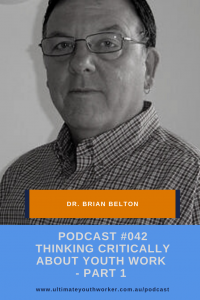
In todays episode of the Ultimate Youth Worker Podcast, โ€œThinking Critically About Youth Work: Part Oneโ€, Aaron speaks with Dr. Brian Belton about the need for youth workers to be critically reflective about who we are as professionals.

Over the years we have had some really great deep web chats with Brian, but this is the first face-to-face!! I mean he lives in the UK and Aaron is here in Australia! Critically thinking about youth work is something that both Brian and Aaron are very passionate about and we hope these two podcast sessions help you to re-think what you thought you knew about youth work.

Thinking Critically About Youth Work: Part 1

Podcast 042 Brian Belton

Brian Belton (FB: @Dr. Brian Belton LI: @Brian Belton) is an international consultant and academic specialising in youth work, supervision and identity studies. Previously he was the Director of International Education, Research and Training at the YMCA George Williams College, London.

Coming from an East London/Gypsy family, Brian played a leading role in the youth gang life of that area in the late 1960s/early 1970s.ย  While attending Burke Secondary Modern School, Plaistow, he had his brushes with the law (at times more of a large broom). However, with the guidance of Jesus (and a couple of tough but fair coppers) he entered youth work as a volunteer and part-time practitioner in the docklands of the late 1970s.

While working in youth work related situations around the world, including Israel, the Falkland Islands, Germany, the USA, Thailand, Hong Kong, Zambia, South Africa, China and Canada, Brianโ€™s interest in identity and ethnicity flourished and today he is an internationally recognised authority on Gypsy Ethnicity, and the rights of Roma in Europe, having written widely on that subject, delivering papers most recently in the USA, Austria, Greece, Sweden and Slovenia as well as around the UK.ย  In has recently concluded a three year research programme focusing on the social exclusion of Roma with partners in Spain, Germany and Turkey.

Gaining his professional qualification from the YMCA College and went on to became a Senior Youth Worker in Bethnal Green, employed by the ILEA before achieving a BSc at City University.ย  Returning to the ILEA he took charge of a major community project in Islington. Spending some time as an area youth officer, Brian successfully completed Masters studies at the University of Essex.

On joining the staff of the George Williams College he started his doctoral work, and gained a PhD in 2000

Currently Brian is developing a growing, worldwide network of practitioners and academics concerned with the exploration of youth work and is starting a project looking to develop a profile of youth work across European Commonwealth Countries, in association with the Commonwealth Secretariat.

Please enjoy this podcast!

Dr. Brian Belton

What was your favourite quote or lesson from this episode? Please let me knowย in the comments.

SCROLL BELOW FOR LINKS AND SHOW NOTESโ€ฆ

SELECTED LINKS FROM THE EPISODE

SHOW NOTES

You’re listening to the Ultimate Youth Worker Podcast with your host, Aaron Garth [00:20]

Dr. Brian Belton Biography [01:30]

Paediatric Nurse Julian frames how he has seen youth workers [06:30]

A good number of people were defensive about youth work [09:30]

Lets think about this… [09:40]

First comment from Sarah [10:30]

Chris Comment [10:47]

Asking the right questions about doing youth work [12:30]

Is doing our best at thing that we aren’t good at a good idea? [14:00]

School/youth work project [15:00]

Jacks and Jills of all trades [17:30]

Policy and law missing from youth work education [17:45]

Youth work as a colonial experience [19:00]

Youth work should not be clandestine [23:00]

Youth work and empowerment [24:00]

Authority, Responsibility and Power [26:20]

Youth work is a journey [30:45]

SOME QUOTES FORM THE EPISODE

“Most youth workers Iโ€™ve come across seem to act like 3rd rate teachers, clueless social workers, amateur psychiatrists (kiddie curers) or jaded child minders”. – Julian, paediatric nurse

“I think what he [Julian] was talking about is how we have been corralled” – Brian Belton

“We need probably to think a little bit harder about what we want to be, what we can be and what we should be” – Brian Belton

“If anything worries me a little if i am serious, it worries me that if we can’t look at our practice in this way, in this reflective critical manner” – Brian Belton

“Too much agreement kills a chat” Elderidge Cleaver

“Why do we want to do what you might call our best? Isn’t there a case for actually asking the whole question about doing stuff?” – Brian Belton

“The idea that we can be all things to all people and that we should be congratulated for just doing our best, seems to me to be very misguided”- Brian Belton

“i’ve often talked about youth workers as being, we’re sherpas. We walk alongside you. We carry a bit of the load. So that you can take YOUR journey. Whatever journey that is. Whichever mountain YOU are going to climb” – Aaron Garth

PEOPLE MENTIONED IN THE PODCAST

Thanks for Listening!

To share your thoughts:

  • Share this cast with a friend or colleague.
  • Leave a note in the comment section below.
  • Share this show on TwitterFacebook, or Pinterest.

To help out the show:

  • Leave an honest review on iTunes. Your ratings and reviews really help the podcast and we read each and every one.
  • Subscribe on iTunes.

Join the Ultimate Youth Worker Community

If you are looking to be a more principled, passionate and professional youth worker then this is the community for you. Get regular podcasts, blog posts, training opportunities and much more.ย 

Join now
Aaron Garth

Aaron Garth

Aaron Garth is a Melbourne-based youth worker, social worker, and mental health practitioner with over two decades of experience supporting young people across Australia. As Executive Director of Ultimate Youth Worker, he leads a team dedicated to training, coaching, and developing professionals in the youth sector. A graduate of RMIT University and current PhD candidate, Aaron has worked across some of the most challenging areas of youth services โ€” from homelessness and mental health to drug and alcohol outreach and residential care. He is a sought-after speaker, educator, and advocate for a more professionalised youth workforce, and has taught at institutions including RMIT, Chisholm Institute, and Eastern College Australia. Aaron's work is driven by a simple belief: when youth workers are better supported, young people get better outcomes.
More Posts - Website

Follow Me:Add me on FacebookAdd me on LinkedInAdd me on PinterestAdd me on YouTubeAdd me on Instagram

Work with the Young Person as the Focus

Work with the Young Person as the Focus

I was recently looking at the Certificate IV in Youth Work training packageย and wondering the age old question of what makes how youth workers engage with young people different. Different from social workers, teachers, student welfare professionals, mental health workers and all the other professions and para-professions that work with young people. It is an age old question in youth work. What do we do? How is this different from everyone else. In fact it is probably the foremost question of our professionalisation debate. The sad fact of the matter is that most youth workers cannot agree on the core tenets of youth work as a profession. It was with all this rattling around in my head when I came across one performance element in the very first youth work unit and my mind was changed, work with the young person as the focus. If youth work students could just fully get this then all the other debates become minutia.

The third performance criteria states that one of the areas of knowledge and skills that a youth worker must hold is to “work with the young person as the focus“. Now, this may seem like a foundational piece of knowledge and it is, after all it is in the first youth work unit of the Certificate IV (CHCYTH001 Engage Respectfully with Young People). It is also a fundamental skillset that many youth workers forget, or worse are required to dismiss.ย 

You see there are many people in the world who want to guide our young people. For the most part these people have good intentions. Teachers want students to learn so they can get a job and live as part of society. Parents want their children to be safe. Student welfare staff want young people to have the language, literacy and numeracy skills to graduate. However, do they put the young person first? do they work for the young person as the focus? do they have other motives?

This is the key to great youth work ethos as well as exceptional youth work praxis. I will go into more depth below, but in the mean time lets get back to what the training package informs us about this. There are six performance criteria that youth work students must demonstrate here to be deemed to have the knowledge and skills to be a youth work graduate. They are:

  1. Apply youth-centred practices when working with young peopleย 
  2. Respect the rights, needs and responsibilities of the young personย 
  3. Explain worker rights and responsibilities to the young person as necessaryย 
  4. Establish a professional relationship and boundary expectations with the clientย 
  5. Identify and manage power inequities in the professional relationshipย 
  6. Apply principles of ethical decision-making in working with young peopleย 
ย 
Engage Respectfully with Young People

How do we work with young people as the focus?

Apply youth-centred practices when working with young peopleย 

The Youth worker needs to demonstrate that they have a solid grasp on youth-centred practices and how to implement these with young people. This begs the question, what areย youth-centred practices? A few that spring to mind are ‘youth engagement’, ‘youth participation’ย and Carl Rogers ‘person centred therapy’. There are a few more, but the idea here is the young person needs to be at the centre of the activity of youth work. So, if the young person is not at the centre of your work, you probably aren’t doing youth work.ย 

Respect the rights, needs and responsibilities of the young personย 

We must have a rights based approach to youth work. Theย Victorian Youth Work Code of Ethicsย is explicit about this approach. We as youth workers are very much informed by theย United Nation Convention on the Rights of the Childย in our dealings with young people. We are also needs based. It is about what our young people need, not their mum, dad, teacher or the local constabulary. The space of responsibilities is a contentious issue for youth workers and is linked heavily to the rights side of things. Here in Victoria we have aย Charter of Rights and Responsibilities, it states,ย  “in protecting the rights of a person there is a corresponding duty to other individuals or the wider society to act responsibly towards them“. As youth workers this means we have the responsibility to protect our young peoples rights, it is not our young peoples responsibility.

Explain worker rights and responsibilities to the young person as necessaryย 

As youth workers we have many rights and responsibilities. One of our rights is to be safe in our workplace. This is enshrined in work health and safety legislation. Another right is to be paid for our work. These rights and more also come with some responsibilities. Responsibilities such as holding a duty of care, being a fit and proper person and looking out for theirย safety. Our young people must hear and understand these things. We might even give them an information sheet that explains them.

Establish a professional relationship and boundary expectations with the clientย 

In his most excellent book “Youth Work Ethics” Professor Howard Sercombe states, “the {youth work] relationship is intentionally limited“. He goes on further to state, “It is a partnership in that space… in which youth worker and young person work together to heal hurts, to repair damage, to grow into responsibility an to promote new ways of being“(2010, p.11). This is one of the most useful steps in the youth work relationship as it clearly identifies to the worker and young person what can and can’t be part of the relationship. We identify timelines for support, clearly identify agreed expectations and put up barriers for protection. This has become an even more important step in Australian youth work since the Royal Commission into Institutional Abuse.

Identify and manage power inequities in the professional relationshipย 

As youth workers we must recognise that we haveย power over young people. We might try to minimise its effect, but it is there. How we go about identifying this, potentially with our young people and then managing it is central to being able to build and maintain out relationship. One key way to do this well is to haveย regular supervisionย where you are challenged about this.

Apply principles of ethical decision-making in working with young people

Having aย code of ethicsย is a really important step for professional youth work. However the document is useless unless it is put into practice. As youth workers we need ethical decision-making frameworks to help us navigate the murky waters of youth work practice. One clear decision imperative is that our young people are our primary consideration, or as the training package puts it we work with the young person as the focus. We are big fans of Virtue Ethics at Ultimate youth Worker and we use this extensively in our work, however there are a number of ethical decision frameworks that can help us to put our young people at the centre of our decision making processes.


If we are to take youth work to the heights of professionalism we must be able to identify what makes us unique. One of the very clear practices that sets us apart is how we view those we work with. Not as helpless clients but as young people free to determine their futures. For us to engage respectfully with them it must not be from a stance of the all knowing adult. We often say to youth workers that our job is that of a sherpa. We are a knowledgable guide who walks alongside young people and we help to carry the load occasionally while they strive to reach the top of the mountain they are climbing at the time.

Join the Ultimate Youth Worker Community

If you are looking to be a more principled, passionate and professional youth worker then this is the community for you. Get regular podcasts, blog posts, training opportunities and much more.ย 

Join now
Aaron Garth

Aaron Garth

Aaron Garth is a Melbourne-based youth worker, social worker, and mental health practitioner with over two decades of experience supporting young people across Australia. As Executive Director of Ultimate Youth Worker, he leads a team dedicated to training, coaching, and developing professionals in the youth sector. A graduate of RMIT University and current PhD candidate, Aaron has worked across some of the most challenging areas of youth services โ€” from homelessness and mental health to drug and alcohol outreach and residential care. He is a sought-after speaker, educator, and advocate for a more professionalised youth workforce, and has taught at institutions including RMIT, Chisholm Institute, and Eastern College Australia. Aaron's work is driven by a simple belief: when youth workers are better supported, young people get better outcomes.

More Posts - Website

Follow Me:Add me on FacebookAdd me on LinkedInAdd me on PinterestAdd me on YouTubeAdd me on Instagram

Podcast 041: Listen to Engage

In todays episode of the Ultimate Youth Worker Podcast, โ€œListen to Engageโ€, Aaron speaks to us about the need for youth workers to listen respectfully to their young people. One of the keys to developing respectful engagement with our young people is the skill of listening to gain understanding of how they view their experiences.

Listen to Engage

We have two ears and one mouth, so the proverb goes, so listen twice as much as you speak. As youth workers we engage in a relational profession. We speak, we listen, we engage. Unfortunately, we can sometimes forget this. We listen to inform our young people of our opinions. We refute or rebut their view of their experiences. To answer before listening is our folly and our shame. Even fools are thought wise if they keep silent. For us to engage respectfully we need to put our young people at the centre of our engagement. Treat them with dignity, understand their experiences from their point of view and respect their autonomy

Six steps to good engagement

Here are a few tips that will help you to engage respectfully with your young people. When having a conversation it is extremely important to listen well.

Pay attention

It is easy for our minds to wander. If we do not pay attention it is impossible to engage well. We need to be active listeners. Use our minimal encouragers. Look them in the eyes when they make their points. Focus on what they are saying. Actively listen.

Hold your judgements

Hold your tongue, your beliefs and judgements. This is key to relational practices. What we think is not important here. It is all about being focused on the young person.

Reflect on what has been said

Take time to think. You do not have to speak straight away. Let what has been said truly sink in to your brain and heart.

Clarify

Seek first to understand before you seek to be understood. Make sure you understand what has been said. If you are unsure ask questions to clarify.

Summarise

Once you have paid attention, held your judgement, reflected on what had been said and clarified any misunderstanding this is a good time to summarise and paraphrase what has been said to make sure you have fully understood your young person.

Share

If you have done all of these things then you will have earned the right to speak into the lives of the young people.

Todayโ€™s resources

Here are links to some articles and training that have bearing on todays podcast:

Thanks for Listening!

To share your thoughts:

  • Share this cast with a friend or colleague.
  • Leave a note in the comment section below.
  • Share this show on TwitterFacebook, or Pinterest.

To help out the show:

  • Leave an honest review on iTunes. Your ratings and reviews really help the podcast and I read each one.
  • Subscribe on iTunes.

Before you goโ€ฆ Sign up to our newsletter

Subscribe

* indicates required


Email Format


Aaron Garth

Aaron Garth

Aaron Garth is a Melbourne-based youth worker, social worker, and mental health practitioner with over two decades of experience supporting young people across Australia. As Executive Director of Ultimate Youth Worker, he leads a team dedicated to training, coaching, and developing professionals in the youth sector.

A graduate of RMIT University and current PhD candidate, Aaron has worked across some of the most challenging areas of youth services โ€” from homelessness and mental health to drug and alcohol outreach and residential care. He is a sought-after speaker, educator, and advocate for a more professionalised youth workforce, and has taught at institutions including RMIT, Chisholm Institute, and Eastern College Australia.

Aaron's work is driven by a simple belief: when youth workers are better supported, young people get better outcomes.

More PostsWebsite

Follow Me:Add me on FacebookAdd me on LinkedInAdd me on PinterestAdd me on YouTubeAdd me on Instagram

Supervision

Podcast 040: Supervision

Supervision

In todays episode of the Ultimate Youth Worker Podcast โ€œSupervisionโ€ Aaron speaks to us about the need for youth workers to have good professional supervision. As an industry that claims professional status it is ludicrous that mot of our members do not receive a minimum of monthly professional supervision..

Supervision

In, the AYAC National Youth Work Snapshot 2013, a survey of youth workers showed that 8.4% of surveyed youth workers had never had a supervision session and around 51.7% receive it less than once every three months. As an industry that claims professional status this is appalling. It is no wonder that the sector in Australia turns over staff at 23% every year. Supervision is important to staff retention.

The best supervisors I have had came from both ends of the qualification spectrum. One was a qualified Social Worker with over a decade of experience who regularly attended courses on supervision. The other was a Youth Worker who had no qualifications but was an avid reader of supervision texts and attended every professional development opportunity focused on supervision. The skill set that both of these supervisors had in common was an eager appetite to better their own practice as supervisors and a great ability to listen and reflect. The styles they used were different, the theoretical focus wide and varied and the outcomes specific to the needs of myself and my clients.

Maidment & Beddoe (2012) believe that supervision must be placed at the core of professional development for staff, โ€œWe want to place supervision at the heart of professional development, which is career-long and where, via diverse learning activities, practitioners refine and augment their knowledge, develop skills, and undertake supervision to enhance critically reflective practiceโ€.

The largest cause of burnout within our sector is that of psychological distress with around 23% of work cover claims. Using supervision sessions in the format above creates an opportunity for minimising the distress and maximising longevity in the field. Supervision provides a conduit for communication on specific issues relating to the causes of youth worker burnout. It asks us to be open and responsive to the issues while learning and developing our skills.

But why should youth workers have supervision in the first place???

The short answer is supervision gives us time to reflect and develop our skills to become the best we can be!

The longer answer is as people who are professionals we are required to critically reflect on the work we do through a lens of evidence and research. To do this we need to be held accountable by other practitioners in our field with more experience. The process of professionalisation has changed youth work into an industry which abides by this ethos and expects staff to be held accountable for their work.

What should supervision look like?

We use a model based on the work of Alfred Kadushin where there are at least three distinct spheres to supervision that need to be addressed in each session for effectiveness: understanding the field of practice and how it applies to your tasks, personal support and affect regulation, and the administrative elements to your work within your organisation. As an external supervisor we add the element of professional skills development to this as well.

Todayโ€™s resources

Here are links to some articles and training that have bearing on todays podcast:

Thanks for Listening!

To share your thoughts:

  • Share this cast with a friend or colleague.
  • Leave a note in the comment section below.
  • Share this show on TwitterFacebook, or Pinterest.

To help out the show:

  • Leave an honest review on iTunes. Your ratings and reviews really help the podcast and I read each one.
  • Subscribe on iTunes.

Before you goโ€ฆ Sign up to our newsletter

Subscribe

* indicates required
Email Format
Aaron Garth

Aaron Garth

Aaron Garth is a Melbourne-based youth worker, social worker, and mental health practitioner with over two decades of experience supporting young people across Australia. As Executive Director of Ultimate Youth Worker, he leads a team dedicated to training, coaching, and developing professionals in the youth sector. A graduate of RMIT University and current PhD candidate, Aaron has worked across some of the most challenging areas of youth services โ€” from homelessness and mental health to drug and alcohol outreach and residential care. He is a sought-after speaker, educator, and advocate for a more professionalised youth workforce, and has taught at institutions including RMIT, Chisholm Institute, and Eastern College Australia. Aaron's work is driven by a simple belief: when youth workers are better supported, young people get better outcomes.
More PostsWebsite

Follow Me:Add me on FacebookAdd me on LinkedInAdd me on PinterestAdd me on YouTubeAdd me on Instagram

Podcast 039 Why research must inform your practice

In todays episode of the Ultimate Youth Worker Podcast “Why research must inform your practice” Aaron speaks to us about the need to use evidence based practice in our youth work. We look at the need for professionals to have a theory base in their industry which informs the way they practice.

Why research must inform your practice

All too often youth workers get tarnished with the reputation of the slackers in the wider human services sector. We just drink coffee and play pool with young people right? Well the sad fact is there are a lot of people who call themselves youth workers out there that this reputation is well deserved. They have no or very little qualification. They have the “experience of one”. If you ask them they are amazing youth workers with all the experience they ever need.

Unfortunately, the average youth worker struggles too. Many youth workers we speak to haven’t read a journal article since they did studies, rarely read a book on youth work and are not part of their professional association. Part of it is the way our profession has been framed, more as a vocational rather than an academic’ profession. We don’t have many University courses. Our professional associations are fledgling and state based with little national leadership in the sector. Our professionals focus on building professional skills in further education with it being rare to see a youth worker go on to a higher degree by research to build knowledge of the youth work profession.

In this context the youth work profession finds itself severely under the pump. Many of our programs are government funded and expected to use evidence based practice to ensure the quality of those programs. As a profession we borrow from many other professions knowledge base and co-opt it for our own purpose. We need to address these short comings if we are to strengthen our profession and the support we can bring to bear for our young people.


Todayโ€™s resources

Here are links to some articles and training that have bearing on todays podcast:

Thanks for Listening!

To share your thoughts:

  • Share this cast with a friend or colleague.
  • Leave a note in the comment section below.
  • Share this show on TwitterFacebook, or Pinterest.

To help out the show:

  • Leave an honest review on iTunes. Your ratings and reviews really help the podcast and I read each one.
  • Subscribe on iTunes.

Before you goโ€ฆ Sign up to our newsletter

Subscribe

* indicates required
Email Format
Aaron Garth

Aaron Garth

Aaron Garth is a Melbourne-based youth worker, social worker, and mental health practitioner with over two decades of experience supporting young people across Australia. As Executive Director of Ultimate Youth Worker, he leads a team dedicated to training, coaching, and developing professionals in the youth sector. A graduate of RMIT University and current PhD candidate, Aaron has worked across some of the most challenging areas of youth services โ€” from homelessness and mental health to drug and alcohol outreach and residential care. He is a sought-after speaker, educator, and advocate for a more professionalised youth workforce, and has taught at institutions including RMIT, Chisholm Institute, and Eastern College Australia. Aaron's work is driven by a simple belief: when youth workers are better supported, young people get better outcomes.
More PostsWebsite

Follow Me:Add me on FacebookAdd me on LinkedInAdd me on PinterestAdd me on YouTubeAdd me on Instagram