In the height of this neoliberalist push towards managerialism we are finding that more managers seem to be looking over our shoulders. They tell us exactly how to do our jobs and what theoretical frameworks we can use. They meddle in areas that many of them have no training in.
Theodore Roosevelt once said “The best executive is the one who has sense enough to pick good men to do what he wants done, and self-restraint enough to keep from meddling with them while they do it.” This is something that managers in the human service and specifically those who manage youth workers need to understand. If you hired good people then you don’t need to watch their every move.
Managers set your staff on their tasks require regular reporting and then get out of the way.
Aaron Garth is a Melbourne-based youth worker, social worker, and mental health practitioner with over two decades of experience supporting young people across Australia. As Chief Executive Officer of Ultimate Youth Worker, he leads a team dedicated to training, coaching, and developing professionals in the youth sector.
A graduate of RMIT University and current PhD candidate, Aaron has worked across some of the most challenging areas of youth services — from homelessness and mental health to drug and alcohol outreach and residential care. He is a sought-after speaker, educator, and advocate for a more professionalised youth workforce, and has taught at institutions including RMIT, Chisholm Institute, and Eastern College Australia.
Aaron's work is driven by a simple belief: when youth workers are better supported, young people get better outcomes.
I was recently talking to a youth worker who hadn’t had a holiday in over five years. Aside from a couple of long weekends and the forced week off between Christmas and New Years, he hadn’t had time away from work. When I probed more it turned out the he had marriage issues, spent next to no time with his children and was off the charts on stress tests; basically a self care nightmare. I asked why he was pushing himself and he said that he needed the money and that if he wasn’t there his clients would be in trouble.
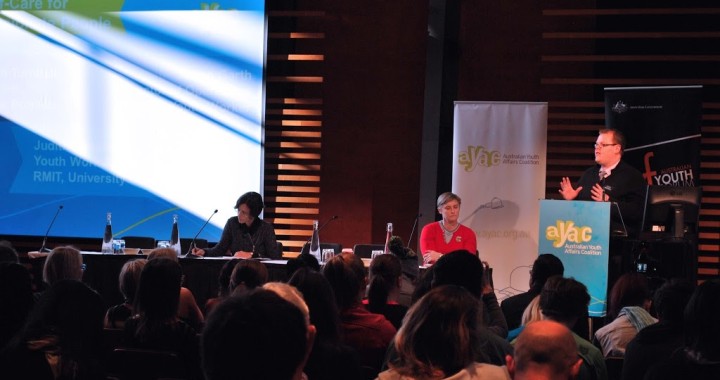
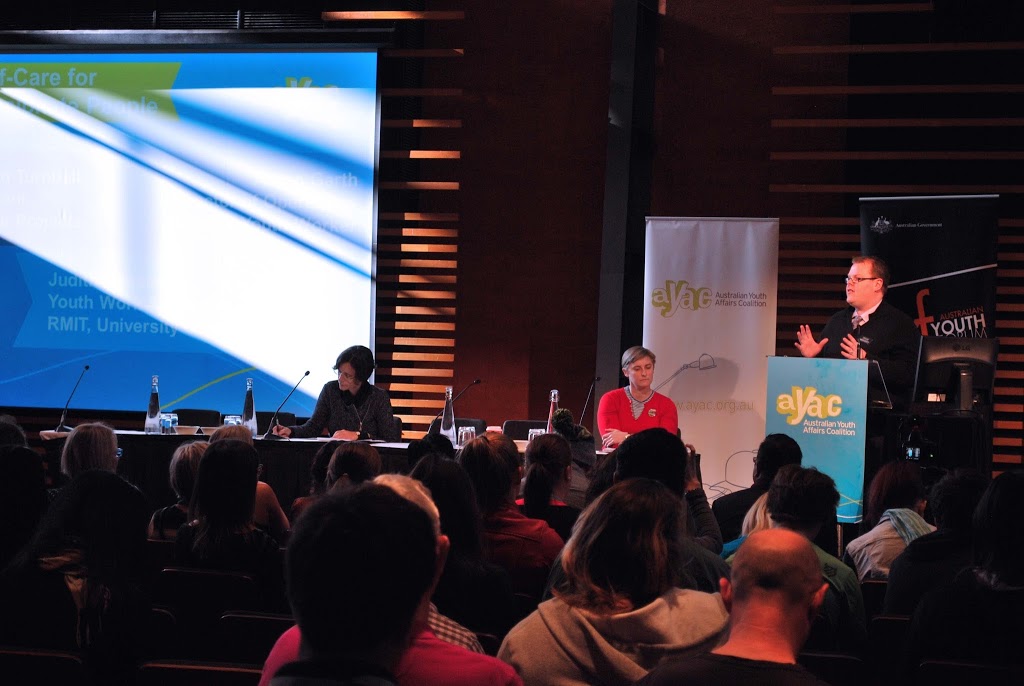
If I had a dollar for every time I heard a story like this I would have a decent car brought and paid for. Recently, at the Australian Youth Affairs Conference, I was on a panel addressing self care. One of the questions I was asked was the reasons I hear for a lack of self care, really all I hear are excuses.
The main excuse I hear is that our clients need us. The fact that 100% of them were doing life fine before we got involved in their lives never enters the picture. It is like, if we weren’t there all our young people would die or end up in prison. So we run ourselves into the ground and give them sub standard service along the way.
I spoke to the youth workers manager later that afternoon, and after giving them a serve about not showing care for their staff I told her that she needed to send this guy on a forced vacation in the next month. The Director of the service did not know that there were staff in their service that hadn’t taken holidays in years. That service now has a policy that staff must take holidays every year.
You have to take holidays. Your family, career and your clients depend on you looking after yourself.
You can also leave us a comment below or post a comment on facebook and twitter.
Aaron Garth is a Melbourne-based youth worker, social worker, and mental health practitioner with over two decades of experience supporting young people across Australia. As Chief Executive Officer of Ultimate Youth Worker, he leads a team dedicated to training, coaching, and developing professionals in the youth sector.
A graduate of RMIT University and current PhD candidate, Aaron has worked across some of the most challenging areas of youth services — from homelessness and mental health to drug and alcohol outreach and residential care. He is a sought-after speaker, educator, and advocate for a more professionalised youth workforce, and has taught at institutions including RMIT, Chisholm Institute, and Eastern College Australia.
Aaron's work is driven by a simple belief: when youth workers are better supported, young people get better outcomes.
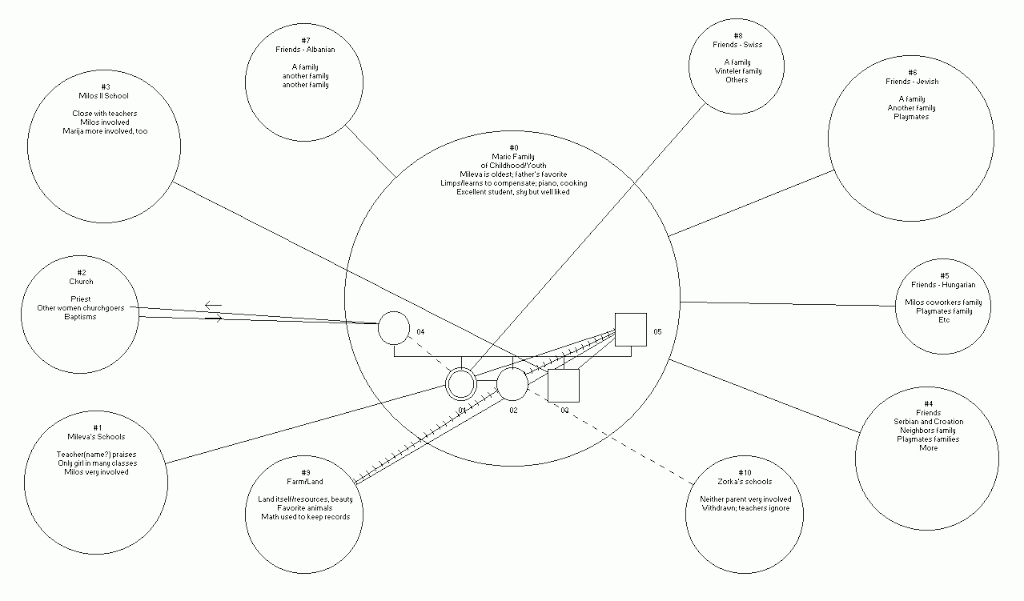
One of the most used tools I have in my kit is an Ecomap. An Ecomap is a graphical representation of the systems at work in a person or groups life. The graphic places the individual or group in the centre and all the other groups or individuals which have influence over them. This great tool has been in use since 1975 when it was invented by Hartman.
The basic idea is that you draw a circle and put the client in it. You then draw circles around the outside which represent the groups and people involved with the client. The reason this is one of my favourite tools is that it shows the people and groups which have influence, whether good or bad, over a persons life. This can then be used to discuss positive influence and the need to deal with negatives.
give it a go.
P.S. If you think the example above looks pretty boring… me too. Our good friends over at Canva.com have come up with a great set of templates to tart up you ecomap and make it look a million bucks. check out www.canva.com to see what they can help you create.
Aaron Garth is a Melbourne-based youth worker, social worker, and mental health practitioner with over two decades of experience supporting young people across Australia. As Chief Executive Officer of Ultimate Youth Worker, he leads a team dedicated to training, coaching, and developing professionals in the youth sector.
A graduate of RMIT University and current PhD candidate, Aaron has worked across some of the most challenging areas of youth services — from homelessness and mental health to drug and alcohol outreach and residential care. He is a sought-after speaker, educator, and advocate for a more professionalised youth workforce, and has taught at institutions including RMIT, Chisholm Institute, and Eastern College Australia.
Aaron's work is driven by a simple belief: when youth workers are better supported, young people get better outcomes.
Recently in my state many of the youth mentoring programs have had to come to terms with losing their funding. This has led to a number of programs closing up shop and leaving many young people in the lurch. The big issue is that these programs provide much more benefit than they cost.
The sad fact is youth workers can’t do everything that our young people need. We need others to help! The best way I know of is to have a mentoring program. In my career I have been involved in a number of mentoring programs and they were all worth their weight in gold.
As youth workers we need to keep youth mentoring programs going… even if we don’t have the funds. We must provide opportunities to develop our young people and one of the best opportunities is to build their network. To have older people guide them through the storms and stress. To have people with similar interests build their knowledge.
Aaron Garth is a Melbourne-based youth worker, social worker, and mental health practitioner with over two decades of experience supporting young people across Australia. As Chief Executive Officer of Ultimate Youth Worker, he leads a team dedicated to training, coaching, and developing professionals in the youth sector.
A graduate of RMIT University and current PhD candidate, Aaron has worked across some of the most challenging areas of youth services — from homelessness and mental health to drug and alcohol outreach and residential care. He is a sought-after speaker, educator, and advocate for a more professionalised youth workforce, and has taught at institutions including RMIT, Chisholm Institute, and Eastern College Australia.
Aaron's work is driven by a simple belief: when youth workers are better supported, young people get better outcomes.
Over the past weekend I spent some time reading about the professionalisation debate which has swept the global youth work fraternity. I read that as an industry it is required of us to become more professionalised in order to cement our place in the human services sector. I read that we must become more stringent on who we let in and what we do to those who do not conform to the new ways. I read that we need associations to manage our professionalism in the same vain as nurses, psychologists and lawyers. I read and I wept.
There are few in the youth services industry which would not argue that we need to become more professional. There are even fewer who would argue that we don’t need more stringent requirements on those we allow into the sector. The issue that we see in the current professionalization argument is that we are forsaking youth work to be seen as equal to every other generic profession.
Youth work needs to stand up and be counted. There is little good in us becoming like every other cookie cutter profession. In doing so we will suffer the death of a thousand cuts. Every time we give up a little of our innovation or uniqueness to become more like other professions we die a little. When we become more like everyone else we lose something of ourselves.
Recently I was speaking with a youth work student who believed whole heartedly that the only way to do youth work was case management. She believed that the way she had been taught to do youth work over her studies was leading her into a case management role. This limited view came to bear as her lecturers sought to instil that case management was the highest form of professional youth work.
We are at the crossroads, and as I was told as a child we need to look both ways before moving forward. So far, most of the literature has not asked what the down side of professionalism might be… and this is the question that we most need to discuss. Because after all the fate of our sector rests on the decisions we make today.
You can also leave us a comment below or post a comment on facebook and twitter.
Aaron Garth is a Melbourne-based youth worker, social worker, and mental health practitioner with over two decades of experience supporting young people across Australia. As Chief Executive Officer of Ultimate Youth Worker, he leads a team dedicated to training, coaching, and developing professionals in the youth sector.
A graduate of RMIT University and current PhD candidate, Aaron has worked across some of the most challenging areas of youth services — from homelessness and mental health to drug and alcohol outreach and residential care. He is a sought-after speaker, educator, and advocate for a more professionalised youth workforce, and has taught at institutions including RMIT, Chisholm Institute, and Eastern College Australia.
Aaron's work is driven by a simple belief: when youth workers are better supported, young people get better outcomes.
A number of years ago I was speaking to some colleagues about our concern that youth work as a profession was losing its ability to innovate and adapt to changing tides of funding and the needs of our clients. We spent a number of hours pulling apart the issues we saw and developing a thesis for change. We realised somewhere in the midst of our conversation that it was not good enough to simply point out the issues in the profession if we were not willing to do something about them.
Ghandi said that you must be the change you want to see in the world. We realised this quote so richly that evening. We realised that if we wanted a more professional sector we needed to be more professional. If we wanted a better trained workforce it had to begin with us. If we were to have a supportive and caring sector then we needed to care for ourselves and seek support. We realised that the first step in our journey was to be the change you want to see in the world.
We began Ultimate Youth Worker to be the change we wanted in the youth sector. What change do you want in the youth sector??? How will you be the change you wish to see???
You can also leave us a comment below or post a comment on facebook and twitter.
Aaron Garth is a Melbourne-based youth worker, social worker, and mental health practitioner with over two decades of experience supporting young people across Australia. As Chief Executive Officer of Ultimate Youth Worker, he leads a team dedicated to training, coaching, and developing professionals in the youth sector.
A graduate of RMIT University and current PhD candidate, Aaron has worked across some of the most challenging areas of youth services — from homelessness and mental health to drug and alcohol outreach and residential care. He is a sought-after speaker, educator, and advocate for a more professionalised youth workforce, and has taught at institutions including RMIT, Chisholm Institute, and Eastern College Australia.
Aaron's work is driven by a simple belief: when youth workers are better supported, young people get better outcomes.
I was speaking to some of my students recently about their time in the courses I teach in. Many of the student said the felt ill prepared and that they found that many of the teachers were hard to understand. When I delved into this it was that the teachers took pleasure in showing off their academic prowess and made everything seem really hard to understand. Many of the students still did not have a good understanding of basic theories and youth work practices as their teachers were speaking a whole other language…academic pomp.
In class this morning one of my students stated that I taught very different than her previous teacher. When I asked what the difference was she said that the teacher she previously had liked to talk on and on and delve deeply into a topic without making the basics understandable. After the first few classes she felt lost and every class after that compounded her feeling of being lost.
I asked what she liked about my style and she said she could understand what I was saying because I spoke in a way they could understand. I don’t use a lot of jargon when I teach. I can, but I was once told that the mark of understanding was the ability to distil knowledge to the lowest common denominator. If you can’t understand it is often because the teacher is making it too difficult.
When I was in high school I sucked at mathematics. I could not understand algebra or algorithims and every year I fell further behind. In year ten one of my teachers realised that I had missed the basics and this was what led to my lack of understanding here. She spent a number of weeks teaching me the basics and had me caught up and surpassing my peers in less than a term. The main thing was I needed the basics and I needed to understand.
No one fails my subjects through a lack of understanding. I teach as if I am explaining to a ten year old until my students get it and then I move on. If you struggle with youth work theory and practices it might just be that you were poorly taught. get back to basics and rid yourself of jargon and you will get passed the fear of theory.
You can also leave us a comment below or post a comment on facebook and twitter.
Aaron Garth is a Melbourne-based youth worker, social worker, and mental health practitioner with over two decades of experience supporting young people across Australia. As Chief Executive Officer of Ultimate Youth Worker, he leads a team dedicated to training, coaching, and developing professionals in the youth sector.
A graduate of RMIT University and current PhD candidate, Aaron has worked across some of the most challenging areas of youth services — from homelessness and mental health to drug and alcohol outreach and residential care. He is a sought-after speaker, educator, and advocate for a more professionalised youth workforce, and has taught at institutions including RMIT, Chisholm Institute, and Eastern College Australia.
Aaron's work is driven by a simple belief: when youth workers are better supported, young people get better outcomes.
Over the years I have been asked hundreds of times about how to set boundaries in youth work. I have spoken to this issue in youth work classes from certificate to degree level. I have spoken on this in supervision session and in seminars. I have also written about it in this blog. Recently I was asked if there was one thing about boundaries that I would pass on to new youth workers what would it be.
One line
I had a mate who had done Sgt. training in the army and one of the roles of a Sgt. is to supervise other troops. In the training my friend was told that when commanding troops he needed to be “firm, fair , friendly but never familiar”. My friend once told me this and it had always stuck.
In youth work we are often trying to lead our young people through the difficult trials of adolescence. Sometimes we need to be firm on the boundaries of our role and their responsibilities. Youth work is all about social justice and as such we want to be as fair as possible when working with young people. Youth work is also a profession developed on friendship building skills. However, sometimes our clients see this friendliness as becoming friends with their youth worker. Which is why we can never become familiar with our young people.
One line sums up my ethic on youth work boundaries, “Be firm, fair, friendly but never familiar”.
Aaron Garth is a Melbourne-based youth worker, social worker, and mental health practitioner with over two decades of experience supporting young people across Australia. As Chief Executive Officer of Ultimate Youth Worker, he leads a team dedicated to training, coaching, and developing professionals in the youth sector.
A graduate of RMIT University and current PhD candidate, Aaron has worked across some of the most challenging areas of youth services — from homelessness and mental health to drug and alcohol outreach and residential care. He is a sought-after speaker, educator, and advocate for a more professionalised youth workforce, and has taught at institutions including RMIT, Chisholm Institute, and Eastern College Australia.
Aaron's work is driven by a simple belief: when youth workers are better supported, young people get better outcomes.
Youth work is changing rapidly. Many of the changes are coming to the fore because of issues which have haunted an under qualified, under supported and minimally accountable workforce. Unfortunately the way the issues are being dealt with is with a firm hand with an iron grasp. We are setting the barrier to entry in our fledgling professional associations as high as possible. We are requiring more in every youth work position description to show how good we are and we are using highly regulated professions as a template for our own.
Youth work has also seen a number of people who have said that this is not good enough. However, these voices are being shouted down in a torrent of violent opposition as rebellious to the cause of professionalism. Youth work is a profession which thrives under scrutiny and leads in innovation. Why would we want to lose our innovation to fall in line with groups like nurses and social workers???
Great spirits have always encountered violent opposition from mediocre minds. Albert Einstein
Youth work needs more great spirits and canny outlaws to keep it from becoming just another form of toothless neoliberal social service experiment. We need to resurrect the passion and talent that youth work has historically been known for and harness it for the future. There will be some who see it as holding the profession back… but these are just mediocre minds.
If you haven’t yet, sign up for our newsletter, find out all the goings on at Ultimate Youth Worker.
You can also leave us a comment below or post a comment on facebook and twitter.
Aaron Garth is a Melbourne-based youth worker, social worker, and mental health practitioner with over two decades of experience supporting young people across Australia. As Chief Executive Officer of Ultimate Youth Worker, he leads a team dedicated to training, coaching, and developing professionals in the youth sector.
A graduate of RMIT University and current PhD candidate, Aaron has worked across some of the most challenging areas of youth services — from homelessness and mental health to drug and alcohol outreach and residential care. He is a sought-after speaker, educator, and advocate for a more professionalised youth workforce, and has taught at institutions including RMIT, Chisholm Institute, and Eastern College Australia.
Aaron's work is driven by a simple belief: when youth workers are better supported, young people get better outcomes.
A while ago we wrote on what post-qualifying education might look like for the youth sector. We had a number of people agree and disagree with our thoughts but the one thing that we kept coming back to was the current state of youth worker education. Our sticking point in these discussions was the lack of practical placement in current education.
In a recent survey of its members the Youth Workers Association in Victoria came to the belief that no more than 30% of a youth work course should be undertaken “on the job”. The reality of the average youth work degree is that it is more like 15%. The issue that we see is that youth worker education is becoming an almost purely theoretical endeavour. When the core of our work is developing relationships can this truly be taught through theory alone???
Recently I was chatting with a friend who is completing a degree in tourism and marketing and he was surprised to hear that we did not need to complete an industry year. In his course they complete two years of study, then an industry year, and return to complete their final year. This not only leads students to gain a practical understanding of their field, but also provides links to employment.
As a teacher in the field education of youth workers and a former employer I have noticed a severe lack of industry knowledge and practical skills in students and graduates of youth work courses. In our attempt to make youth work a theoretically sound profession we are losing much of the practice skill development. We are turning out a great number of theoretical practitioners but rare is the great practitioner.
We don’t need less practical placement in youth work education, we need more! You can’t learn youth work from a book…it must be learnt through doing it. Sixty-five days of placement in a couple of youth services is not nearly enough for students to gain a depth of understanding in youth work practice. We believe that the model of an industry year is a good starting point however to make it a worthwhile learning experience there must be opportunities to critically reflect for both student and organisation. Mentoring of new students is a possible answer to this conundrum. Perhaps universities could provide regular seminars on new research as a link between industry and academia.
The point is students need to have a stronger link to industry before they graduate.
Aaron Garth is a Melbourne-based youth worker, social worker, and mental health practitioner with over two decades of experience supporting young people across Australia. As Chief Executive Officer of Ultimate Youth Worker, he leads a team dedicated to training, coaching, and developing professionals in the youth sector.
A graduate of RMIT University and current PhD candidate, Aaron has worked across some of the most challenging areas of youth services — from homelessness and mental health to drug and alcohol outreach and residential care. He is a sought-after speaker, educator, and advocate for a more professionalised youth workforce, and has taught at institutions including RMIT, Chisholm Institute, and Eastern College Australia.
Aaron's work is driven by a simple belief: when youth workers are better supported, young people get better outcomes.