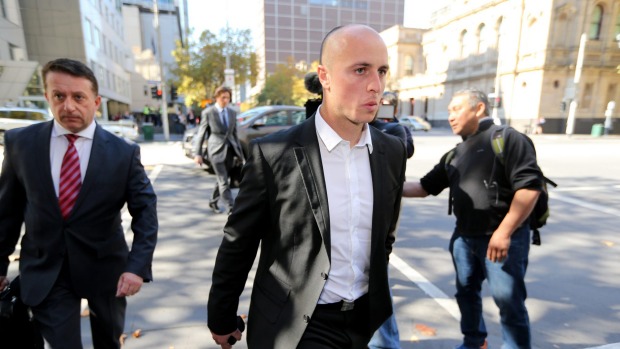
There is currently an Independent Broad-based Anti-corruption Commission (IBAC) investigating corrupt spending within the Victorian department of education. It appears that there has been significant funds misappropriated from head office to the principals in schools. many of these people on $100, 000+ salaries already but they take from funds which could be used for support services.
Recently, the department has changed the classification of roles of support staff such as psychologists and social workers to pay them less. They also gave schools the opportunity to use the funds for these services in any way they wanted. Young people miss out again. The education system is not designed for supporting young people and then you have people who rort the system and hurt them even further. The commission has heard many stories of schools hiding invoices and being invoiced for work never supplied. More money being siphoned from where it needs to go.
Courtesy of www.theage.com.au
It has been our observation that the more power people have the more likely they are to abuse it. With the education department spreading their power to the principals we are seeing many more issues with this power abuse. With this power came no accountability, and with no accountability we see abuse and corruption. These schools cry poor for funds to help their students but then…
This isn’t a new story by any stretch of the imagination. It is one that comes up time and time again. Every time it does we hear nothing of the services that are lost or the young people that have been hurt by these corrupt individuals. The education department needs to focus more on their internal accountability and good service provision and much less on penny pinching. Governments need to step in and have the guts to make a clean sweep and start again. These individuals are only the tip of the iceberg when it comes to corruption and poor service delivery.
In the words of the human headline; Shame, Shame, Shame.
Aaron Garth is a Melbourne-based youth worker, social worker, and mental health practitioner with over two decades of experience supporting young people across Australia. As Chief Executive Officer of Ultimate Youth Worker, he leads a team dedicated to training, coaching, and developing professionals in the youth sector.
A graduate of RMIT University and current PhD candidate, Aaron has worked across some of the most challenging areas of youth services — from homelessness and mental health to drug and alcohol outreach and residential care. He is a sought-after speaker, educator, and advocate for a more professionalised youth workforce, and has taught at institutions including RMIT, Chisholm Institute, and Eastern College Australia.
Aaron's work is driven by a simple belief: when youth workers are better supported, young people get better outcomes.
The Federal Australian government is currently on the warpath. In their sights: cost cutting. The latest casualty: welfare payments. One of the biggest losers in the proposed changes put forward are young people. This isn’t the first time a government in Australia has targeted young people and welfare payments however it is the first time the current government has tried. This particular government had a report into welfare reform written which explicitly links policy directives on young people being in education, training or employment with access to welfare payments.
The McClure report sets out that young people under the age of 22 would not be eligible for stand alone welfare payments and only those young people involved in education or training would be eligible at all. This links education with welfare in a way that says our education system is appropriate for all young people. It requires study when for some young people this is neither available nor appropriate. It asserts power over young people in a way which has not been done before in Australia.
This proposed suite of changes was met with unprecedented backlash from the youth sector with every state and the national peak bodies condemning its lack of consultation and care fore young people. While the report recognised that some young people will be living independently, it is unclear on how they will be assessed to be “genuinely independent” and eligible to receive an income payment in their own right. Joanna Siejka, CEO of YNOT stated, “The report presumes that young people are not willing to engage in education, training and employment, but research shows that young people are increasingly wanting to engage in these activities and do not want to be on welfare”.
Government and the youth vote
This backlash from the youth peaks shone a light on a significant issue which is often not addressed by government. Why do governments struggle to support young people? There are a number of reasons however the biggest one is that for the most part young people cannot vote and are therefore not considered part of the constituency. If young people don’t have a vote then they do not count in the policy making process. Some governments will go beyond this focus, however more often than not young people face the brunt of cost cuts and policy changes.
Government needs to understand that just because their term in office is 3-4 years that young people have a long memory. Young people are the future and if we hurt them now they will remember when they are able to vote. This happened in the 2007 federal election in Australia and it will happen again. Young people must be treated with respect by government for longevity in politics. More than that it is just plain decency.
Aaron Garth is a Melbourne-based youth worker, social worker, and mental health practitioner with over two decades of experience supporting young people across Australia. As Chief Executive Officer of Ultimate Youth Worker, he leads a team dedicated to training, coaching, and developing professionals in the youth sector.
A graduate of RMIT University and current PhD candidate, Aaron has worked across some of the most challenging areas of youth services — from homelessness and mental health to drug and alcohol outreach and residential care. He is a sought-after speaker, educator, and advocate for a more professionalised youth workforce, and has taught at institutions including RMIT, Chisholm Institute, and Eastern College Australia.
Aaron's work is driven by a simple belief: when youth workers are better supported, young people get better outcomes.
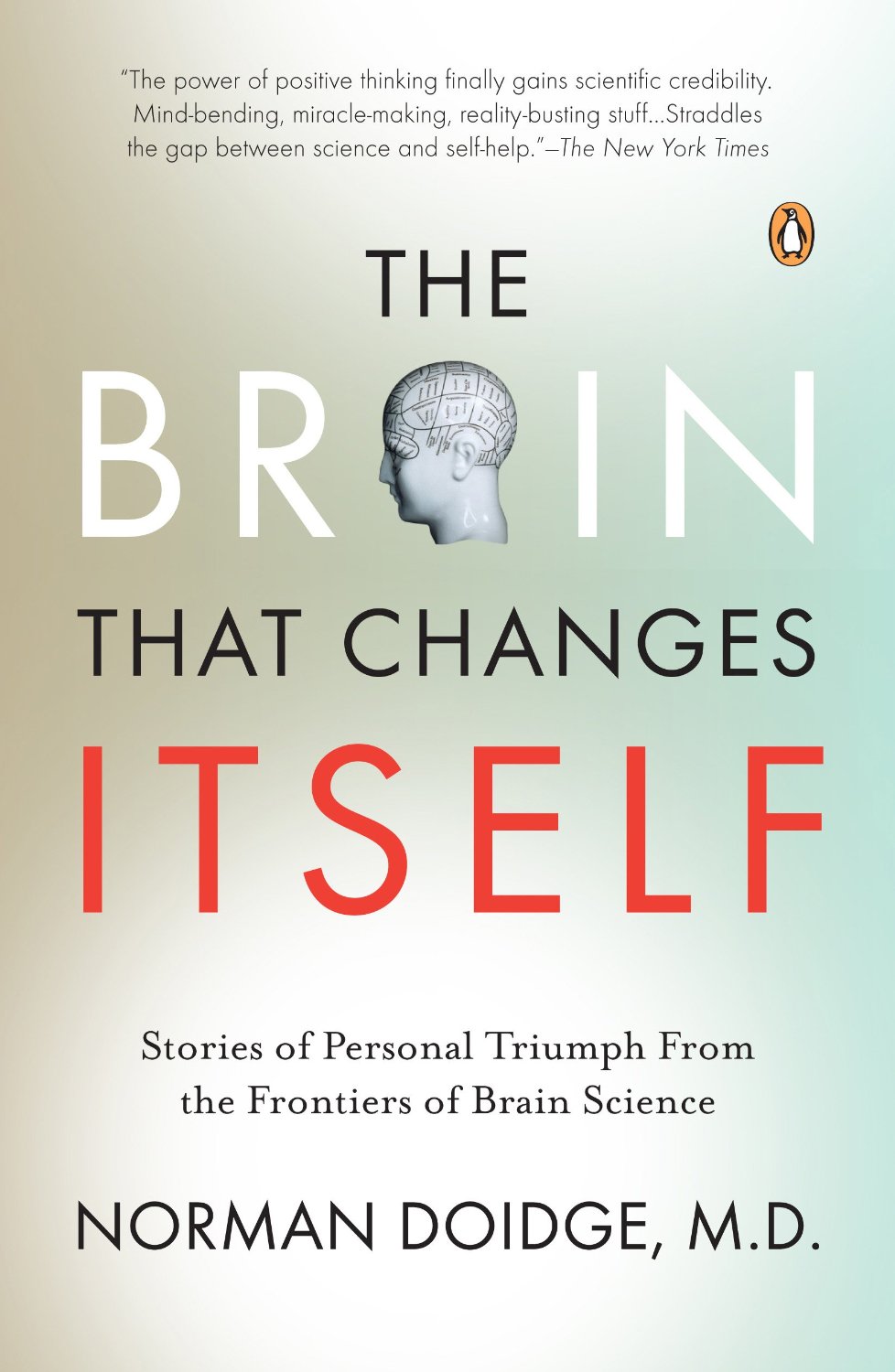
Throughout my career as a youth worker and particularly over the past few years of educating youth workers I have been asked thousands of times what books I recommend youth workers should read. One of the top books I always recommend is The Brain That Changes Itself: Stories of Personal Triumph from the Frontiers of Brain Science by Norman Doidge, MD. It has almost nothing to do with contemporary youth work, however I think that it paints an amazing picture of the plasticity of the brain. This is key to why I recommend it as adolescence is a time where the brain is undergoing an amazing transformation.
You have to get this book.
Norman Doidge, a Psychiatrist, psychoanalyst and researcher delivers a very important and informative book that should be read by all. Dr. Doidge takes us by the hand and carefully explains that the brain can and does change throughout life. Contrary to the previous belief that after childhood the brain begins a long process of decline, Doidge shows us that our brains have the remarkable power to grow, change, overcome disabilities, learn, recover, and alter the very culture that has the potential to deeply affect human nature.
The long-held theory that brain functions were localized and specialised (like a machine) has now evolved to embrace the recognition that the brain is plastic and can actually change itself with exercise and understanding. This is a massive change in our limited understanding of the equipment that helped mankind land on the moon, create cities and solve the worlds diseases… our own brain!
In chapter 1, we meet Cheryl, a woman who has completely lost her sense of balance. She must hold on to the wall to walk, but even that does not steady her. And when she does fall, there is no relief for she still feels like she is falling perpetually into an abyss. This excruciating disorder due to total loss of vestibular apparatus makes her life a living hell. Such people are called “wobblers” because that is what they do. They behave and look like they are walking a tight rope. It is not surprising that many “wobblers” have committed suicide. Enter Paul Bach-y-Rita and his team who have invented a hat. This hat/helmet, with its tongue display and electrodes, acts as a sensor of movement in two planes thus giving Cheryl the ability to orient herself in space, thereby losing the terrible vertigo that led to wobbling. Cheryl and those like her who wear this seemingly magical hat can experience through the tongue connecting to the brain what is needed to maintain balance by finding new pathways in the brain that process balance. The broader implications of this discovery are mind-boggling.
Another hero in the plasticity movement is Michael Merzenich, one of the world’s leading researchers on the subject. Based on his belief in practicing a new skill under the right conditions, he claims that brain exercises can compete with drugs to treat schizophrenia and that cognitive function can improve radically in the elderly. Learning itself increases the capacity to learn by changing the structure of the brain which he likens to a living creature with an appetite needing nourishment and exercise. Working with a monkey he showed how brain maps are dynamic and work by the ‘use it or lose it’ principle. Two phrases associated with Merzenich are ‘use it or lose it’ (as with any muscle) and “neurons that fire together wire together” meaning that throwing a ball, for instance, many times in the same way creates a brain map where the thumb map is next to the index finger map, and then the middle finger. So, brain maps work by spatially grouping together events that happen together. Multi-tasking or divided attention does not lead to lasting change in brain maps.
The story of Mr. L in Chapter 9 illustrates exactly how psychoanalysis changed his character defenses by helping him access his deepest feelings about loss. Mr. L learned that it was safe to give up the denial that protected him for over 40 years from the pain of early loss. He exposed the memories and emotional pain that he had hidden, permitting psychological reorganization. Mr. L changed from an isolated, depressed man unable to commit to anyone, to a man able to experience profound love, marry, and have children.
In chapter 11, “More Than the Sum of Her Parts,” we meet Michelle, born with half a brain. The fact that her right hemisphere took over from her left hemisphere the functions of speech and language, while performing its own functions speaks clearly for neuroplasticity. Michelle leads a comfortable, though somewhat impaired life, enjoys movies, a job, and her family. The story of how one half of her brain took on functions of the missing half is an adventure.
My personal favourite Chapter, Seven, “Pain – The Dark side of Plasticity” introduces us to the neurologist V.S. Ramachandran, described as the Sherlock Holmes of modern neurology. Learning about this man is a fascinating experience in itself. He is heroic in his simplicity and curiosity. “Your own body is a phantom, one that your brain has constructed purely for convenience” says Ramachandran – and this statement has influenced so much of my thinking. His interest became phantom pain – pain that amputees feel after amputation and he discovered that rewired brain maps were the cause. The brain’s plasticity enables rewiring of missing neurons. These discoveries also explain a positive outcome of certain brain remapping and this is in the sexual realm. Phantom orgasm and phantom erection can be experienced in the feet of men with amputated legs and feet leading Ramachandran to wonder about foot fetishes in a neurological way. I will not even try to explain how the mirror box Ramachandran devised to help his patient Philip cope with excruciating pain from an elbow that was amputated works. But, successful amputation of this phantom limb through using the mirror box led others to use it – and there’s more! Ramachandran says that the distorted body images of anorexics and some who go for plastic surgery are caused by the brain and then projected onto the body. So, could one conclude that if one gets the message that he/she is ugly or fat, whether consciously or unconsciously, through loved ones or culture, the brain distorts the perception of the body? Anorectic people actually believe that they are always too fat – defying the reality of scales. It is no coincidence that Ramachandran is from India where his culture was open to what we would call mystical thinking. Psychotic people actually hear voices and hallucinate. Can the theory of brain plasticity be used to explain and even cure such cases. Read this chapter and decide for yourself. The idea that illusion and imagination can conquer chronic pain by restructuring brain maps plastically, without medication, needles, or electricity must be really bad news for the pharmaceutical industry.
The Brain That Changes Itself is one of those books that makes us imagine how much our brains may actually be able to do. Our young people in a state of brain growth have amazing opportunities for their brains to stretch and be pliable. As youth workers this critical time offers us an amazing time to speak into the lives of our young people.
Aaron Garth is a Melbourne-based youth worker, social worker, and mental health practitioner with over two decades of experience supporting young people across Australia. As Chief Executive Officer of Ultimate Youth Worker, he leads a team dedicated to training, coaching, and developing professionals in the youth sector.
A graduate of RMIT University and current PhD candidate, Aaron has worked across some of the most challenging areas of youth services — from homelessness and mental health to drug and alcohol outreach and residential care. He is a sought-after speaker, educator, and advocate for a more professionalised youth workforce, and has taught at institutions including RMIT, Chisholm Institute, and Eastern College Australia.
Aaron's work is driven by a simple belief: when youth workers are better supported, young people get better outcomes.
Today, I had the pleasure of a lunch with a good friend and supporter of the work of Ultimate Youth Worker. A manager of a local government youth service and a canny outlaw I was enthralled in our conversation. We spoke about children, sociology, government policy, raising families and much much more. We spoke for nearly two hours and could have spent another two quite easy. We spoke about life in the good and bad and in the end we parted more strengthened and enthused in our walk.
Peer support is essential
It is these type of encounters that keep us going as youth workers. When colleagues share life together it takes our relationship from mutual employee to friend and confidant. It is the ability to share our joys and our fears that make these relationships so important. We must go beyond just peer reflection. Unfortunately, most organisations do not foster this relationship development. Managers and HR stress that as people we are only there doing the work to hit KPI’s. It is this lack of relationship building which confirms in many of us the need to leave our employer.
In my work throughout the sector I have been stoked to find such support and friendship from many people. We may only catch up once or twice a year or we may meet weekly but always we encourage an build one another up. We look out for each other, support each others projects and dream of the next big thing. Over the past two years I have also began to build an international group of peers who also do this. We Skype. We email. One day we will even meet face-to-face.
Get some peer support. It may require you to reach out. To be uncomfortable. To trust another. For your longevity you need good support networks.
Aaron Garth is a Melbourne-based youth worker, social worker, and mental health practitioner with over two decades of experience supporting young people across Australia. As Chief Executive Officer of Ultimate Youth Worker, he leads a team dedicated to training, coaching, and developing professionals in the youth sector.
A graduate of RMIT University and current PhD candidate, Aaron has worked across some of the most challenging areas of youth services — from homelessness and mental health to drug and alcohol outreach and residential care. He is a sought-after speaker, educator, and advocate for a more professionalised youth workforce, and has taught at institutions including RMIT, Chisholm Institute, and Eastern College Australia.
Aaron's work is driven by a simple belief: when youth workers are better supported, young people get better outcomes.
In the AYAC National Youth Work Snapshot 2013 a survey of youth workers showed that 8.4% of surveyed youth workers had never had a supervision session and around 51.7% receive it less than once every three months. As an industry that claims professional status this is appalling. It is no wonder that the sector in Australia turns over staff at 23% every year. Supervision is important to staff retention.
The best supervisors I have had came from both ends of the qualification spectrum. One was a qualified Social Worker with over a decade of experience who regularly attended courses on supervision. The other was a Youth Worker who had no qualifications but was an avid reader of supervision texts and attended every professional development opportunity focused on supervision. The skill set that both of these supervisors had in common was an eager appetite to better their own practice as supervisors and a great ability to listen and reflect. The styles they used were different, the theoretical focus wide and varied and the outcomes specific to the needs of myself and my clients. Supervision is important to staff development.
But why should we have supervision sessions in the first place?
Maidment & Beddoe (2012) believe that supervision must be placed at the core of professional development for staff, “We want to place supervision at the heart of professional development, which is career-long and where, via diverse learning activities, practitioners refine and augment their knowledge, develop skills, and undertake supervision to enhance critically reflective practice”.
The short answer is supervision gives us time to reflect and develop our skills to become the best we can be!
The longer answer is that there are at least three distinct spheres to supervision that need to be addressed in each session for effectiveness: understanding the field of practice and how it applies to your tasks, personal support and affect regulation, and the administrative elements to your work within your organisation. As an external supervisor we add the element of professional skills development to this as well.
The largest cause of burnout within our sector is that of psychological distress. Using supervision sessions in the formats above creates an opportunity for minimising the distress and maximising longevity in the field. Supervision provides a conduit for communication on specific issues relating to the causes of youth worker burnout. It asks us to be open and responsive to the issues while learning and developing our skills.
Supervision is key to success and longevity in youth work.
Aaron Garth is a Melbourne-based youth worker, social worker, and mental health practitioner with over two decades of experience supporting young people across Australia. As Chief Executive Officer of Ultimate Youth Worker, he leads a team dedicated to training, coaching, and developing professionals in the youth sector.
A graduate of RMIT University and current PhD candidate, Aaron has worked across some of the most challenging areas of youth services — from homelessness and mental health to drug and alcohol outreach and residential care. He is a sought-after speaker, educator, and advocate for a more professionalised youth workforce, and has taught at institutions including RMIT, Chisholm Institute, and Eastern College Australia.
Aaron's work is driven by a simple belief: when youth workers are better supported, young people get better outcomes.
One of the most contentious issues in youth work today is funding. We don’t have enough money and we don’t have enough positions. So when the Australian federal government released their budget last month an a number of youth work programs were defunded the sector cried out. One area that was at the forefront of the attack was the Government’s decision to remove funding for some school welfare staff who were funded under the National School Chaplaincy & Student Welfare Program. The Government decided to revert to an earlier version of the program which solely funded chaplains and not welfare workers.
Many of the comments that have been floating around the ether have painted a picture of religious right winged fanatics taking over student welfare. Most of all they paint a picture of untrained, unqualified proselytisers who will damn us all to hell. To put it quite bluntly the public is being grossly misinformed. If your argument is about the ideology of having religious people in student welfare positions that is a very different discussion than the one about their ability and qualifications. Here are a few thoughts our Executive Director shared this morning.
Aaron Garth is a Melbourne-based youth worker, social worker, and mental health practitioner with over two decades of experience supporting young people across Australia. As Chief Executive Officer of Ultimate Youth Worker, he leads a team dedicated to training, coaching, and developing professionals in the youth sector.
A graduate of RMIT University and current PhD candidate, Aaron has worked across some of the most challenging areas of youth services — from homelessness and mental health to drug and alcohol outreach and residential care. He is a sought-after speaker, educator, and advocate for a more professionalised youth workforce, and has taught at institutions including RMIT, Chisholm Institute, and Eastern College Australia.
Aaron's work is driven by a simple belief: when youth workers are better supported, young people get better outcomes.
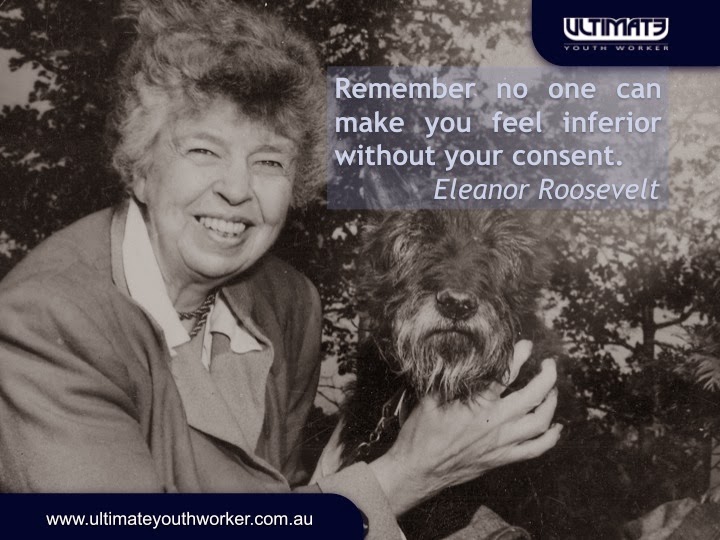
Over the years no other issue in youth work has bugged me more than the discussions about how we need to become more like other professions. For the most part it is a discussion about what we are not as youth workers. It says what we do not do. It says we are inferior to other professions.
We hear it every day as youth workers. Our clients are referred to “professionals” because we aren’t trained enough, aren’t qualified enough or just plain don’t know enough. These professionals look upon us with the same condescension that people aim at well meaning children who are overly excited. They tell us how much we don’t know about young people from their perspective and why they are indispensable to our young people. And we look at them with wide doe eyes and a knowing glance that says they are right. We are inferior.
The academy has told us for years that youth work as it stands is inferior.
Our colleagues have told us how inferior our work is.
We have told ourselves how inferior we are.
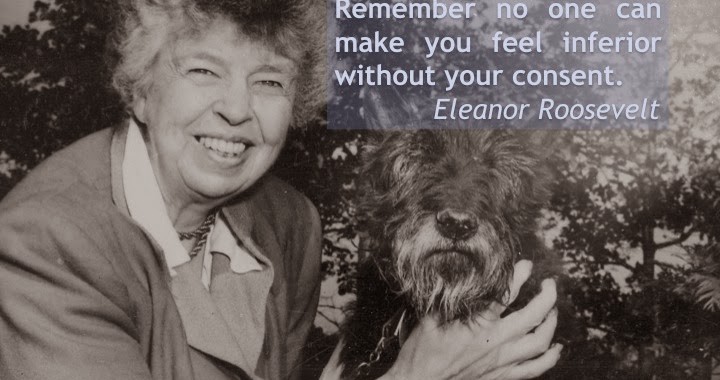
For youth work as a profession to take the next step we first need to stop comparing ourselves to others. Comparison leads to inferiority. We are a stand alone profession with our own knowledge base and a rocking way of supporting young people that others can only dream about.
Inferiority only comes if we allow it… so lets stop it.
Aaron Garth is a Melbourne-based youth worker, social worker, and mental health practitioner with over two decades of experience supporting young people across Australia. As Chief Executive Officer of Ultimate Youth Worker, he leads a team dedicated to training, coaching, and developing professionals in the youth sector.
A graduate of RMIT University and current PhD candidate, Aaron has worked across some of the most challenging areas of youth services — from homelessness and mental health to drug and alcohol outreach and residential care. He is a sought-after speaker, educator, and advocate for a more professionalised youth workforce, and has taught at institutions including RMIT, Chisholm Institute, and Eastern College Australia.
Aaron's work is driven by a simple belief: when youth workers are better supported, young people get better outcomes.
For an extremely long time now people have understood the importance of having good leaders.This is emphasized by the amount leadership summits and courses that are regularly held around the globe.Furthermore, there are probably thousands (perhaps even more?) of books on some aspect of leadership published each year.Not even to mention the various TED talks on this topic!“Leadership” has become a cultural buzzword and no-one wants to be left behind.And not being slouches, we as youth workers will not to be left behind either!(As one we scream and throw our fists in the air!Yeah, yeah I know I’m getting a bit carried away, but seriously, can you imagine a bunch of youth workers going all “Braveheart”?)
Now, I don’t know about you but I am crazy about sports.It is especially in sports that the role of the captain, the leader, comes under close scrutiny from coaches, peers and fans alike.Venturing an uninformed guess I’d say that there is a correlation between a team’s performance and their captain’s performance in a given game and/or season.If the captain’s performance is above par, most times the team tends to be successful.On the flipside, if the team falters in their performance, the captain will be one of the first to be held accountable.Keeping this in mind, in this post I’ll be sharing some basic thoughts that you as captain and team-leader might find helpful on your way to a “winning and successful season”.
1.Teamwork and diversity
The importance of teamwork has been discussed thousands and thousands of times.However, what sometimes remains lacking is a focus on diversity within the team.The team leader cannot do everything, nor can everyone in the team think the same way.The team needs to be made up of people with diverse leadership approaches and skills.For instance, my leadership role is that of ‘thinker’.But as thinker I cannot only be surrounded by thinkers.That way nothing ever is going to get done.So for example I need to look for a few ‘doers’ – people who play in different positions.Furthermore, I need to know when to pass the ball to my team members, those leaders on the team who are in a better position to deal with certain situations.
2.Lead from the front, encourage from the back
The captain needs to lead from the front.Every team has a particular strategy, a game-plan, which they want to follow and the captain has to set the example.He (or she) needs to model the strategy.But this is more than merely showing the way, it’s about encouraging others to follow the path.It’s about the embodiment of your organisation’s code of ethics, but it is also about carefully mentoring the less experienced leaders in your team to do the same.You are a leader of leaders, who has to make even more leaders.This feat won’t come easy and in the process you might want to consider reading up a bit on coaching and emotional intelligence.
Finally, to be the best, the captain has to stay a little longer at the fields and work a little harder.All for the sake of his/her team.You know your team.You know your organisation.And you know what it will take to get the job done.Read more books, speak to different kinds of people, and even enrol for extra courses if you have to.It seems to me that the importance of continued education and learning is underrated in the field of youth work.Furthermore, see to it that you have a good support system in place.I’d hate to see you burn yourself out in the process.We all work hard, but there’s a fundamental difference between giving your all, and being reckless.Take care of yourself.The captain also looks well after his/her own well-being.
Most of all have fun, keep it simple and give every “game” your best.So captain, what do you think?
Aaron Garth is a Melbourne-based youth worker, social worker, and mental health practitioner with over two decades of experience supporting young people across Australia. As Chief Executive Officer of Ultimate Youth Worker, he leads a team dedicated to training, coaching, and developing professionals in the youth sector.
A graduate of RMIT University and current PhD candidate, Aaron has worked across some of the most challenging areas of youth services — from homelessness and mental health to drug and alcohol outreach and residential care. He is a sought-after speaker, educator, and advocate for a more professionalised youth workforce, and has taught at institutions including RMIT, Chisholm Institute, and Eastern College Australia.
Aaron's work is driven by a simple belief: when youth workers are better supported, young people get better outcomes.
The most well known youth workers world wide are often one of two types of people. They are either the academics who write something worth reading or they are the youth worker who does something spectacular that others write about.
The academics are trying to write something that the youth worker on the ground can use to improve practice or develop the sector as a whole. They bring research and practice together within the pages of journals and textbooks and ask the reader to implement their ideas. Academics write to keep their jobs. They write to expand their influence. They write to frame the work of the youth worker on the ground.
The youth worker on the other hand is developing new programs, working with those delinquent young people the news is always talking about and living out action research. They are learning through doing. They are building relationships. They are developing a set of practice skills that are fluid and framed. They are the ones the rest of us look up to because they just seem to do the job so well.
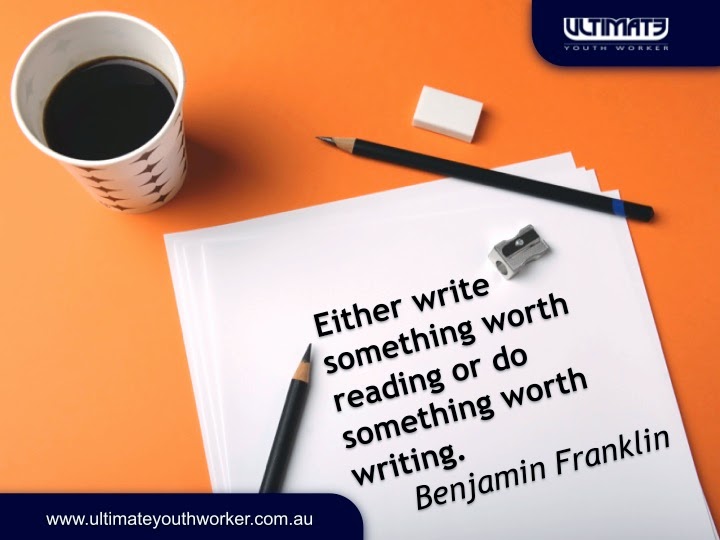
These people either write something worth reading or do something worth writing. However I propose another group. Those who write something worth reading and do something worth writing about. There is a growing number of youth workers taking to writing about the ins and outs of this profession called youth work. They are doing some amazing work and writing about it. They blog, podcast and video their thoughts. They write for the common youth worker and the academic. They speak from the heart and from the data.
Where do you fit on the spectrum? Leave us a comment below.
Aaron Garth is a Melbourne-based youth worker, social worker, and mental health practitioner with over two decades of experience supporting young people across Australia. As Chief Executive Officer of Ultimate Youth Worker, he leads a team dedicated to training, coaching, and developing professionals in the youth sector.
A graduate of RMIT University and current PhD candidate, Aaron has worked across some of the most challenging areas of youth services — from homelessness and mental health to drug and alcohol outreach and residential care. He is a sought-after speaker, educator, and advocate for a more professionalised youth workforce, and has taught at institutions including RMIT, Chisholm Institute, and Eastern College Australia.
Aaron's work is driven by a simple belief: when youth workers are better supported, young people get better outcomes.
I have been in contact with a youth worker lately who is currently writing a book about relational youth work. In our correspondence and discussions I have realised again the immense privilege and responsibility of youth work. Ours is a profession of relationship. Without the trust and respect that comes with the sharing of life youth work is nothing but case management. Relational youth work is at the core of great youth work. It is who we are as practitioners.
Today in a supervision session I encouraged a youth worker that her building relationships with severely disengaged young people was more important than trying to link them to employment options. This youth worker had heard the opposite. From managers and other service professional this woman had been told that relationships came second to KPI’s. Our work is being eroded by a neoliberalist agenda which focuses on outcomes and finances over relationship. If we allow our core work to be tainted by this agenda then we will continue to see our young people struggle.
At Ultimate Youth Worker we believe so wholly in relationship that we added ‘deep engagement‘ to our pillars of practice. The short term solutions-focussed interventions that the government has been insisting on haven’t worked. The only way youth work ticks its KPI’s properly is if deep relationships underpin interventions. We need more engagement in youth work, not less. We need youth workers who reach out to young people with a focus on developing relationship before ticking boxes. We need more relational youth work. We all know this fundamental practice needs to become front and centre in our practice again.
What is one thing you can do to develop a stronger, deeper relationship with your young people this week? How can we become more relational in our work?
Sign up to our newsletter for more thoughts on deep engagement.
Aaron Garth is a Melbourne-based youth worker, social worker, and mental health practitioner with over two decades of experience supporting young people across Australia. As Chief Executive Officer of Ultimate Youth Worker, he leads a team dedicated to training, coaching, and developing professionals in the youth sector.
A graduate of RMIT University and current PhD candidate, Aaron has worked across some of the most challenging areas of youth services — from homelessness and mental health to drug and alcohol outreach and residential care. He is a sought-after speaker, educator, and advocate for a more professionalised youth workforce, and has taught at institutions including RMIT, Chisholm Institute, and Eastern College Australia.
Aaron's work is driven by a simple belief: when youth workers are better supported, young people get better outcomes.