Local government youth work: Placation or proliferation?

In my illustrious career I had the privilege of being a coordinator of a small local government youth service for the lengthy duration of seven months. As I was transitioning to this role I was warned by a number of colleagues that this would be a difficult role for me to hold due to my own philosophical and professional beliefs in youth work. I wish I had have listened to my advisers then. Whilst I made some amazing friends and worked wit some extremely dedicated staff the constriction on youth service provision made the role untenable.
 
I have spoken to a number of my youth work colleagues who have worked for councils and have had a mixed response to my feelings. Many of my colleagues stated that council youth work provided them with the best possible framework for strengthening young people and providing opportunities for growth and development. That advocacy and participation are held as core duties and that programs work fills a gap in service provision.
 
I have also spoken to a number of youth workers who see council youth work as no more than placating residents and disenfranchised young people. They see the idea of program work and generalist work as proliferating disenfranchisement in young people. That at best council youth services provide a way of keeping young people off the streets and at worst provide an oppressive program keeping young people out of public life.

From my own experience I would say that the later is probably a bit far fetched, however many councillors and senior managers in local government have little understanding of the importance of young people in their municipalities. Local government youth workers need to be less constrained than they are at the moment so that they can provide locally focused responses to local issues. Youth workers in local government are often reminded that their client isn’t their community it is their councillors. This does place a clear line in the sand that youth workers must grapple with… especially when our profession believes that young people are our primary client.
Aaron Garth

Aaron Garth

Aaron Garth is a Melbourne-based youth worker, social worker, and mental health practitioner with over two decades of experience supporting young people across Australia. As Executive Director of Ultimate Youth Worker, he leads a team dedicated to training, coaching, and developing professionals in the youth sector. A graduate of RMIT University and current PhD candidate, Aaron has worked across some of the most challenging areas of youth services — from homelessness and mental health to drug and alcohol outreach and residential care. He is a sought-after speaker, educator, and advocate for a more professionalised youth workforce, and has taught at institutions including RMIT, Chisholm Institute, and Eastern College Australia. Aaron's work is driven by a simple belief: when youth workers are better supported, young people get better outcomes.

More Posts - Website

Follow Me:Add me on FacebookAdd me on LinkedInAdd me on PinterestAdd me on YouTubeAdd me on Instagram

A sense of entitlement: youth work education in the 21st century.

Over the past few months I have spoken with over a dozen youth work educators from throughout the world about the calibre of youth work students coming through there courses. These course range from one year to three years and have people from all walks of life coming in droves to study. But one thing seems to have united the student body more than anything… A sense that they are entitled to become youth workers!
 
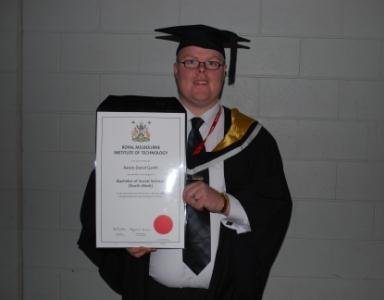
A little over a decade ago I decided to become a youth worker. It was an audacious plan for a young bloke who had never finished high school or anything else he had put his hand to. I had a reverence for the profession and an academic fear of my lecturers. I would have heated discussions and difficult conversations but when the lecturers called an end to those conversations that was the end. When they told me something needed to be done I did it or I failed (and I did fail once). Above all I knew that youth work was a profession that expected the best and if we didn’t like it we could bugger off.
 
As you can see I stayed and made it out with a degree.
 
All the youth work educators I have spoken with have told me that there are some students who still hold the reverence for the profession and the educators however more than ever before there is a sense of entitlement in new students. They seem to believe that getting their qualification is a foregone conclusion and the teachers are just in the way of them entering the sector. This feeling has been reiterated by the numerous organisations I place students in to gain experience. The organisations are seeing lazy, unprofessional and generally unworthy people coming through. What has gone wrong?
 
Could it be that youth work is seen as an easy ride? That people see youth workers as those who cruise through with no need for excellence? Has the free market made youth work for the lowest bidder attractive to those with no hope and no reason to work? Or perhaps it is that youth work education which aims at the lowest common denominator has finally found it.
 
We are in trouble! We need to bring back a level of respect for our profession. We need to see excellence. We need quality over quantity. We need to be graduating youth workers who want to be in the field because they are passionate and qualified. We need youth workers with a reverence for the work.
 

You can also leave us a comment below or post a comment on facebook and twitter.


If you haven’t yet, sign up for our newsletter to find out all the goings on at Ultimate Youth Worker. (Sign up here)

Aaron Garth

Aaron Garth

Aaron Garth is a Melbourne-based youth worker, social worker, and mental health practitioner with over two decades of experience supporting young people across Australia. As Executive Director of Ultimate Youth Worker, he leads a team dedicated to training, coaching, and developing professionals in the youth sector. A graduate of RMIT University and current PhD candidate, Aaron has worked across some of the most challenging areas of youth services — from homelessness and mental health to drug and alcohol outreach and residential care. He is a sought-after speaker, educator, and advocate for a more professionalised youth workforce, and has taught at institutions including RMIT, Chisholm Institute, and Eastern College Australia. Aaron's work is driven by a simple belief: when youth workers are better supported, young people get better outcomes.

More Posts - Website

Follow Me:Add me on FacebookAdd me on LinkedInAdd me on PinterestAdd me on YouTubeAdd me on Instagram

Firm, Fair, Friendly but never Familiar: Boundaries in youth work.

Over the years I have been asked hundreds of times about how to set boundaries in youth work. I have spoken to this issue in youth work classes from certificate to degree level. I have spoken on this in supervision session and in seminars. I have also written about it in this blog. Recently I was asked if there was one thing about boundaries that I would pass on to new youth workers what would it be.


One line

I had a mate who had done Sgt. training in the army and one of the roles of a Sgt. is to supervise other troops. In the training my friend was told that when commanding troops he needed to be “firm, fair , friendly but never familiar”. My friend once told me this and it had always stuck.
 
 
In youth work we are often trying to lead our young people through the difficult trials of adolescence. Sometimes we need to be firm on the boundaries of our role and their responsibilities. Youth work is all about social justice and as such we want to be as fair as possible when working with young people. Youth work is also a profession developed on friendship building skills. However, sometimes our clients see this friendliness as becoming friends with their youth worker. Which is why we can never become familiar with our young people.
 

One line sums up my ethic on youth work boundaries, “Be firm, fair, friendly but never familiar”.

Aaron Garth

Aaron Garth

Aaron Garth is a Melbourne-based youth worker, social worker, and mental health practitioner with over two decades of experience supporting young people across Australia. As Executive Director of Ultimate Youth Worker, he leads a team dedicated to training, coaching, and developing professionals in the youth sector. A graduate of RMIT University and current PhD candidate, Aaron has worked across some of the most challenging areas of youth services — from homelessness and mental health to drug and alcohol outreach and residential care. He is a sought-after speaker, educator, and advocate for a more professionalised youth workforce, and has taught at institutions including RMIT, Chisholm Institute, and Eastern College Australia. Aaron's work is driven by a simple belief: when youth workers are better supported, young people get better outcomes.

More Posts - Website

Follow Me:Add me on FacebookAdd me on LinkedInAdd me on PinterestAdd me on YouTubeAdd me on Instagram

What makes a great youth worker?

In one of our seminars we start by asking people to draw a picture of the ultimate youth worker. We ask them to write around the picture what make this youth worker ultimate. It is always interesting to see what is written and what the picture looks like. The picture is often of a hip, hoodie wearing young person (even if the picture was drawn by someone in their forties) with all the coolness anyone can muser. The words that are used to describe this youth worker are cool, rapport builder, knows the new music and did we mention they had to be cool.
 
For the most part the things that people place down are superfluous. They are not needed to be a great youth worker. In fact most great youth workers have little idea about the new music or could ever see themselves in the category of “cool”. What this shows is that many youth workers have brought into the popular rhetoric as to what a youth worker looks like and is. The biggest issue for me and my staff is that so many youth workers do not speak about their values!
 
When we speak to truly great youth workers and ask them this question they spruik values such as social justice, participation, human dignity, self determination and human rights. We ask them what an ultimate youth worker looks like and they paint a picture of any person walking down the street. Old, young, black, white, qualified, unqualified it doesn’t matter.
 
A strong understanding of the values base which you bring to the profession of youth work is key to the ongoing effectiveness of your work.
 
What values do you bring?
 
Aaron Garth

Aaron Garth

Aaron Garth is a Melbourne-based youth worker, social worker, and mental health practitioner with over two decades of experience supporting young people across Australia. As Executive Director of Ultimate Youth Worker, he leads a team dedicated to training, coaching, and developing professionals in the youth sector. A graduate of RMIT University and current PhD candidate, Aaron has worked across some of the most challenging areas of youth services — from homelessness and mental health to drug and alcohol outreach and residential care. He is a sought-after speaker, educator, and advocate for a more professionalised youth workforce, and has taught at institutions including RMIT, Chisholm Institute, and Eastern College Australia. Aaron's work is driven by a simple belief: when youth workers are better supported, young people get better outcomes.

More Posts - Website

Follow Me:Add me on FacebookAdd me on LinkedInAdd me on PinterestAdd me on YouTubeAdd me on Instagram

Youth work change makers: rebellion or resurrection

Youth work is changing rapidly. Many of the changes are coming to the fore because of issues which have haunted an under qualified, under supported and minimally accountable workforce. Unfortunately the way the issues are being dealt with is with a firm hand with an iron grasp. We are setting the barrier to entry in our fledgling professional associations as high as possible. We are requiring more in every youth work position description to show how good we are and we are using highly regulated professions as a template for our own.
 
Youth work has also seen a number of people who have said that this is not good enough. However, these voices are being shouted down in a torrent of violent opposition as rebellious to the cause of professionalism. Youth work is a profession which thrives under scrutiny and leads in innovation. Why would we want to lose our innovation to fall in line with groups like nurses and social workers???

Great spirits have always encountered violent opposition from mediocre minds. Albert Einstein

Youth work needs more great spirits and canny outlaws to keep it from becoming just another form of toothless neoliberal social service experiment. We need to resurrect the passion and talent that youth work has historically been known for and harness it for the future. There will be some who see it as holding the profession back… but these are just mediocre minds.
 

If you haven’t yet, sign up for our newsletter, find out all the goings on at Ultimate Youth Worker.

You can also leave us a comment below or post a comment on facebook and twitter.

Aaron Garth

Aaron Garth

Aaron Garth is a Melbourne-based youth worker, social worker, and mental health practitioner with over two decades of experience supporting young people across Australia. As Executive Director of Ultimate Youth Worker, he leads a team dedicated to training, coaching, and developing professionals in the youth sector. A graduate of RMIT University and current PhD candidate, Aaron has worked across some of the most challenging areas of youth services — from homelessness and mental health to drug and alcohol outreach and residential care. He is a sought-after speaker, educator, and advocate for a more professionalised youth workforce, and has taught at institutions including RMIT, Chisholm Institute, and Eastern College Australia. Aaron's work is driven by a simple belief: when youth workers are better supported, young people get better outcomes.

More Posts - Website

Follow Me:Add me on FacebookAdd me on LinkedInAdd me on PinterestAdd me on YouTubeAdd me on Instagram

A small group of thoughtful, concerned youth workers changing the world.

A little over twelve months ago I was part of a small group of youth workers at their wits end with how the youth sector was progressing. We were concerned about the current curriculum for youth workers. We were concerned about the lack of good ongoing professional development for the sector. We were really concerned that there was a lack of mentors and solid professional supervision in youth work organisations. In short we were worried that youth work was becoming a lazy profession.
 
We discussed these issues many times and eventually we challenged each other to do something about it. most of us on that fateful night decided to stop whinging and to do something about the issues we saw. Some of us became youth work teachers in university, TAFE and private registered training organisations. Some of us began internal change in our own organisations. Some of us embarked on the development of the Ultimate Youth Worker organisation. 
 
As I have embarked on the journey that has been the Ultimate Youth Worker I have found that there are a number of thoughtful, concerned youth workers changing the world. We are all coming at the issues in the youth sector from slightly different perspectives and using different ways of communicating but we all want to see youth work become more professional, more caring of our young people and more supportive of staff.
 
There are a number of canny outlaws in the youth work sector at the moment who we have been supported by and who we have great respect for. We have been phenomenally supported by Shae and Stephen Pepper of www.youthworkinit.com in the USA, they have promoted our blog and allowed us the honour of posting on theirs. But in their own right they promote best practice through knowledge sharing and support the sector through resource development. We have also been supported by an awesome youth minister from South Africa in Neels Redelinghuys. Neels runs a youth ministry in Bloemfontein, South Africa and a great blog and twitter account and has promoted pretty much everything we have said for the last six months (we wonder if he isn’t angling for a job).
 
These are just a small group of thoughtful, concerned youth workers changing the world, and as once was said:

Never doubt that a small group of thoughtful, concerned citizens can change world. Indeed it is the only thing that ever has. —Margaret Mead

Aaron Garth

Aaron Garth

Aaron Garth is a Melbourne-based youth worker, social worker, and mental health practitioner with over two decades of experience supporting young people across Australia. As Executive Director of Ultimate Youth Worker, he leads a team dedicated to training, coaching, and developing professionals in the youth sector. A graduate of RMIT University and current PhD candidate, Aaron has worked across some of the most challenging areas of youth services — from homelessness and mental health to drug and alcohol outreach and residential care. He is a sought-after speaker, educator, and advocate for a more professionalised youth workforce, and has taught at institutions including RMIT, Chisholm Institute, and Eastern College Australia. Aaron's work is driven by a simple belief: when youth workers are better supported, young people get better outcomes.

More Posts - Website

Follow Me:Add me on FacebookAdd me on LinkedInAdd me on PinterestAdd me on YouTubeAdd me on Instagram

Guest post on youthsectorblog.

Our guest post is being published on the collaborative blog youthsectorblog.wordpress.com today – it’s a frank discussion on the lack of mental health training given to youth workers in the current youth work curriculum. Feel free to post in the comments about how witty, insightful and amazing it is!!!
If you’ve come to Ultimate Youth Worker after already reading the post on youthsectorblog.wordpress.com  WELCOME!!! We hope you found it witty, insightful and amazing too!
We’re really glad you’ve come to check us out. Here’s a quick guide to us as a company:

Our Blog

You should already be on our blog page, so you can scroll down and read some of our recent posts. To see older posts, there are a few ways of doing this:
  • Click on “older posts” at the bottom of this page
  • Click on one of the categories on the right hand side of the page to read specific types of posts (e.g. professional identity, youth work, self care etc)
  • Use the “blog archive” on the right

Our Website

We are currently developing a website to showcase what we believe and what we do! Check us out

Connect with us!

We’d love to connect with you in the following ways:
  • Subscribe to receive our posts via email (you can do it on the right hand side of this post) – you’ll receive one email a week with that week’s post(s). Don’t worry, we’ll never spam you or sell your details.
  • Follow us on Twitter
  • Like us on Facebook
  • If you haven’t yet, sign up for our newsletter to find out all the goings on at Ultimate Youth Worker. (Sign up here)
Once again, thanks for visiting Ultimate Youth Worker! We hope you find some useful stuff on our blog. If you know any youth workers or youth pastors, we’d love for you to tell them about us – each week we provide a new post so keep on coming for more thoughts on youth work.
Aaron Garth

Aaron Garth

Aaron Garth is a Melbourne-based youth worker, social worker, and mental health practitioner with over two decades of experience supporting young people across Australia. As Executive Director of Ultimate Youth Worker, he leads a team dedicated to training, coaching, and developing professionals in the youth sector. A graduate of RMIT University and current PhD candidate, Aaron has worked across some of the most challenging areas of youth services — from homelessness and mental health to drug and alcohol outreach and residential care. He is a sought-after speaker, educator, and advocate for a more professionalised youth workforce, and has taught at institutions including RMIT, Chisholm Institute, and Eastern College Australia. Aaron's work is driven by a simple belief: when youth workers are better supported, young people get better outcomes.

More Posts - Website

Follow Me:Add me on FacebookAdd me on LinkedInAdd me on PinterestAdd me on YouTubeAdd me on Instagram

Calendar management for the youth work professional.

Here is a little something that doesn’t get taught in school but will change your way of working forever. I was listening to a podcast a while ago and this changed my life. There were a number of casts which speak about calendar management which we will summarise here.


Family first

The most important things should be on our calendar first. As such we agree with the guys at manager-tools.com that this should be family. There is no such thing as work life balance, family just comes first. If your kids have a doctors appointment or its your wedding anniversary these things should be first in your calendar.

Schedule time for email

Most of us are bombarded by email (Just today I had over one hundred emails). Many of us have the pop up toast enabled to tell us when a new mail arrives…get rid of it. Schedule two times a day to check email. I have 10:30-11:00 and 15:30-16:00 set on my calendar every workday to check email. If we don’t schedule our email it will take us over and take our focus off the things that really matter.

Strategic objectives (first thing in the morning)

Whether you are a case manager or a program worker you have a number of strategic objectives which need to be addressed each week. If you spend the most productive part of your day focusing on your strategic objectives then you know you will be getting the best out of your time.

Network building lunch

Once a week you want to be purposefully building your network. We all have to eat so why not combine eating lunch with developing your network. Just invite a potential network to lunch and Bob’s your uncle.


Get rid of free time.

In pretty much every calendar I have ever seen there are huge swathes of unassigned time. Everyone I come across tells me how busy they are but if you look at their calendar you would be very confused. We put our tasks on the calendar eg. meetings and client time but we do not put time for things such as travel, strategic objectives or checking emails. If your calendar has a heap of free time you should fill it with strategic priorities.
 
If you subscribe to these few ideas about your calendar you will find that your days seem less chaotic and your work time more productive. For more on these ideas we recommend “Getting things done” by David Allen and the “The Effective Executive” by Peter Drucker.
 

Leave us a comment below or post a comment on facebook and twitter

If you haven’t yet, sign up for our newsletter to find out all the goings on at Ultimate Youth Worker.

Aaron Garth

Aaron Garth

Aaron Garth is a Melbourne-based youth worker, social worker, and mental health practitioner with over two decades of experience supporting young people across Australia. As Executive Director of Ultimate Youth Worker, he leads a team dedicated to training, coaching, and developing professionals in the youth sector. A graduate of RMIT University and current PhD candidate, Aaron has worked across some of the most challenging areas of youth services — from homelessness and mental health to drug and alcohol outreach and residential care. He is a sought-after speaker, educator, and advocate for a more professionalised youth workforce, and has taught at institutions including RMIT, Chisholm Institute, and Eastern College Australia. Aaron's work is driven by a simple belief: when youth workers are better supported, young people get better outcomes.

More Posts - Website

Follow Me:Add me on FacebookAdd me on LinkedInAdd me on PinterestAdd me on YouTubeAdd me on Instagram

Top 5 blog posts of the first twelve months of Ultimate Youth Worker.

Well its almost been twelve months! On the 26 June 2012 we started out on a journey to support youth workers and the organisations they work for and never looked back. It has been an interesting time. We have made many friends and a few enemies. We have asked you all to imagine a new youth work. We have asked you to be better than before. To become the most highly skilled workforce in youth work history. To become truly excellent in all we do.
 
 
Over the next few weeks we will look at what we have achieved in our first twelve months in business. Today we will look at our top five blog posts of the year.
  1. Build your network Sep 20, 2012. Having a strong network is key to a youth workers effectiveness. To support our young people we need to have a broad and deep pool of people that we can call on when the chips are down. This post tells you how to get started.
  2. AccountabilitySep 12, 2012. The second pillar to our “Model of Effective Youth Work Practice“, Accountability is more important to our best-practice than ever before. Accountability through mentors, good supervisors and reflective practice groups are all great ways to start.
  3. What will youth work look like in 2013? This series was an amazing opportunity for us to get some of the people we look up to in the sector to discuss what they saw as the next step in the youth services sector. Shae and Stephen, Professor Dana Fusco, Sam Ross, Professor Howard Sercombe and our Director Aaron Garth all spoke on this and it has been one of our most read group of posts.   
  4. Reflective practice: Why we should journal. Aug 21, 2012. In our youth work courses they require us to do some journaling at some stage as a chance to reflect on our practice… so why do we stop when we enter the field as employees? This post asks us to get back in the habit.
  5. Setting boundaries in youth work: How much do I share about me? Oct 31, 2012. As a teacher in a youth work course this is one of the questions I always get asked when students go on placement. knowing how much to share about ourselves is one of the hardest questions to grapple with because there is no straight answer.
These posts were the top posts of our first year in the field. We have written dozens of others and had a lot of support from other contributors. We hope that next year brings you just as many if not more awesome posts.

 
Aaron Garth

Aaron Garth

Aaron Garth is a Melbourne-based youth worker, social worker, and mental health practitioner with over two decades of experience supporting young people across Australia. As Executive Director of Ultimate Youth Worker, he leads a team dedicated to training, coaching, and developing professionals in the youth sector. A graduate of RMIT University and current PhD candidate, Aaron has worked across some of the most challenging areas of youth services — from homelessness and mental health to drug and alcohol outreach and residential care. He is a sought-after speaker, educator, and advocate for a more professionalised youth workforce, and has taught at institutions including RMIT, Chisholm Institute, and Eastern College Australia. Aaron's work is driven by a simple belief: when youth workers are better supported, young people get better outcomes.

More Posts - Website

Follow Me:Add me on FacebookAdd me on LinkedInAdd me on PinterestAdd me on YouTubeAdd me on Instagram

What is youth work without innovation and risk?

As a youth worker in the current neo-liberal regime we are told to play it safe, cover your arse and don’t do anything that could get you in trouble. We are living in a world of risk aversion! We see our young people as always at risk. We are at risk of losing our job. Our organisation is at risk of losing funding. There are risks everywhere and it is our job to minimise these risks.
 
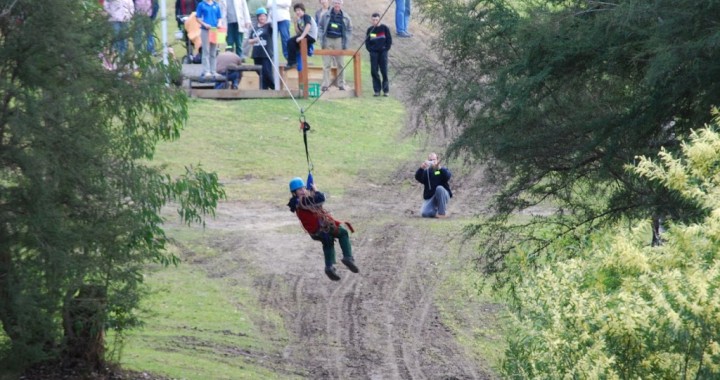
When I began as a youth worker camps and daytrips were a staple of almost every youth service. A bit of a wrestle at a Friday night youth group wasn’t unheard of. Leaving a male youth worker alone with a group of young people was seen as ok. I remember going on a snow camp where the campsite we were staying at unexpectedly ended up with a mud pit after a torrential downpour. That mud pit ended up as our very own wrestling ring and young people and leaders alike wrestled to their hearts content and washed it off with a dip in the local dam. 
 
 
In our current risk averse way of doing things we are at-risk of doing nothing to support our young people lest we end up getting in trouble. Its a vicious cycle. Youth work was innovative and ahead of the curve. Today it seems sterile and unimpressive. Aside from a few canny outlaws the whole service sector is becoming bland.
 

Twenty years from now you will be more disappointed by the things that you didn’t do than by the ones you did do. So throw off the bowlines. Sail away from the safe harbor. Catch the trade winds in your sails. Explore. Dream. Discover.

Mark Twain

Youth workers are innovators! We improvise, adapt and overcome. We have big ideas and some of them require risk. Calculated risks can bring great rewards. I don’t want any youth worker I work with to get twenty years into their career only to look back and believe they haven’t achieved. I want explorers. I want dreamers and I want discoveries. We are in one of the most exciting times known to the human race and if our work is bland we have no one but ourselves to blame. Make your work exciting!  
Aaron Garth

Aaron Garth

Aaron Garth is a Melbourne-based youth worker, social worker, and mental health practitioner with over two decades of experience supporting young people across Australia. As Executive Director of Ultimate Youth Worker, he leads a team dedicated to training, coaching, and developing professionals in the youth sector. A graduate of RMIT University and current PhD candidate, Aaron has worked across some of the most challenging areas of youth services — from homelessness and mental health to drug and alcohol outreach and residential care. He is a sought-after speaker, educator, and advocate for a more professionalised youth workforce, and has taught at institutions including RMIT, Chisholm Institute, and Eastern College Australia. Aaron's work is driven by a simple belief: when youth workers are better supported, young people get better outcomes.

More Posts - Website

Follow Me:Add me on FacebookAdd me on LinkedInAdd me on PinterestAdd me on YouTubeAdd me on Instagram