Well there are only three more posts left in this series. We have been building an understanding of the core components of a mental state exam so that we can support our young people as best we can. This week I was speaking with a youth worker in one of Victoria’s largest Christian denominations about a mental health conference he was at. I was reminded about how important it is for all youth workers to have a strong understanding of mental health. So far we have discussed how a young persons appearance,behaviour,speech and language, mood and affect and their thought process and content can provide indicators as to their mental state. Today we discuss how a young persons thought content can provide insight into their current mental health status.
Today we look at perception. Perception in the broadest sense of the world is how we sense the world through our five major sense: sight, touch, taste, smell and hearing. The three categories of perceptual disturbance are hallucinations, pseudohallucinations and illusions.
A hallucination is defined as a sensory perception in the absence of any external stimulus, and is experienced objectively by the young person eg. they see it and you don’t. Hallucinations occur in any of the five senses, although auditory (hearing) and visual (sight) hallucinations are the most frequently observed. Auditory hallucinations are typical of psychosis and symptoms such as ‘voices talking about the young person’ and ‘hearing one’s thoughts spoken aloud’ are indicative of schizophrenia, whereas second-person hallucinations such as ‘voices talking to the young person threatening or insulting or telling them to commit suicide’, may be symptomatic of psychotic depression or schizophrenia. Visual hallucinations are more likely suggestive of organic conditions such as epilepsy, drug intoxication or drug withdrawal.
An illusion is defined as a false sensory perception in the presence of an external stimulus, in other words a distortion of a sensory experience, and may be recognized as such by the subject. The best example I can think of is mime artist or the visual illusions of Giuseppe Arcimboldo. The old adage that your eyes play tricks on you is no more true than when we think of illusions. Illusions in themselves are not necessarily an indicator of mental illness but could mean a physical disorder or intoxication.
One of Giuseppe Arcimboldo’s illusions
A pseudohallucination is experienced in an internal or subjective space such as ‘voices in my head’ and is regarded as akin to fantasy. Other sensory abnormalities include a distortion of the young persons sense of time, for example déjà vu, or a distortion of the sense of self (depersonalization) or sense of reality (derealization). These symptoms could be suggestive of dissociative disorders, epilepsy or brain damage.
Aaron Garth is a Melbourne-based youth worker, social worker, and mental health practitioner with over two decades of experience supporting young people across Australia. As Chief Executive Officer of Ultimate Youth Worker, he leads a team dedicated to training, coaching, and developing professionals in the youth sector.
A graduate of RMIT University and current PhD candidate, Aaron has worked across some of the most challenging areas of youth services — from homelessness and mental health to drug and alcohol outreach and residential care. He is a sought-after speaker, educator, and advocate for a more professionalised youth workforce, and has taught at institutions including RMIT, Chisholm Institute, and Eastern College Australia.
Aaron's work is driven by a simple belief: when youth workers are better supported, young people get better outcomes.
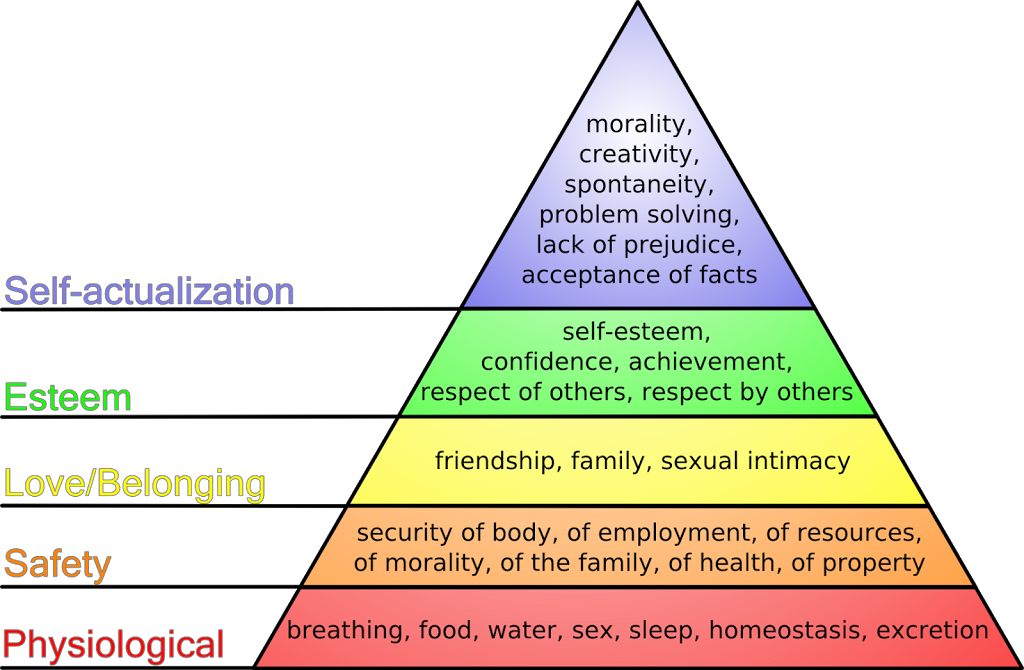
Not long after starting my youth work career I went back home to spend a weekend at my mums house. my youngest brother was having a party and after chatting with a few of his mates a pattern started to emerge…they all hated school. The stories all seemed the same, struggling at home, lost in classes and teachers who just seemed to get on their case. Most of these kids were lucky if the bottom rung of Maslow’s hierarchy of needs was met in their lives and many of the teachers were asking them to work in the self-actualisation region.
Maslow’s hierarchy of needs
The more I listened to my brothers mates, the more I was appalled at the education system and the teachers lack of empathy. Conversely, at the time I had a number of friends who were studying education so I began a witch hunt. Teachers were evil I just needed the proof. My own dislike of school and my own run ins with teachers who knew about as much about adolescent welfare as I know about thermodynamics (which to be sure is only how to spell it) may have been clouding my judgement. As my investigation progressed however I began to realise that it is not teachers fault that they seem empathetically impotent, their course structures do not really teach them anything about the welfare of their students.
My friends who completed their secondary teaching degrees had one subject on student wellbeing. Most of them either slept, drank or played snooker through the classes and those that did attend found that the content was unhelpful when it came to actually helping their students. As people who are spending 30+ hours a week with young people it blew my mind to realise how little they are taught about young people in their courses. Realistically if you don’t do electives about young people you would only have two subjects which relate to youth development and wellbeing.
A couple of years later I got to go to the school my brother and his mates attended to do a guest talk. As a former student there who had finally gotten life in order I was asked to inspire young minds to greatness. All I could think was it would have been great if any of my teachers could have inspired me to greatness…instead they inspired me to drop out of secondary school. I did my best and spoke like a true salesman for half an hour and at the end the students had a chance to chat with me. Many of the students were in similar situations to my brothers mates and all of the ones I spoke with told me that their teachers had no clue about their circumstances outside of school.
When I got home I reflected on that night years ago and something one of my brothers mates said after I tore him a new one for thinking of dropping out of school. He said “I %^&*ing HATE school: I’m going to be a drug dealer!” You know what…that’s exactly what he did. More and more these days schools have become the central welfare point for young people and their families, however the people they are turning to have minimal training and resources at best. This does pose more difficult issues for youth workers in schools.
As the most trained and equipped people to deal with the issues young people are facing, school based youth workers have a huge role to fill. We need to be supports and referral points for young people, supports and trainers for teachers and most of all advocates for the young people while they are going through their storm and stress. We need to give teachers their dues, they are great educators, and we need to help them gain a better understanding of adolescents and how to improve their welfare.
Aaron Garth is a Melbourne-based youth worker, social worker, and mental health practitioner with over two decades of experience supporting young people across Australia. As Chief Executive Officer of Ultimate Youth Worker, he leads a team dedicated to training, coaching, and developing professionals in the youth sector.
A graduate of RMIT University and current PhD candidate, Aaron has worked across some of the most challenging areas of youth services — from homelessness and mental health to drug and alcohol outreach and residential care. He is a sought-after speaker, educator, and advocate for a more professionalised youth workforce, and has taught at institutions including RMIT, Chisholm Institute, and Eastern College Australia.
Aaron's work is driven by a simple belief: when youth workers are better supported, young people get better outcomes.
This morning I got to have breakfast with one of my amazing mates. Over the healthiest option I could care to find (a double shot latte and a three stack of pancakes and maple syrup) we discussed the ins and outs of the youth sector. Particularly we spoke about the stress that comes with the job. We also spoke of the ability that some roles have to help youth workers burnout. anecdotally we believed that the average youth worker lasts two years and if you are in a role like resi-care you are lucky to last six months.
After we had chewed the fat for a while mainly bitching about how hardly done by we are as youth workers our attention turned to the organisations who employ us. There is a duty of care that organisations owe to their staff which we at Ultimate Youth Worker believe is being allowed to lapse. Many years ago unions fought for the eight hour work day. In my career I have never worked an eight hour day. Sleepover shifts circumvent OH&S legislation. Staff are exposed to vicarious trauma and poorly debriefed. Youth workers are forced to work within bureaucratic frameworks that require more work and less reflection.
The average youth worker drowns in bureaucracy and its worse if they don’t look after their self care
Many of the staff that we come across at Ultimate Youth Worker want to do their job to the best of their ability and they all say that they could use more support from their managers. Most managers we meet would love to support their staff but are drowning in paperwork and their own lack of support to be able to help anyone. Then when all hell breaks loose we crucify the staff and managers for not doing their job right. If there is not time to reflect and maintain self care what do we expect!!!
Organisations that value their staff develop them as much as they develop their young people. Managers carve out time for professional development, supervision and the overall welfare of their staff. Organisations actively develop policy and procedures to support their staff to do their job effectively and without to much vicarious trauma. Organisations REQUIRE professional development of their staff and demand that their managers support their staff as whole people not just staff.
We don’t get paid enough to do the job and get treated like crap. Organisations need to take responsibility for their staff wellbeing, for sustainability of the sector and for their own reputation. Funding bodies are not immune from their responsibility either!
Aaron Garth is a Melbourne-based youth worker, social worker, and mental health practitioner with over two decades of experience supporting young people across Australia. As Chief Executive Officer of Ultimate Youth Worker, he leads a team dedicated to training, coaching, and developing professionals in the youth sector.
A graduate of RMIT University and current PhD candidate, Aaron has worked across some of the most challenging areas of youth services — from homelessness and mental health to drug and alcohol outreach and residential care. He is a sought-after speaker, educator, and advocate for a more professionalised youth workforce, and has taught at institutions including RMIT, Chisholm Institute, and Eastern College Australia.
Aaron's work is driven by a simple belief: when youth workers are better supported, young people get better outcomes.
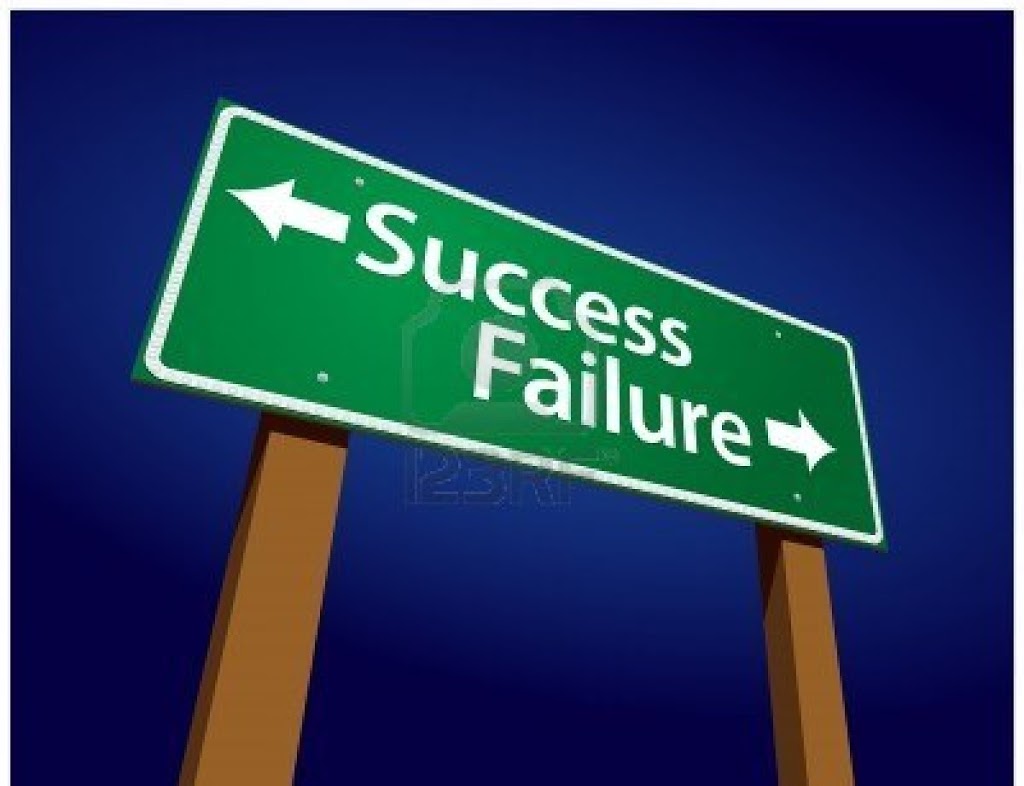
Success is the ability to go from failure to failure without losing your enthusiasm. – Sir Winston Churchill
Starting a new business comes with many risks and hopefully a number of rewards. Over the past twelve months we have definitely felt this at Ultimate Youth Worker. All of our staff got on board because we saw the need for more support in the youth sector. We have helped dozens of youth workers and their organisations to develop a more supportive environment in this time. But it was not all success!
We failed more times than we care to admit. We lost clients because of a lack of frameworks. We spent more time learning about business management than doing our business. We left, lost or were encouraged to leave well paying jobs to get Ultimate Youth Worker off the ground. Our first six months we made a total profit of $80. But we were always enthusiastic.
So often we work with young people who have failed more times than they can even remember. They are downtrodden and feel about two feet tall and one more failure might just tip them over the edge. Our job as youth workers is keep them enthused. In their enthusiasm their wildest success will finally come.
Aaron Garth is a Melbourne-based youth worker, social worker, and mental health practitioner with over two decades of experience supporting young people across Australia. As Chief Executive Officer of Ultimate Youth Worker, he leads a team dedicated to training, coaching, and developing professionals in the youth sector.
A graduate of RMIT University and current PhD candidate, Aaron has worked across some of the most challenging areas of youth services — from homelessness and mental health to drug and alcohol outreach and residential care. He is a sought-after speaker, educator, and advocate for a more professionalised youth workforce, and has taught at institutions including RMIT, Chisholm Institute, and Eastern College Australia.
Aaron's work is driven by a simple belief: when youth workers are better supported, young people get better outcomes.
So we are a little over half way in this series. We have been developing an understanding of the core components of a mental state exam so that we can support our young people as best we can. This week I was speaking with a youth worker in one of Victoria’s largest Christian denominations about a mental health conference he was at. I was reminded about how important it is for all youth workers to have a strong understanding of mental health. So far we have discussed how a young persons appearance,behaviour,speech and language, and their mood and affect can provide indicators as to their mental state. Today we discuss how a young persons thought content can provide insight into their current mental health status.
A prime example of maladaptive thought content and process
Thought process
A young person’s thought process can tell you a lot about them. The quantity, tempo and form of thought are keys to understanding the process. A persons thought process can’t be directly observed. It can only be described by or inferred from a young persons speech. Some people may experience their thoughts coming so rapid that their speech seems incoherent. Alternatively an individual may have inhibited thinking, in which thoughts seem to progress slowly with few associations. Are they all over the place or are they clear and consistent. do they have few thoughts or do they keep returning to the same thoughts.
Does the young person include a great deal of irrelevant detail or make frequent diversions, but remains focused on the broad topic. Flight of ideas is typical of mania. On the other hand, young people with depression may have slow or inhibited thinking. Poverty of thought is one of the symptoms of schizophrenia, and may also be a feature of severe depression.
Thought content
When we think of thought content we would describe a young persons delusions, overvalued ideas, obsessions, phobias or preoccupations. To draw out any abnormalities of thought content we need to explore a young persons thoughts in an open-ended conversational manner with regard to their intensity, salience, the emotions associated with the thoughts, the extent to which the thoughts are experienced as one’s own and under one’s control, and the degree of belief or conviction associated with the thoughts.
A delusion is a core feature of psychotic disorders. A young persons delusions may be described as persecutory or paranoid, delusions of reference, grandiose, erotomanic, delusional jealousy or delusional misidentification. Delusions may be mood-congruent (the delusional content is in keeping with the mood), or mood-incongruent (delusional content not in keeping with the mood).An overvalued idea is a false belief that is held with conviction but not with delusional intensity. Hypochondriasis is an overvalued idea that one is suffering from an illness and people with anorexia nervosa may have an overvalued idea of being overweight.
Preoccupations are thoughts which are not fixed, false or intrusive, but have an undue prominence in the person’s mind. Clinically significant preoccupations would include thoughts of suicide, homicidal thoughts, suspicious or fearful beliefs associated with certain personality disorders, depressive beliefs (for example that one is unloved or a failure), or some types of anxiety and depression. A Mental State Exam contributes to risk assessments of young people by including a thorough exploration of any suicidal or hostile thought content. Assessment of suicide risk includes detailed questioning about the nature of the person’s suicidal thoughts, belief about death, reasons for living, and whether the person has made any specific plans to end his or her life.
Aaron Garth is a Melbourne-based youth worker, social worker, and mental health practitioner with over two decades of experience supporting young people across Australia. As Chief Executive Officer of Ultimate Youth Worker, he leads a team dedicated to training, coaching, and developing professionals in the youth sector.
A graduate of RMIT University and current PhD candidate, Aaron has worked across some of the most challenging areas of youth services — from homelessness and mental health to drug and alcohol outreach and residential care. He is a sought-after speaker, educator, and advocate for a more professionalised youth workforce, and has taught at institutions including RMIT, Chisholm Institute, and Eastern College Australia.
Aaron's work is driven by a simple belief: when youth workers are better supported, young people get better outcomes.
In youth work we study youth development, theories of participation and many others that help us to work with young people in every situation we find ourselves in. Our theories often focus on the strengths of our young people to overcome the adversities they face. We develop our working styles around the strengths of our young people to provide a solid foundation to build relationship and work towards the future. Teachers also use their theory base to work on developing young people.
Youth work in the schooling system
One of the most common theories that teachers use is called scaffolding. Scaffolding was developed by Russian Psychologist Lev Vygotsky in the early years of last century. Vygotsky believed that all understanding is built on the previous learnings of a person. That a process must be undertaken to build new knowledge on top of old knowledge in the same way we build a scaffold. Vygotsky also believed in the Zone of Proximal Development. A space between what a young person can do by themselves and what they could do with the help of an adult. These two theories have permeated educational systems throughout the world for over forty years.
Another theorist who has permeated the education system is Ivan Ilich, an Austrian philosopher, Roman Catholic priest, and social commentator on areas such as medicine and education. In 1971 his book “Deschooling Society” gave a radical slap in the face to institutional education and how it has has limited the learnings of young people in society. Instead he posits self-directed learning as a better option.
A number of other theories permeate the education system and depending on where in the world you are will depend on the theory that is at the forefront of educational practice. Using the relationships you have made ask a teacher or principal to give you an overview of the theoretical approaches that they use. If you have an understanding of the theories which underpin their work then you can work with them to develop a model of practice in their school which works for both parties.
Aaron Garth is a Melbourne-based youth worker, social worker, and mental health practitioner with over two decades of experience supporting young people across Australia. As Chief Executive Officer of Ultimate Youth Worker, he leads a team dedicated to training, coaching, and developing professionals in the youth sector.
A graduate of RMIT University and current PhD candidate, Aaron has worked across some of the most challenging areas of youth services — from homelessness and mental health to drug and alcohol outreach and residential care. He is a sought-after speaker, educator, and advocate for a more professionalised youth workforce, and has taught at institutions including RMIT, Chisholm Institute, and Eastern College Australia.
Aaron's work is driven by a simple belief: when youth workers are better supported, young people get better outcomes.
For a long time now there has been a conversation going on in youth work. A professional/ para-professional dichotomy which many believe is subversive to the current push for professionalization. A conversation which preaches resistance to the neo-liberal free market push which seeks qualification over experience and cheap labour over appropriate supports.
The issue with requiring professionalism of a vocation is one which is being faced by social work in Australia and has been faced by psychologists. One of the issues which has and will continue to rear its head is if youth workers professionalise they will require higher pay. Higher pay in a free market means less workers. Less workers mean less appropriate service provision. Another issue is that of training and qualification. With over 75% of the current youth work employ holding a two year diploma or less where do we set the bar. The youth workers association in Victoria requires a bachelor degree for full membership. The Department of Human Services however only requires a Certificate IV for its youth work staff.
At Ultimate Youth Worker we believe that the professionalisation debate is currently doing more harm than good to youth work. In the storm and stress that is youth work we need all the boots on the ground that we can possibly muster. At Ultimate Youth Worker we see the current debate thinning out the herd. It makes qualifications the epitome of the profession and damns anyone else. Youth work throughout history has bucked the trends and required youth workers to think outside the square. The current push for professionalization places us firmly in the square.
Any dead fish can float with the current, It takes a live one to swim against it. We need a new paradigm to the idea of current professionalization ideology. We need well trained, well supported qualified youth workers! What we don’t need is a broad swathe approach to attaining this. We need a whole lot more practical wisdom in youth work. We need a whole lot more passion. We need a whole lot more accountability. What we do not need more of is control in the form of restricting sector size. We need to set ourselves apart from the pack.
What do you think? Leave us a comment below or post a comment on facebook and twitter.
Aaron Garth is a Melbourne-based youth worker, social worker, and mental health practitioner with over two decades of experience supporting young people across Australia. As Chief Executive Officer of Ultimate Youth Worker, he leads a team dedicated to training, coaching, and developing professionals in the youth sector.
A graduate of RMIT University and current PhD candidate, Aaron has worked across some of the most challenging areas of youth services — from homelessness and mental health to drug and alcohol outreach and residential care. He is a sought-after speaker, educator, and advocate for a more professionalised youth workforce, and has taught at institutions including RMIT, Chisholm Institute, and Eastern College Australia.
Aaron's work is driven by a simple belief: when youth workers are better supported, young people get better outcomes.
Welcome to another Monday Ultimate Youth Workers. I was recently read about the amazing work of Dr. Martin Luther King Jr. in the turbulent times of the 1960’s. There is something about a man who is thrown in to the deep end of such a massive issue that not only swims but tows a nation behind him. If that doesn’t motivate you nothing does.
One of Dr. King’s quotes that I read was, “Take the first step in faith. You don’t have to see the whole staircase, just take the first step”. Sometimes we don’t know what step two or three look like. We just have to take a leap. When Dr. King and the other brave residents who in 1955 Boycotted the Montgomery Bus for 385 days I am sure they didn’t think on day one that they would be there for over a year.
When Dr. King gave his “I have a dream” speech I don’t think that he saw the civil rights movement stalling after his death. I think he saw a moment in time where someone had to stand in the breach.
In his final days in 1968 Martin Luther King Jr. spoke with an authority and wisdom that some people say could only have come from a prophetic knowing that the end was near. Most of the time we do not know how our journey will end we just need to take the first step in faith and hope all will work itself out in the wash.
What is your first step in faith going to look like?
Aaron Garth is a Melbourne-based youth worker, social worker, and mental health practitioner with over two decades of experience supporting young people across Australia. As Chief Executive Officer of Ultimate Youth Worker, he leads a team dedicated to training, coaching, and developing professionals in the youth sector.
A graduate of RMIT University and current PhD candidate, Aaron has worked across some of the most challenging areas of youth services — from homelessness and mental health to drug and alcohol outreach and residential care. He is a sought-after speaker, educator, and advocate for a more professionalised youth workforce, and has taught at institutions including RMIT, Chisholm Institute, and Eastern College Australia.
Aaron's work is driven by a simple belief: when youth workers are better supported, young people get better outcomes.
So far in this series we have been developing an understanding of the core components of a mental state exam. So far we have discussed how a young persons appearance,behaviour,speech and language can provide indicators as to their mental state. Today we discuss how a young persons mood and affect can provide insight into their current mental health status.
Mood
Mood is described using a young person’s own words. Happy, sad, angry, elated, anxious or apathetic. Many young people may be unable to describe their subjective mood state. Throughout my career I have seen a marked decrease in emotional intelligence in our society. It may take some work to flesh out how a young person feels. There are a number of resources to help young people to articulate their emotions, my personal favourites are mood dudes and the stones. In essence Mood is how young people see themselves in their own opinion.
Emotional intelligence in a squeeze ball
The key to remember about mood is that it is subjective. The young person is the master of their own emotional state. Only they truly know what is going on inside.
Affect
Affect is noted by us when we observe the apparent emotion conveyed by the person’s nonverbal behaviour. Affect may be described as appropriate or inappropriate behaviour to the current situation, and as congruent or incongruent with their thought content. For example, a young person who shows a neutral affect when describing a very distressing experience such as family violence would be described as showing incongruent affect, which might suggest PTSD. The intensity of the young persons affect may be conveyed as normal, blunted, exaggerated, flat, heightened or overly dramatic.
A flat or blunted affect can be associated with schizophrenia, depression or post-traumatic stress disorder. Heightened affect might suggest mania, excitement or anxiety and an overly dramatic or exaggerated affect might suggest certain personality disorders. A young person may show a full range of affect, or a wide range of emotional expression during your assessment. They may move from heightened to blunted or they may only show a single affect.
The key to remember about affect is that it is objective. It is what you observe about a young person. The key here is to be clear about what you are observing and why you believe it means what you believe. For example, “Aaron appeared sad. He spoke slowly, kept eye contact on the ground and cried“.
Aaron Garth is a Melbourne-based youth worker, social worker, and mental health practitioner with over two decades of experience supporting young people across Australia. As Chief Executive Officer of Ultimate Youth Worker, he leads a team dedicated to training, coaching, and developing professionals in the youth sector.
A graduate of RMIT University and current PhD candidate, Aaron has worked across some of the most challenging areas of youth services — from homelessness and mental health to drug and alcohol outreach and residential care. He is a sought-after speaker, educator, and advocate for a more professionalised youth workforce, and has taught at institutions including RMIT, Chisholm Institute, and Eastern College Australia.
Aaron's work is driven by a simple belief: when youth workers are better supported, young people get better outcomes.
In the early days of my career I had the privileged of being a youth worker that went into our local high school. I was employed by my local church as a schools worker and spent much of my time running lunchtime programs. I spent much of my time building relationships with teachers, support staff and principals. I was in a lucky position. Many of my friends across the world had many more restrictions placed on them when working with and in schools.
One of the subjects in my Bachelor Degree was youth work and the schooling system in the course I learnt a lot about the way education has been framed through history and how it is placed in the current context. I also learnt that to be effective in the system that sometimes you had to work around the system. Honestly, it was one of my least favoured subjects. It really did not teach me how to work in the schooling system.
As youth workers we are guests in the education system. We are seen as providers of non-formal education… life skills and the like. When young people come to us they are not getting a qualification or an understanding of the three R’s (does that mean teachers can’t spell???). Instead we look after the other stuff. We develop the personal.
It is a sacred spot to work in the education system and we must honour the opportunity. The only way it can work is if the relationships are solid.
What do you think? Leave us a comment below or post a comment on facebook and twitter.
Aaron Garth is a Melbourne-based youth worker, social worker, and mental health practitioner with over two decades of experience supporting young people across Australia. As Chief Executive Officer of Ultimate Youth Worker, he leads a team dedicated to training, coaching, and developing professionals in the youth sector.
A graduate of RMIT University and current PhD candidate, Aaron has worked across some of the most challenging areas of youth services — from homelessness and mental health to drug and alcohol outreach and residential care. He is a sought-after speaker, educator, and advocate for a more professionalised youth workforce, and has taught at institutions including RMIT, Chisholm Institute, and Eastern College Australia.
Aaron's work is driven by a simple belief: when youth workers are better supported, young people get better outcomes.