The most exciting part about looking to the future is you can make it anything you want. You dream a dream in time gone by… and then you look towards the amazing future you have created. The hard part is going out and creating it. You actually have to spend time and resources in the pursuit of your dream. At Ultimate Youth Worker we have a dream to see youth workers be the best they can possibly be, and 2019 is the year that our dreams and yours collide!
You keep telling us that the support you receive in the sector is limited at best, most of you have not had a proper supervision session in the last year. You have told us that the training you attend has little to do with youth work and if it does its stuff you already know. You tell us that when poop hits the fan and you need critical incident debriefing you end up talking to psychologists that don’t understand the youth sector or the work you do. In short you have told us that you don’t feel supported to do the job.
You have told us that you love the work you do. If you were better supported, trained and cared for youth work would be the perfect job.
We have heard you and we are the organisation who is looking to meet all your needs. In 2019 we are focusing in on the support you need to be the best youth worker you can be.
Supervision
Around 90% of youth workers do not get adequate support and debriefing for the work we do. At minimum that is a one hour supervision session once a month. A space where you get to talk about how you are going, the work you are struggling with and the steps you need to take to become a better professional.
In 2019 you will be able to get external supervision from youth workers with over a decade of experience and holding masters degrees. You asked for individual supervisors who are qualified and experienced and you got it. You can gain individual or group supervision to meet the needs you have as a youth worker.
Training
We have been to more than our fair share of “professional development” over the years and quite honestly we want our money back from most of it. Dull, uninteresting, topics based at those with no knowledge of the sector, outdated, and most of all… boring!!! We have spoken to many of the youth workers in our community and the first few years of your career appear to be the most challenging.
To that end we have created our ‘Tier One‘ training for youth workers in their first few years of youth work. Much of this training is aimed at areas youth workers tell us they need more support in, and is built on the idea that you could do it to compliment a degree program.
There is a disappointing trend in the wider human services sector to leave critical incident debriefing to psychologists who have very little experience in the sector. While well meaning and highly qualified they don’t know youth work or the context youth workers work in. We have provided Critical Incident Debriefing for the last few years as a side to the main work of Ultimate Youth Worker. In 2018, we have been approached by a number of youth work organisations to provide debriefing for their youth workers. In 2019, we will provide this service as part of our core business of supporting youth workers.
Research
two
Research is more important now in the youth and community services sector than ever before. Evidence based practice is here to stay and if you want to meet the challenges of this century and all its funding issues you need good research. Ultimate Youth Worker researchers come from a diversity of disciplinary backgrounds including social work, psychology, youth work and education. Our research approaches like our staff are diverse and complementary to the sector. The types of research and practice development we undertake have included:
Action research
Collaborative research
Development of models of best-practice
Evaluation
Face-to-face and online training modules
Implementation science
Population studies
Qualitative and quantitative studies
Youth participation
Our staff can help you with everything from literature reviews to major projects. Whatever your need contact us for a confidential discussion as to your requirements.
Podcast
The Ultimate Youth Worker Podcast is the leading youth work podcast on the internet. Expert interviews, mini trainings, and intimate behind-the-scenes secrets from our team of expert youth workers… all tied together by our mission to make EVERYTHING you listen to as actionable as possible. We guarantee that you will find this podcast the most helpful tool in your youth work toolkit.
In 2019 we will be reaching out around the world we bring together the most experienced practitioners, the most published academics and the most renowned policy makers to help us to gain a depth of wisdom that will make us all Ultimate Youth Workers. Bringing evidence based practices, journal articles, books and the best practical wisdom together to inform our interviews you get the most up to date thinking in the sector… all at the touch of your favourite podcast player.
Aaron Garth is a Melbourne-based youth worker, social worker, and mental health practitioner with over two decades of experience supporting young people across Australia. As Chief Executive Officer of Ultimate Youth Worker, he leads a team dedicated to training, coaching, and developing professionals in the youth sector.
A graduate of RMIT University and current PhD candidate, Aaron has worked across some of the most challenging areas of youth services — from homelessness and mental health to drug and alcohol outreach and residential care. He is a sought-after speaker, educator, and advocate for a more professionalised youth workforce, and has taught at institutions including RMIT, Chisholm Institute, and Eastern College Australia.
Aaron's work is driven by a simple belief: when youth workers are better supported, young people get better outcomes.
In this episode of the Ultimate Youth Worker Podcast Aaron speaks with Jessy Hall, Community Engagement Coordinator about his work with Ultimate Youth Worker focussing on building our community and a few awesome adventures coming his way.
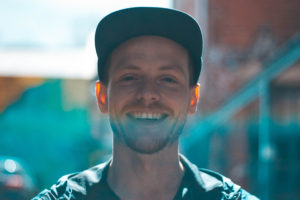
Let me introduce you to Jessy Hall. Jessy is a young man born on Wurundjeri country in Melbourne, Victoria. Jessy holds a Diploma in Youth Work and a Certificate IV in Child, Youth and Family Intervention.
Jessy has been working as a youth worker since 2014 in a variety of different roles. His passion for youth work began whilst volunteering on a YMCA program for young indigenous leaders
Jessy is the Community Engagement Coordinator at Ultimate Youth Worker. Writing articles, joining the podcast, engaging with members of the Ultimate Youth Worker community and generally being an all round nice guy, Jessy is our go to staff member for turning our frowns upside down. If you want to know about the goings on in our community then our community engagement coordinator is the go to guy.
Jessy has just embarked on the journey of a lifetime, to drive around Australia in a four wheel drive with his partner. He plans to work along the way and explore the different opportunities available for youth workers in Australia. During his trip Jessy will add videos, pictures and podcast of the amazing youth workers he comes across. If you have a great project that you are involved with let us know and Jessy might be able to pop in for a visit.
Aaron Garth is a Melbourne-based youth worker, social worker, and mental health practitioner with over two decades of experience supporting young people across Australia. As Chief Executive Officer of Ultimate Youth Worker, he leads a team dedicated to training, coaching, and developing professionals in the youth sector.
A graduate of RMIT University and current PhD candidate, Aaron has worked across some of the most challenging areas of youth services — from homelessness and mental health to drug and alcohol outreach and residential care. He is a sought-after speaker, educator, and advocate for a more professionalised youth workforce, and has taught at institutions including RMIT, Chisholm Institute, and Eastern College Australia.
Aaron's work is driven by a simple belief: when youth workers are better supported, young people get better outcomes.
The height of professional youth work in Australia is the humble degree program. Three years of your life where you get to learn all the ins and outs of the profession of youth work in Australia. There are currently six youth work degrees in Australia, each with their own distinctive points.
If you are considering studying a youth work degree in Australia then you need to weigh up the pros and cons. A helpful first step is our podcast “How do I become a youth worker“. Another point to make is that all youth work degrees in Australia a regulated by the Tertiary Education Quality Standards Agency (TEQSA) which assures the quality of Australia’s higher education sector. All the courses have had to meet rigorous and exacting standards to be able to be endorsed including a review by industry experts and academics. So whichever course you choose, know that you are getting a comprehensive course which has been developed to meet the highest standards of education.
So here is a breakdown of the courses (in alphabetical order) which are available to you if you are after youth work degrees Australia:
Australian Catholic University
Australian Catholic University runs a Bachelor of Youth Work from their campus in Melbourne. This is what they say about the course:
Youth Work is an exciting and challenging career involving working for and with young people in a variety of fun and rewarding ways. The key thing that differentiates youth workers from other community service workers is that young people are their primary concern. Youth work acknowledges the social and cultural environments within which young people live and helps foster young people’s emotional and social development.
In addition to the core youth work units, students can choose between minors in counselling or sociology. You will receive valuable practical experience in working with young people, in addition to the theoretical insights and practical competencies needed for dealing with the needs, problems and aspirations of young people.
Eastern College Australia runs a Bachelor of Applied Social Science (Youth Work) from their campus in Wantirna in Melbourne’s Eastern Suburbs. This is what they say about the course:
Youth workers improve the life outcomes for young people. We encourage their personal and social development while helping them to become active citizens.
In our Bachelor of Applied Social Science (Youth Work), you will gain a strong foundation for working with young people. You will gain specialist knowledge to support young people experiencing difficulties from a trauma informed care perspective. To get you ready for a challenging and rewarding career you will spend 70 days on professional work placements.
Our degree is taught from a Christian worldview perspective, and is delivered by experts in the field of youth work. You will receive guidance from specialist youth workers and experienced sociologists, community development workers, social workers and other relevant areas. You will graduate with the knowledge, skills and experience to support young people as a reflective practitioner.
Edith Cowan University runs a Bachelor of Youth Work from their campus in Joondalup, Western Australia. This is what they say about the course:
Provides a comprehensive program of study in the essentials of youth work as an embedded practice within community work. The course includes specialist units in youth work, plus complementary studies in community work.
Students can choose complementary areas of study such as Aboriginal and Intercultural Studies, Addiction Studies, Community Work, Criminology, Psychology, Counselling, Visual Arts, Media and Communication, Events Management, and Outdoor Adventure.
Tabor runs a Bachelor of Applied Social Science (Youth Work) from their campuses in Adelaide and Perth. This what is they say about the course:
Young people are actively involved in shaping our world. So, what will this world look like for all of us in the future? How will life be better for citizens of the next century? The Tabor Bachelor of Applied Social Science (Youth Work) is developed around a central, optimistic ideology – that young people enrich society. Such enrichment requires unity and collaboration. Human experience is fundamentally relational and Tabor believes that any society is made better by the presence of multiple voices.
The Tabor program is designed to promote the critical need for a collective voice in shaping our future world. Play at online casinos here. This belief, grounded in the social sciences and our own spiritual values, drives us to play a role in the ongoing struggle for justice and to help young people excel in an interconnected society.
RMIT University runs a Bachelor of Youth Work and Youth Studies from their campus in Melbourne’s CBD. This is what they say about the course:
The Bachelor of Youth Work and Youth Studies explores complex issues affecting at-risk youth, such as homelessness, radicalisation, poverty and mental health. It encourages critical debate and investigation of youth in relation to space, digital landscapes, culture, religion, family and the law.
The role of a youth worker is diverse, with many challenging and rewarding career opportunities. This program aims to examine and foster the environments in which all young people can thrive and feel confident, connected and safe.
Victoria University runs a Bachelor of Youth Work from their campus in Melbourne’s Footscray Park Campus and recently in NSW. This is what they say about the course:
In our youth work degree, you’ll learn to help young people develop through activities that are enjoyable, challenging and educational.
You’ll graduate with:
a solid professional foundation for working with young people
specialist knowledge to support disadvantaged groups
clarity on the services available to teenagers and young adults
Can we suggest that if you are in youth work or are looking to be a youth worker and you want to be in the sector for more than a couple of years then you need to have a youth work degree in Australia. The knowledge, practice wisdom and experience you gain will hold you in great stead for many years. Whichever degree you choose know that you are going to be learning from the best in the sector.
Remember that each of these degrees have their own take on how to do youth work, but the core business of working with young people to encourage, empower and engage young people is the same.
Aaron Garth is a Melbourne-based youth worker, social worker, and mental health practitioner with over two decades of experience supporting young people across Australia. As Chief Executive Officer of Ultimate Youth Worker, he leads a team dedicated to training, coaching, and developing professionals in the youth sector.
A graduate of RMIT University and current PhD candidate, Aaron has worked across some of the most challenging areas of youth services — from homelessness and mental health to drug and alcohol outreach and residential care. He is a sought-after speaker, educator, and advocate for a more professionalised youth workforce, and has taught at institutions including RMIT, Chisholm Institute, and Eastern College Australia.
Aaron's work is driven by a simple belief: when youth workers are better supported, young people get better outcomes.
In todays post we have scoured the depths of Youtube to find some great videos with information to help you answer that annoying question ‘what drug is that?’ We have found info on some of the most common drugs that young people use and will link you in with some resources that you can use in your practice with young people.
The National Drug Strategy Household Survey 2016 gives some valuable information about drug use and patterns in Australia, we have used this as a guide to choosing which drugs to look at today. You can download the report in the link below:
Alcohol is the most widely used drug in Australia and for a lot of young people it can be a rite of passage and an important part of social inclusion in the adolescent years. With the adolescent years being an integral time for brain development, the neurotoxins in alcohol can potentially cause significant harm if not used safely. That is why it’s important to make sure that young people understand the effects of alcohol and are armed with as much information as possible to consume safely and look after each other when they do. Headspace have created this video and an information page that is easily digestible for young people, albeit a little cheesy. But who doesn’t like cheese.
Next up we have Cannabis, or Marijuana, Weed, Choof, or a myriad of other street names that we would all be familiar with. Also one of the most common drugs used within Australia, with under 30’s being the highest users. If you aren’t familiar with the below video, it was a $350,000 (failed) attempt by the NSW government to raise awareness about the effects of Cannabis on young people. Whilst it did provide us with a few laughs, there are questions about its’ effectiveness of informing young people.
The National Drug Strategy Household Survey 2016 states that young Australians (aged 14–24) first try cocaine at 19.2 years on average and it is the second most commonly used illegal drug after cannabis. So what is cocaine? In short, cocaine from its’ original form as a coca leaf, goes through about 8 processes and is mixed with at least 11 harmful and poisonous ingredients along the way, including gasoline and cement. It is also common to mix cocaine with other drugs including amphetamines. By the time cocaine reaches the street there is no way to know what has actually been used to mix and cut the drug. The above video gives a brief overview of what is in cocaine.
Methamphetamine is a man-made stimulant drug and it is a more potent form of the drug amphetamine. When it is in its crystalline form, the drug is called crystal meth or “ice”. Whilst both drugs cause similar symptoms, methamphetamine has longer-lasting and more harmful effects on the central nervous system. These characteristics make it a drug with high potential for widespread abuse. Consequently, it has been thrust in to the public eye on a large scale in recent times due to the devastating affect it can have on the individual and the wider community. In 2016, the Australian government launched the Nation Ice Action Strategy as an attempt to reduce the supply and demand and to increase education, prevention, treatment, support and community engagement. There entire strategy is funded for just under $300 million which will be divided amongst different programs working towards tackling both alcohol and drug problems Australia wide.
MDMA is the main ingredient in the party drug Ecstasy and the most common form of ecstasy used comes in either pill or tablet form. The average amount of MDMA in a “pill” is 70-125mg. When ingested, MDMA causes the release of the neurotransmitter serotonin, which plays a vital role in mood regulation and helps defend against mental health issues such as anxiety and depression. If our serotonin stores are depleted it can have a debilitating effect on our sleep, memory and learning, temperature regulation, and some social behaviour. In Australia, there is currently a big push for “pill testing” to become legal at music festivals as a harm reduction method. Due to the amount of unknown and potentially dangerous ingredients used in the production of MDMA, especially pills, this method is seen by some professionals as a step towards reducing drug related deaths and overdoses at festivals. For further information on this and MDMA visit the links below.
For further information on the 2016 National Drug Strategy Household Survey as well as a detailed summary of what you can do to support young people in accessing treatment options for alcohol and other drug related issues, read the article below by Ultimate Youth Worker Executive Director Aaron Garth.
Aaron Garth is a Melbourne-based youth worker, social worker, and mental health practitioner with over two decades of experience supporting young people across Australia. As Chief Executive Officer of Ultimate Youth Worker, he leads a team dedicated to training, coaching, and developing professionals in the youth sector.
A graduate of RMIT University and current PhD candidate, Aaron has worked across some of the most challenging areas of youth services — from homelessness and mental health to drug and alcohol outreach and residential care. He is a sought-after speaker, educator, and advocate for a more professionalised youth workforce, and has taught at institutions including RMIT, Chisholm Institute, and Eastern College Australia.
Aaron's work is driven by a simple belief: when youth workers are better supported, young people get better outcomes.
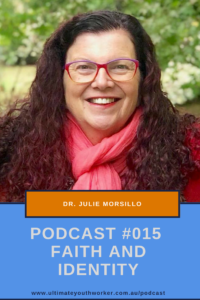
In this episode of the Ultimate Youth Worker Podcast ‘Faith and identity’ Aaron speaks with Dr. Julie Morsillo about her work focussing on youth identity development and what impact faith has on this.
Julie grew up in Sydney, spent a year in Papua New Guinea with her parents where she was an assistant primary school teacher and piano teacher. She went to the Bible College of South Australia in Victor Harbour. Then moving to Melbourne Julie has been involved in church leadership, a foster parent and cottage parent, she worked for the North-West One Stop Welfare Centre, Victoria Equal Opportunity Commission, Victorian Public Service Commissioner, International Commission of Jurists, International Red Cross and Whitley Theological College. Julie has also been an adjunct lecturer in psychology and community development at Victoria University, the counselling co-ordinator at the Asylum Seeker Resource Centre, researcher in the Public Interest team at Australian Psychological Society (APS) and has had her own private practice as a counselling psychologist and supervisor of provisional psychologists.
If you are wondering how to best implement what you hear on the podcast we think getting supervision is one of the best ways. Having the opportunity to critically reflect is the best tool for career longevity we know of. If you don’t currently have a supervisor who looks to grow you as a person and as a professional then its time to get an external supervisor. We can help with that!!!
Aaron Garth is a Melbourne-based youth worker, social worker, and mental health practitioner with over two decades of experience supporting young people across Australia. As Chief Executive Officer of Ultimate Youth Worker, he leads a team dedicated to training, coaching, and developing professionals in the youth sector.
A graduate of RMIT University and current PhD candidate, Aaron has worked across some of the most challenging areas of youth services — from homelessness and mental health to drug and alcohol outreach and residential care. He is a sought-after speaker, educator, and advocate for a more professionalised youth workforce, and has taught at institutions including RMIT, Chisholm Institute, and Eastern College Australia.
Aaron's work is driven by a simple belief: when youth workers are better supported, young people get better outcomes.
Where do you start when you need youth mental health resources?
We get asked all the time where the best resources are. Well finally we have created a resource just for youth workers. All the resources here have been check and tested by our team. These youth mental health resources are recommended by leading practitioners and organisations who work with young people from all over the world. We will continue to update this post so come back again and again to get more resources. All the links to the books take you directly to amazon so you can pick up a copy for yourself.
Purcell, R; Ryan, S; Scanlan, F; Morgan, A; Callahan, P, Allen, N and Jorm, A (2013) What works for depression in young people 2nd Ed. Melbourne, VIC, Australia. Beyondblue
Johnstone, M (2005) I Had a Black Dog.Sydney, NSW, Australia. Pan Macmillan Australia
BeyondNow Convenient and confidential, the BeyondNow app puts your safety plan in your pocket so you can access and edit it at any time. You can also email a copy to trusted friends, family or your health professional so they can support you when you’re experiencing suicidal thoughts or heading towards a suicidal crisis.
BeyondNow is free to download from the Apple Store or Google Play. If you don’t have a smartphone or would prefer to use your desktop or laptop, BeyondNow is also available to use online.
Aaron Garth is a Melbourne-based youth worker, social worker, and mental health practitioner with over two decades of experience supporting young people across Australia. As Chief Executive Officer of Ultimate Youth Worker, he leads a team dedicated to training, coaching, and developing professionals in the youth sector.
A graduate of RMIT University and current PhD candidate, Aaron has worked across some of the most challenging areas of youth services — from homelessness and mental health to drug and alcohol outreach and residential care. He is a sought-after speaker, educator, and advocate for a more professionalised youth workforce, and has taught at institutions including RMIT, Chisholm Institute, and Eastern College Australia.
Aaron's work is driven by a simple belief: when youth workers are better supported, young people get better outcomes.
Thanks for listening to me speak today. I really appreciated finding out a bit about your course and where you hope to go in your careers. At Ultimate Youth Worker we want to see every youth worker become the best they can be. Youth work can be hard, but it can also be extremely rewarding. The journey can be a difficult one without the right support. Here are a few of our most used tools for you to use as you need.
Our Core Values Audit is a simple tool to help you begin to work through your values. As youth workers we need to have a good understanding of what makes us tick. Our young people will learn what ticks us off very quickly. If we know ourselves then we will be less likely to snap when they push our buttons.
This Skills Audit makes you think about your future. Have a look at a couple of job descriptions for the roles you would like to have in five years time. Use the audit to find out what you need to do to get the job you want.
Qualifications_Depth and Breath is a tool to help you map out your career needs. Knowing what qualifications you have and what you need to do the job you want give you a clear path for education.
Great website resources
YACVic YERP: This is one of the best resources for practically doing youth participation work done by a bunch of experts from Victoria.
Detached Youth Work – Learning from the Street: James Ballantyne is a youth worker in the north of England who is very much on the coal face of Christian Youth Work. James helps Christian youth ministers understand the nuance of doing detached youth work.
Get a book
If you haven’t joined our facebook community yet get on board. It is one of the largest and most active youth work groups on the internet.
Check out the Ultimate Youth Worker Podcast for the most up to date research, tools and practice wisdom from the youth sector. Subscribe and get a fortnightly cast straight to your iTunes account, and if you like it give us a good rating.
Aaron Garth is a Melbourne-based youth worker, social worker, and mental health practitioner with over two decades of experience supporting young people across Australia. As Chief Executive Officer of Ultimate Youth Worker, he leads a team dedicated to training, coaching, and developing professionals in the youth sector.
A graduate of RMIT University and current PhD candidate, Aaron has worked across some of the most challenging areas of youth services — from homelessness and mental health to drug and alcohol outreach and residential care. He is a sought-after speaker, educator, and advocate for a more professionalised youth workforce, and has taught at institutions including RMIT, Chisholm Institute, and Eastern College Australia.
Aaron's work is driven by a simple belief: when youth workers are better supported, young people get better outcomes.
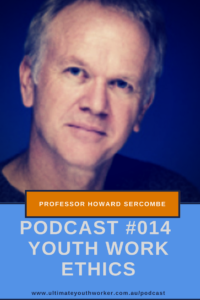
In this episode of the Ultimate Youth Worker Podcast ‘Youth Work Ethics’ Aaron speaks with Professor Howard Sercombe about his over two decade looking at and developing Youth Work Ethics documents.
Howard Sercombe is a leading youth work academic and practitioner. He has been a pioneer internationally in thinking about professional ethics for youth workers, and was involved in drafting codes of ethics for youth workers across Australia and in Scotland, England, South Africa, Zambia and New Zealand. His book, Youth Work Ethics has been widely influential. He has also published widely on the sociology of youth, including the construction of youth in the media and the emerging influence of neuroscience. He and his partner, broadcaster Helen Wolfenden, have just relocated to Sydney after ten years in Glasgow. He currently holds an honorary Professorship in Education with the University of Glasgow, and is doing primary parenting for Oscar, 4 and Timothy, nearly 2.
In todays episode Aaron and Howard speak about the development of the Fairbridge code of ethics used by many youth work associations worldwide. How did the code come in to being? Why do youth workers need to think about ethics? How can youth workers think ethically in their day to day practice?
Professional youth workers must think about the concept of ethical practice every day. Codes of Ethics are a significant way for the young people we serve to know what we can and cannot do. They also give youth workers a great framework for ethical decision making, professional supervision and reflective practice.
You can find more information about Howard on LinkedIn.
Today’s resources
Here are links to some of Howard’s latest articles that have bearing on todays podcast.
Aaron Garth is a Melbourne-based youth worker, social worker, and mental health practitioner with over two decades of experience supporting young people across Australia. As Chief Executive Officer of Ultimate Youth Worker, he leads a team dedicated to training, coaching, and developing professionals in the youth sector.
A graduate of RMIT University and current PhD candidate, Aaron has worked across some of the most challenging areas of youth services — from homelessness and mental health to drug and alcohol outreach and residential care. He is a sought-after speaker, educator, and advocate for a more professionalised youth workforce, and has taught at institutions including RMIT, Chisholm Institute, and Eastern College Australia.
Aaron's work is driven by a simple belief: when youth workers are better supported, young people get better outcomes.
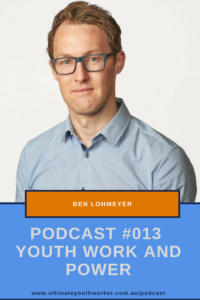
In this episode of the Ultimate Youth Worker Podcast Aaron speaks with Ben Lohmeyer from Tabor College of Higher Education about his research into youth work and power.
Ben Lohmeyer is a critical youth sociologist and youth worker. He is a PhD candidate at Flinders University and the Program Coordinator of the Bachelor of Applied Social Sciences (Youth Work) at Tabor. Ben’s research interests include: youth, governance, violence (personal, structural and neoliberal) and youth work practice.
Ben has worked across a range of youth work settings including alternative education, alternative accommodation and peace building. He has experience facilitating restorative justice processes, designing and facilitating peace building programs as well as grant and policy writing. Ben has is currently completing his PhD in Sociology at Flinders University focussing on youth and neoliberal violence.
In todays episode Aaron and Ben speak about youth work and power. How do youth workers recognise power issues? How do youth workers identify and manage power inequalities in the professional relationship? What can youth workers do when power is imposed by neoliberal structures? How can youth workers show genuine concern in the face of power imbalances? Youth workers must wrestle with the concept of power as it is a significant issue for the young people we serve and in doing youth work with integrity.
Aaron Garth is a Melbourne-based youth worker, social worker, and mental health practitioner with over two decades of experience supporting young people across Australia. As Chief Executive Officer of Ultimate Youth Worker, he leads a team dedicated to training, coaching, and developing professionals in the youth sector.
A graduate of RMIT University and current PhD candidate, Aaron has worked across some of the most challenging areas of youth services — from homelessness and mental health to drug and alcohol outreach and residential care. He is a sought-after speaker, educator, and advocate for a more professionalised youth workforce, and has taught at institutions including RMIT, Chisholm Institute, and Eastern College Australia.
Aaron's work is driven by a simple belief: when youth workers are better supported, young people get better outcomes.
Back in 2013 we wrote a post that dealt with how to approach youth work when you have a criminal record. You can read the original article here: Police records and public perception: Youth work with conviction. We had just had a number of students who had struggled to find placements due to their criminal record. These students were questioning if they had made a huge mistake. Basically they asked something like, “Aaron, will I ever be able to get a job in the sector or should I just quit now?” The unfortunate answer to this is it depends.
This week the Australian Community Workers Association wrote a post titled “Pursuing community work when you have a criminal record“. In the post, which we think is fantastic, the crew at ACWA have reiterated all the points we made almost five years ago. First, they cover what a security check reveals about you. Second, how employers will determine your suitability. Finally, how to handle your history during a job search. This article brings together some really great thoughts, particularly the final section. Being open and honest about your criminal record and what you have done to restore your community standing is a really important step. It helps employers to understand you and to make informed decisions as to your suitability for employment.
Unfortunately, there will always be people and organisations who see a criminal record and take that to mean you are unsuitable. These people and organisations will judge you without the opportunity for explanation or recourse. Don’t let this stop you. As a judge once told me, “we need youth workers who have experienced the other side and have come back from the edge”. These youth workers show that it is possible to restore community perception and make a great life for yourself.
ACWA end this very important piece by stating, “At the end of the day, we all make mistakes and deserve a chance to put our past behind us. The community services sector supports people to reach their potential and this is as true for aspiring workers as it is for clients“. We couldn’t agree more!!!
Aaron Garth is a Melbourne-based youth worker, social worker, and mental health practitioner with over two decades of experience supporting young people across Australia. As Chief Executive Officer of Ultimate Youth Worker, he leads a team dedicated to training, coaching, and developing professionals in the youth sector.
A graduate of RMIT University and current PhD candidate, Aaron has worked across some of the most challenging areas of youth services — from homelessness and mental health to drug and alcohol outreach and residential care. He is a sought-after speaker, educator, and advocate for a more professionalised youth workforce, and has taught at institutions including RMIT, Chisholm Institute, and Eastern College Australia.
Aaron's work is driven by a simple belief: when youth workers are better supported, young people get better outcomes.







 . Camberwell, VIC, Australia. Penguin Books
 . Camberwell, VIC, Australia. Penguin Books
 Depression resources
 . Crows Nest, NSW, Australia. Allen and Unwin
 . Sydney, NSW, Australia. Pan Macmillan Australia
 .Sydney, NSW, Australia. Pan Macmillan Australia
 . New York, NY, USA. Oxford University Press
 Anxiety resources
 . New York, NY, USA. Oxford University Press
 . Oakland, CA, USA. New Harbinger Publications
 Eating Disorders resources
 . New York, NY, USA. Oxford University Press
 . New York, NY, USA. WW Norton and Company
 . Abingdon, UK. Taylor and Francis.
 . London, UK. Robinson Publishing.
 . London, England. Oxford University Press
 . New York, NY, USA. Oxford University Press
 . Sydney, NSW, Australia. Allen and Unwin
 Drug and Alcohol resources
 . Sydney, NSW, Australia. Allen and Unwin

 Unfortunately, there will always be people and organisations who see a criminal record and take that to mean you are unsuitable. These people and organisations will judge you without the opportunity for explanation or recourse.