The supervision environment is important to staff uptake
All to often I hear from youth workers that they don’t want to do supervision sessions. The concerns range from the classic ‘it would breach confidentiality‘ to the obscure, ‘it doesn’t fit well with my existential philosophy‘. The main reason we hear is that staff don’t feel comfortable. Whether meeting with their manager or an external provider the staff member must feel comfortable with the supervision environment. Many staff feel that supervision sessions with their manager are really uncomfortable. The meetings are usually had in the managers office with all the managers stuff on the desk and a mountain of paperwork which needs to be dealt with beside the computer. The manager says they are 100% engaged in the session while looking over the pile of paperwork and listen to their staff intently while the email toast pops up on their computer screen. In the case of external supervisors if they come to your office to work with you or your staff, using the store room as a spare office does not make anyone feel like this is a worthwhile session. If you go out from the office you have issues of privacy and confidentiality. If you go to the external supervisors office they should have a space which is dedicated to sessions like this. Your environment for the supervision session is really important! If the staff member does not feel comfortable then they will not be open to challenge and change. It needs to be an area that does not have too many distracting qualities and gives the person attending a feeling of safety and warmth.
Aaron Garth is a Melbourne-based youth worker, social worker, and mental health practitioner with over two decades of experience supporting young people across Australia. As Chief Executive Officer of Ultimate Youth Worker, he leads a team dedicated to training, coaching, and developing professionals in the youth sector.
A graduate of RMIT University and current PhD candidate, Aaron has worked across some of the most challenging areas of youth services — from homelessness and mental health to drug and alcohol outreach and residential care. He is a sought-after speaker, educator, and advocate for a more professionalised youth workforce, and has taught at institutions including RMIT, Chisholm Institute, and Eastern College Australia.
Aaron's work is driven by a simple belief: when youth workers are better supported, young people get better outcomes.
As a youth worker who managed staff one of the areas I spent a lot of my time doing was internal supervision sessions. I saw that my staff needed the opportunity to discuss cases in depth, gain professional skills and a framework for organisational administrative procedural work. These staff liked the idea of having an open door but the most productive work happened through our supervision sessions.
Unfortunately, many youth work managers have been promoted into management without gaining any training in supervising staff. They remember the support they received and then give the same to their staff… nothing. But if no one has shown them what to do we can forgive them for not supporting their staff. But no longer. Here are the top seven things a manager needs to know about supervising their youth work staff.
More communication is better. These sessions are a way of not only speaking about their practice but building a relationship with your staff member. Many managers believe that they are communicating a lot with their staff… you could triple it and it still wouldn’t be enough. In the words of Steven Covey, ‘seek first to understand, then to be understood’.
You speak for the organisation in all things. As a manager you have role power. It is written all over your face. When you speak to your staff you are speaking with all the authority of your organisation. When you encourage it is like the board has given encouragement. When you admonish they see the CEO getting ready to fire them. Be aware that in their eyes you are the organisation!
Have a best practice framework for the session. In youth work there has not been a lot written about frameworks for professional supervision. In the social work setting there has been quite a lot. Whether you use Alfred Kadushan’s model or another… use a model that has been tried and tested.
Have an agenda. This is a business meeting like any other. It requires an agenda! What case do you want to work through? What policy do we need to analyse? Is there an organisational framework for the work we do? Whatever you choose as your model for practice will frame your agenda.
One hour EVERY fortnight. Consistency is key. You need to do these sessions regularly with your staff. We recommend every fortnight. when you start it will seem like a lot… but give it time. Even if you are travelling for work use Skype or the phone tot have your session. I was a way at a conference not long after taking on my first managing gig. When I told my staff that we would still be doing our sessions they were amazed. It shows that you care about them.
Its about your staff member. These sessions are not a time for you to reminisce about the good old days when you were on the frontline. They are not for you to sprout from the font of all knowledge. They are all about your staff! What are they struggling with? What do they need to know? What is the best way to deal with the issue they have? Overarching your model of supervision is the fact that it is all about your staff development.
You need to be more knowledgable than your staff. If you know less than your staff then you are in trouble. Read a book. Do a course. Get your own external supervision. In the sessions your staff will expect that you can lead them through the maze of case work to pop out the end with their objective well in hand. You need to know what you are doing! If you don’t you may want to look at contracting an external supervisor.
If you follow these seven steps you will be more effective than the average youth work manager by leaps and bounds.
Aaron Garth is a Melbourne-based youth worker, social worker, and mental health practitioner with over two decades of experience supporting young people across Australia. As Chief Executive Officer of Ultimate Youth Worker, he leads a team dedicated to training, coaching, and developing professionals in the youth sector.
A graduate of RMIT University and current PhD candidate, Aaron has worked across some of the most challenging areas of youth services — from homelessness and mental health to drug and alcohol outreach and residential care. He is a sought-after speaker, educator, and advocate for a more professionalised youth workforce, and has taught at institutions including RMIT, Chisholm Institute, and Eastern College Australia.
Aaron's work is driven by a simple belief: when youth workers are better supported, young people get better outcomes.
One of the most contentious issues in youth work today is funding. We don’t have enough money and we don’t have enough positions. So when the Australian federal government released their budget last month an a number of youth work programs were defunded the sector cried out. One area that was at the forefront of the attack was the Government’s decision to remove funding for some school welfare staff who were funded under the National School Chaplaincy & Student Welfare Program. The Government decided to revert to an earlier version of the program which solely funded chaplains and not welfare workers.
Many of the comments that have been floating around the ether have painted a picture of religious right winged fanatics taking over student welfare. Most of all they paint a picture of untrained, unqualified proselytisers who will damn us all to hell. To put it quite bluntly the public is being grossly misinformed. If your argument is about the ideology of having religious people in student welfare positions that is a very different discussion than the one about their ability and qualifications. Here are a few thoughts our Executive Director shared this morning.
Aaron Garth is a Melbourne-based youth worker, social worker, and mental health practitioner with over two decades of experience supporting young people across Australia. As Chief Executive Officer of Ultimate Youth Worker, he leads a team dedicated to training, coaching, and developing professionals in the youth sector.
A graduate of RMIT University and current PhD candidate, Aaron has worked across some of the most challenging areas of youth services — from homelessness and mental health to drug and alcohol outreach and residential care. He is a sought-after speaker, educator, and advocate for a more professionalised youth workforce, and has taught at institutions including RMIT, Chisholm Institute, and Eastern College Australia.
Aaron's work is driven by a simple belief: when youth workers are better supported, young people get better outcomes.
Many of my clients over the years have been doomed by inaction. In many cases it has not been that they lack ability to continue education, stay out of jail, develop social relationships etc. It is that they lacked the self esteem to even try. They had heard for so long how useless they are that eventually they believed it. When you believe something so negative about yourself you don’t even try… especially if there is even the slightest chance of failure.
I have also seen this method at use by many youth workers. In their work they fear failure so much they don’t event try with some clients. With their clients they look at the initial referral and see the too hard basket. They see clients that no one else has made a difference to. They see the difficult path ahead and it is too much. The way to save time, effort and disappointment is to not try at all.
When it comes to career they don’t want to be disappointed there either. They have completed some level of qualification and struggled through and now are scared for life. Any more study seems like a recipe for failure. They don’t do professional development planning. They don’t look at the future with excitement but bitter disappointment. Failure seems like the only way forward so they don’t even try.
When we look to the future and see difficulties and troubles it is only natural to shy away. Fear is a natural state of mind. But, if we let that fear rule us and dominate our thinking it leads to inaction. If we do not act we are doomed to fail before we even start. Don’t let fear of failure hold you back. You will be disappointed if you do.
Aaron Garth is a Melbourne-based youth worker, social worker, and mental health practitioner with over two decades of experience supporting young people across Australia. As Chief Executive Officer of Ultimate Youth Worker, he leads a team dedicated to training, coaching, and developing professionals in the youth sector.
A graduate of RMIT University and current PhD candidate, Aaron has worked across some of the most challenging areas of youth services — from homelessness and mental health to drug and alcohol outreach and residential care. He is a sought-after speaker, educator, and advocate for a more professionalised youth workforce, and has taught at institutions including RMIT, Chisholm Institute, and Eastern College Australia.
Aaron's work is driven by a simple belief: when youth workers are better supported, young people get better outcomes.
Over the past few weeks I have had dozens of conversations around why youth workers and their services need to be using social media. Over the course of my career I have worked in organisations who at best dabbled in using social media and at worst kept it a good arms length away from core business. As youth workers we need to be where the young people are… online! Recently, I was reading a post on why CEO’s need to be on social media. It is not a job for the pimple covered volunteer intern but the CEO!!! Basically the organisations reputation is on the line and it is up to the head of the organisation to keep that reputation positive.
As youth workers we need to be on social media. We need to be there for the same reasons we do outreach and run youth centres. We need to be fully aware of the role and the boundaries of youth work in the virtual environment. We need to remember all our youth work skills are transferable to the online world. We need to blog, Facebook, tweet and whatever else comes along. What are you doing in the online space? If you need support touch base and we will see what we can do!
Aaron Garth is a Melbourne-based youth worker, social worker, and mental health practitioner with over two decades of experience supporting young people across Australia. As Chief Executive Officer of Ultimate Youth Worker, he leads a team dedicated to training, coaching, and developing professionals in the youth sector.
A graduate of RMIT University and current PhD candidate, Aaron has worked across some of the most challenging areas of youth services — from homelessness and mental health to drug and alcohol outreach and residential care. He is a sought-after speaker, educator, and advocate for a more professionalised youth workforce, and has taught at institutions including RMIT, Chisholm Institute, and Eastern College Australia.
Aaron's work is driven by a simple belief: when youth workers are better supported, young people get better outcomes.
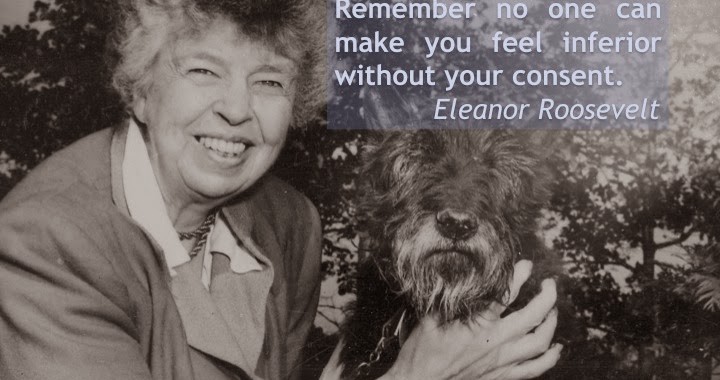
Over the years no other issue in youth work has bugged me more than the discussions about how we need to become more like other professions. For the most part it is a discussion about what we are not as youth workers. It says what we do not do. It says we are inferior to other professions.
We hear it every day as youth workers. Our clients are referred to “professionals” because we aren’t trained enough, aren’t qualified enough or just plain don’t know enough. These professionals look upon us with the same condescension that people aim at well meaning children who are overly excited. They tell us how much we don’t know about young people from their perspective and why they are indispensable to our young people. And we look at them with wide doe eyes and a knowing glance that says they are right. We are inferior.
The academy has told us for years that youth work as it stands is inferior.
Our colleagues have told us how inferior our work is.
We have told ourselves how inferior we are.
For youth work as a profession to take the next step we first need to stop comparing ourselves to others. Comparison leads to inferiority. We are a stand alone profession with our own knowledge base and a rocking way of supporting young people that others can only dream about.
Inferiority only comes if we allow it… so lets stop it.
Aaron Garth is a Melbourne-based youth worker, social worker, and mental health practitioner with over two decades of experience supporting young people across Australia. As Chief Executive Officer of Ultimate Youth Worker, he leads a team dedicated to training, coaching, and developing professionals in the youth sector.
A graduate of RMIT University and current PhD candidate, Aaron has worked across some of the most challenging areas of youth services — from homelessness and mental health to drug and alcohol outreach and residential care. He is a sought-after speaker, educator, and advocate for a more professionalised youth workforce, and has taught at institutions including RMIT, Chisholm Institute, and Eastern College Australia.
Aaron's work is driven by a simple belief: when youth workers are better supported, young people get better outcomes.
Every so often I like to take the pulse of the people I serve. I want to know what is going well. What is happening in their organisations. Most of all I want to know what they are struggling with at the moment! We are here to support youth workers and the organisations they work for. Your struggles are our struggles and if there is something we can do to stand in the gap for you we will.
Aaron Garth is a Melbourne-based youth worker, social worker, and mental health practitioner with over two decades of experience supporting young people across Australia. As Chief Executive Officer of Ultimate Youth Worker, he leads a team dedicated to training, coaching, and developing professionals in the youth sector.
A graduate of RMIT University and current PhD candidate, Aaron has worked across some of the most challenging areas of youth services — from homelessness and mental health to drug and alcohol outreach and residential care. He is a sought-after speaker, educator, and advocate for a more professionalised youth workforce, and has taught at institutions including RMIT, Chisholm Institute, and Eastern College Australia.
Aaron's work is driven by a simple belief: when youth workers are better supported, young people get better outcomes.
For an extremely long time now people have understood the importance of having good leaders.This is emphasized by the amount leadership summits and courses that are regularly held around the globe.Furthermore, there are probably thousands (perhaps even more?) of books on some aspect of leadership published each year.Not even to mention the various TED talks on this topic!“Leadership” has become a cultural buzzword and no-one wants to be left behind.And not being slouches, we as youth workers will not to be left behind either!(As one we scream and throw our fists in the air!Yeah, yeah I know I’m getting a bit carried away, but seriously, can you imagine a bunch of youth workers going all “Braveheart”?)
Now, I don’t know about you but I am crazy about sports.It is especially in sports that the role of the captain, the leader, comes under close scrutiny from coaches, peers and fans alike.Venturing an uninformed guess I’d say that there is a correlation between a team’s performance and their captain’s performance in a given game and/or season.If the captain’s performance is above par, most times the team tends to be successful.On the flipside, if the team falters in their performance, the captain will be one of the first to be held accountable.Keeping this in mind, in this post I’ll be sharing some basic thoughts that you as captain and team-leader might find helpful on your way to a “winning and successful season”.
1.Teamwork and diversity
The importance of teamwork has been discussed thousands and thousands of times.However, what sometimes remains lacking is a focus on diversity within the team.The team leader cannot do everything, nor can everyone in the team think the same way.The team needs to be made up of people with diverse leadership approaches and skills.For instance, my leadership role is that of ‘thinker’.But as thinker I cannot only be surrounded by thinkers.That way nothing ever is going to get done.So for example I need to look for a few ‘doers’ – people who play in different positions.Furthermore, I need to know when to pass the ball to my team members, those leaders on the team who are in a better position to deal with certain situations.
2.Lead from the front, encourage from the back
The captain needs to lead from the front.Every team has a particular strategy, a game-plan, which they want to follow and the captain has to set the example.He (or she) needs to model the strategy.But this is more than merely showing the way, it’s about encouraging others to follow the path.It’s about the embodiment of your organisation’s code of ethics, but it is also about carefully mentoring the less experienced leaders in your team to do the same.You are a leader of leaders, who has to make even more leaders.This feat won’t come easy and in the process you might want to consider reading up a bit on coaching and emotional intelligence.
Finally, to be the best, the captain has to stay a little longer at the fields and work a little harder.All for the sake of his/her team.You know your team.You know your organisation.And you know what it will take to get the job done.Read more books, speak to different kinds of people, and even enrol for extra courses if you have to.It seems to me that the importance of continued education and learning is underrated in the field of youth work.Furthermore, see to it that you have a good support system in place.I’d hate to see you burn yourself out in the process.We all work hard, but there’s a fundamental difference between giving your all, and being reckless.Take care of yourself.The captain also looks well after his/her own well-being.
Most of all have fun, keep it simple and give every “game” your best.So captain, what do you think?
Aaron Garth is a Melbourne-based youth worker, social worker, and mental health practitioner with over two decades of experience supporting young people across Australia. As Chief Executive Officer of Ultimate Youth Worker, he leads a team dedicated to training, coaching, and developing professionals in the youth sector.
A graduate of RMIT University and current PhD candidate, Aaron has worked across some of the most challenging areas of youth services — from homelessness and mental health to drug and alcohol outreach and residential care. He is a sought-after speaker, educator, and advocate for a more professionalised youth workforce, and has taught at institutions including RMIT, Chisholm Institute, and Eastern College Australia.
Aaron's work is driven by a simple belief: when youth workers are better supported, young people get better outcomes.
Working with young people is a job drought with concern and trepidation. Young people are looking for hope and opportunity and when they feel there is no hope then with trepidation they strike forth or shrink away. Whether with words or fists we see young people seek to find their hope through striking forth. Through disengagement from social structures they shrink away from a world they see no hope in. It is in this discourse of hope that youth workers work to guide young people to further greatness.
In Australia last night the federal budget was put to parliament and to put it bluntly it will hurt young people. Life will cost more, you will get less and the dream of retiring one day will be lost for most. One such area is the ability for universities to set their own rates for course fees. It was only a few years ago that a less intrusive policy in the UK led to less university entrance in the late 1990’s into 2000. Further changes in 2010 led to a tripling of fees which led to riots.
The push to ‘earn or learn’ means that young people have less time to work out what they want to do. Gap years will become a thing of the past and young people will be up for fifty years of working for the man. If you can’t afford to pay for a course it is ok you can get a loan and pay it back when you earn, however if fees go up as is likely your debt will be much higher than currently. You will also pay it back when you earn less than is currently set. Oh, and you will be fighting with the over 55’s for those jobs you want.
Health care will cost more. You will have to pay $7 bucks to go to a GP and add another $5 on top of your medication costs. One in four young people will have a diagnosed mental health issue… sorry that is going to cost you. Many under 25’s are starting families… cha-ching. A general check up… cha-ching. If you have any chronic health issues.. cha-ching. If you are a young person you were less likely to go to a doctor before… now you just can’t afford to.
Welfare payments are being cut and means tested differently so that young people will be hurt. Now under 25’s can not access the unemployment allowance and will go on the youth allowance, a loss of a few thousand much needed dollars. The aged pension will not be indexed to CPI so in a few years the pension will be under the poverty line leading to more older people in the employment market at least part-time. Young people on disability will be required to work if they are able in any way and work for the dole is being reintroduced.
Transport costs will go up with a fuel tax hike. Family budgets are going to be tighter as the ceiling for family payments has been lowered. All in all young people are being hurt!
The economic rationalism in this budget was clearly visible to all watch. Limit the economic drain of individuals. Grow the free market. Rich get richer and the poor get poorer. Australia is only a slice in the world pie however many of these hits have happened in similar ways in all conservative governments worldwide.
When we as youth workers focus on bringing hope to young people economic rationalism makes this a really hard sell. Young people do not see hope. They see greed and hurt. How will young people react to these losses??? We just need to look to London in 2011 and Greece in 2012. When young people feel a lack of hope they either fight or flee from a society that they feel does not meet standard.
We as youth workers need to get along side our young people and help them to see HOPE. If we don’t the economic rationalist agenda will break them.
Aaron Garth is a Melbourne-based youth worker, social worker, and mental health practitioner with over two decades of experience supporting young people across Australia. As Chief Executive Officer of Ultimate Youth Worker, he leads a team dedicated to training, coaching, and developing professionals in the youth sector.
A graduate of RMIT University and current PhD candidate, Aaron has worked across some of the most challenging areas of youth services — from homelessness and mental health to drug and alcohol outreach and residential care. He is a sought-after speaker, educator, and advocate for a more professionalised youth workforce, and has taught at institutions including RMIT, Chisholm Institute, and Eastern College Australia.
Aaron's work is driven by a simple belief: when youth workers are better supported, young people get better outcomes.
One of the values of Ultimate Youth Worker is ‘excellence in all we do’. We expect that if people are paying for our services they deserve nothing but the most exceptional service. As I have been teaching the last year or so I have come across a scary value that has crept into our sector. Close enough is good enough. It is in students and service providers. We have started to give half assed service.
There are many reasons for this. Our funding agreements tell us to do less with more people. Our clients are more complex and we don’t have any more time. Our education of youth workers has focussed so much on competency and not on relationship. All in all it has led to a focus on just getting through. To our clients though this shows up as a lack of care, support and service. Most of all a complete lack of understanding of their circumstance.
If we are to be seen as professional and to be effective we must rid ourselves of half assed service. No more six week interventions. No more close enough is good enough. We must focus on the needs of our clients. We must seek to provide excellence in all we do! Look at the values of your organisation… Are you really acting in the best interests of your clients? Is it excellence you seek?
Aaron Garth is a Melbourne-based youth worker, social worker, and mental health practitioner with over two decades of experience supporting young people across Australia. As Chief Executive Officer of Ultimate Youth Worker, he leads a team dedicated to training, coaching, and developing professionals in the youth sector.
A graduate of RMIT University and current PhD candidate, Aaron has worked across some of the most challenging areas of youth services — from homelessness and mental health to drug and alcohol outreach and residential care. He is a sought-after speaker, educator, and advocate for a more professionalised youth workforce, and has taught at institutions including RMIT, Chisholm Institute, and Eastern College Australia.
Aaron's work is driven by a simple belief: when youth workers are better supported, young people get better outcomes.