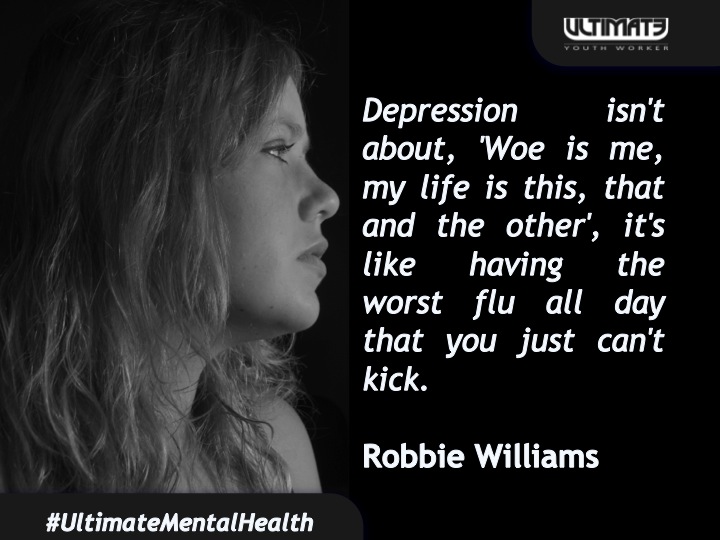
Depression can be kicked
Depression
We continue mental health month at Ultimate youth Worker with the most spoken about of brain disorders, Depression. Depression goes by many different names and it stalks people with the skill of a bloodhound. It chases you down in everyday situations and squashes your ability to reach your goals. The most disturbing quality of all is it slowly stops them of life. When we speak of depression as a disorder of the brain we are speaking of the everyday crippling sense that the world is going to squash us that some of us feel that stop us from living our life to the full.
The common feature of all depressive disorders is the presence of sad, empty, or irritable mood, accompanied by somatic (physical) and cognitive (mental) changes that significantly affect the individuals capacity to function. The black dog and its friends spend most of their time making our mood low which in turn makes us physically and mentally feel like we are walking in mud. Our ability to deal with the day to day stresses of life, work productively and fruitfully, and make a contribution to our community becomes limited and if it persists can become a chronic condition.
[Tweet “#UltimateMentalHealth Do you understand depressive disorders in young people? #youthwork”]
The major differences among the depressive disorders are issues of duration (how long the symptoms last for), timing (whats happening for you at the time), or presumed aetiology (the causes, or manner of causation of a condition). Symptoms of depressive disorders can last from two weeks to a number of years. The onset of the symptoms can be a certain time of the month through to a significant bereavement and anything in between.
Major Depressive Disorder
…represents the classic condition known to most of us in this group of disorders. It is characterised by discrete episodes of at least two weeks duration (although most episodes last considerably longer) involving clear cut changes in affect, cognition, and neurovegetative functions and inter-episode remissions. While these brain disorders can be diagnosed as one off episodes they are more often recurrent in a majority of cases.
As youth workers we will work with many young people with depressive disorders. We must have a strong understanding of the diagnostic criteria, treatment options and recovery planning for young people living with depression. We can then support them to make informed decisions about the treatment planning and recovery orientation. We owe it to them to be well informed.
