8 tips for amazing youth work external supervision.

External supervision

Two years ago when Ultimate Youth Worker began we started as a small external supervision service for youth workers. We started this because we saw the lack of supervision given to our friends and colleagues as well as the lack of qualified youth workers providing external supervision. We wanted to see youth workers supported by youth workers to develop their youth work practice. Over the past two years we have supported dozens of youth workers to do just that. However, we still hear of people offering supervision to youth workers which cause more trouble than support.

These well meaning people, often social workers and psychologists, do not understand the intricacies of youth work theory and practice. They begin to make their supervisees more like them.   Youth workers deserve better. We deserve supervisors who understand youth work theory and practice and how they interweave. We deserve the best possible support to do the work we do.  
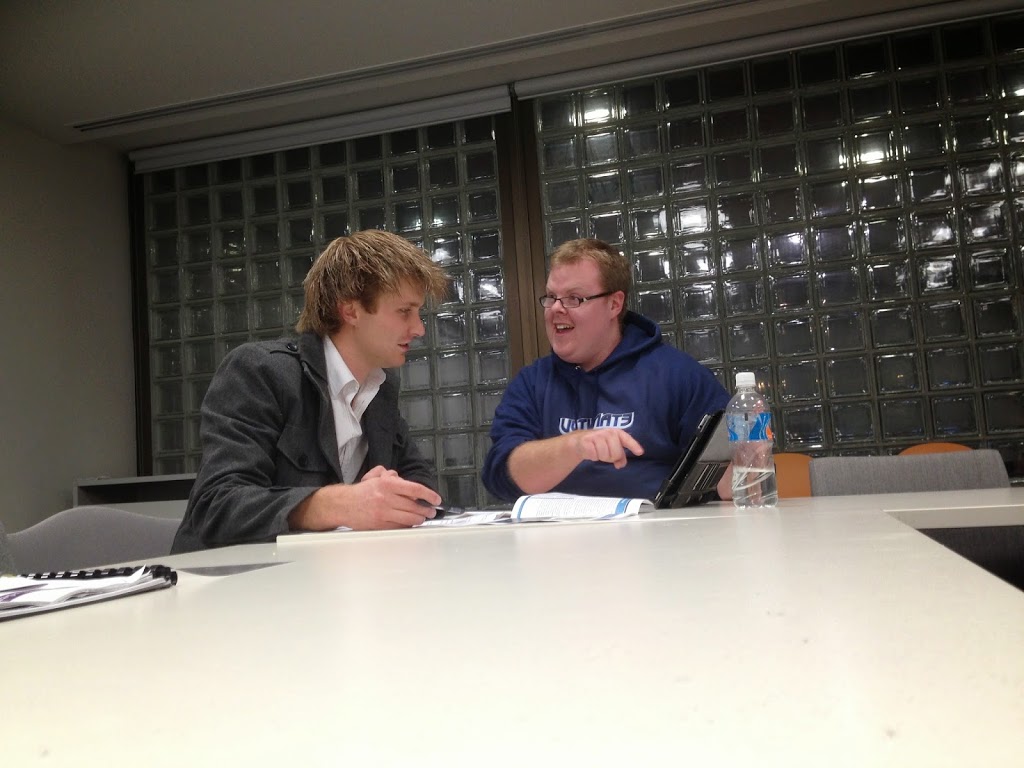
So what should we look for when choosing an external supervisor. Here are a few thoughts we have on the expectations of a good youth work supervisor:

  1. They must have a youth work background. It should not come as a surprise but many other professions do not work with young people. There are also issues which youth workers face which are not covered by other professions. I have heard of social workers, psychologists, OT’s and nurses supervising youth workers when they have never worked with young people. A great external supervisor will have extensive youth work experience… at least five years direct practice is a minimum.
  2. They must be qualified. They must hold a qualification in youth work. Minimum of a diploma level however we recommend the degree. They must also have some qualification in supervision. The minimum standard should be one of the five day courses available by many professional associations.
  3. They must have an articulated best practice framework of supervision. If they cannot articulate the framework they use and why then do not hire them. They must address how they will work with you and the areas they will cover with you.
  4. They must have a track record of other clients. If it is the first time they have supervised people you don’t want to pay to be a guinea pig. If they are genuine they will have a record of staff they have supervised.
  5. They must be a member of a professional body. Whether it is a youth work professional association, a peak body or another professional body. You want to know that they are being kept accountable for the work they are doing within the youth sector.
  6. They must be accessing supervision themselves. Good supervisors have to talk things through too. They need to make sure they are supervising well and ethically. They need to unload the traumas they hear as much as their supervisees.
  7. They must hold professional indemnity insurance. While you should never need it, if you get advice and you use it and something goes wrong you need to be aware that they are insured.
  8. They must be a fit and a challenge. This one takes time and why we recommend a review after the first few sessions. They must fit you personally. Your personality and where you want to be going. And, they must be able to challenge you. to help you step outside yourself and try more.

If you ask your potential external supervisor these questions then you will be assured to have a great supervisor to help you trek through the ups and downs of youth work. If you want a supervisor who ticks all these boxes contact us and we will point you in the right direction.

Apply for supervision today

Aaron Garth

Aaron Garth

Aaron Garth is a Melbourne-based youth worker, social worker, and mental health practitioner with over two decades of experience supporting young people across Australia. As Executive Director of Ultimate Youth Worker, he leads a team dedicated to training, coaching, and developing professionals in the youth sector. A graduate of RMIT University and current PhD candidate, Aaron has worked across some of the most challenging areas of youth services — from homelessness and mental health to drug and alcohol outreach and residential care. He is a sought-after speaker, educator, and advocate for a more professionalised youth workforce, and has taught at institutions including RMIT, Chisholm Institute, and Eastern College Australia. Aaron's work is driven by a simple belief: when youth workers are better supported, young people get better outcomes.

More Posts - Website

Follow Me:Add me on FacebookAdd me on LinkedInAdd me on PinterestAdd me on YouTubeAdd me on Instagram

We need to do better: Critically reflective practice and supervision in youth work

This evening I sat in on a class preparing students for a masters degree placement in the human services. The topic for the class was supervision and particularly reflective supervision. As a company that believes we need a better class of reflective practice and supervision I was really keen to see what they would tell students. Sadly it was a waste of time.
 
The students were shown an article about a critical supervision model and were told to role play a scenario using the model. Then the class ended! This was the only class these students ever had about critically reflecting in supervision. I was shocked!!! The students had a model for critical reflective practice, however it was clear that very few of their placement supervisors really did critically reflective supervision.
 
We need to spend more time on the idea of critical reflection and supervision especially in higher education. What more can we expect when  our students have a two hour class on the subject. We believe that for our sector to really become critically reflective it needs to be taught from the first class in our qualifications. For supervisors to be able to supervise well they need better training than a two hour class.
 
If you are an educator, a supervisor or a coalface worker we need to do better at critically reflective practice and supervision. Join with us to make this a part of your practice.
 

Apply for supervision today

Aaron Garth

Aaron Garth

Aaron Garth is a Melbourne-based youth worker, social worker, and mental health practitioner with over two decades of experience supporting young people across Australia. As Executive Director of Ultimate Youth Worker, he leads a team dedicated to training, coaching, and developing professionals in the youth sector. A graduate of RMIT University and current PhD candidate, Aaron has worked across some of the most challenging areas of youth services — from homelessness and mental health to drug and alcohol outreach and residential care. He is a sought-after speaker, educator, and advocate for a more professionalised youth workforce, and has taught at institutions including RMIT, Chisholm Institute, and Eastern College Australia. Aaron's work is driven by a simple belief: when youth workers are better supported, young people get better outcomes.

More Posts - Website

Follow Me:Add me on FacebookAdd me on LinkedInAdd me on PinterestAdd me on YouTubeAdd me on Instagram

Youth work organisations shirk their responsibility

Organisations must care for their staff

This morning I got to have breakfast with one of my amazing mates. Over the healthiest option I could care to find (a double shot latte and a three stack of pancakes and maple syrup) we discussed the ins and outs of the youth sector. Particularly we spoke about the stress that comes with the job. We also spoke of the ability that some roles have to help youth workers burnout. anecdotally we believed that the average youth worker lasts two years and if you are in a role like resi-care you are lucky to last six months.
 
After we had chewed the fat for a while mainly bitching about how hardly done by we are as youth workers our attention turned to the organisations who employ us. There is a duty of care that organisations owe to their staff which we at Ultimate Youth Worker believe is being allowed to lapse. Many years ago unions fought for the eight hour work day. In my career I have never worked an eight hour day. Sleepover shifts circumvent OH&S legislation. Staff are exposed to vicarious trauma and poorly debriefed. Youth workers are forced to work within bureaucratic frameworks that require more work and less reflection
Self care is an organisational responsibility
The average youth worker drowns in bureaucracy and its worse if they don’t look after their self care

Many of the staff that we come across at Ultimate Youth Worker want to do their job to the best of their ability and they all say that they could use more support from their managers. Most managers we meet would love to support their staff but are drowning in paperwork and their own lack of support to be able to help anyone. Then when all hell breaks loose we crucify the staff and managers for not doing their job right. If there is not time to reflect and maintain self care what do we expect!!!

Organisations that value their staff develop them as much as they develop their young people. Managers carve out time for professional development, supervision and the overall welfare of their staff. Organisations actively develop policy and procedures to support their staff to do their job effectively and without to much vicarious trauma. Organisations REQUIRE professional development of their staff and demand that their managers support their staff as whole people not just staff.   
 
We don’t get paid enough to do the job and get treated like crap. Organisations need to take responsibility for their staff wellbeing, for sustainability of the sector and for their own reputation. Funding bodies are not immune from their responsibility either!
Aaron Garth

Aaron Garth

Aaron Garth is a Melbourne-based youth worker, social worker, and mental health practitioner with over two decades of experience supporting young people across Australia. As Executive Director of Ultimate Youth Worker, he leads a team dedicated to training, coaching, and developing professionals in the youth sector.

A graduate of RMIT University and current PhD candidate, Aaron has worked across some of the most challenging areas of youth services — from homelessness and mental health to drug and alcohol outreach and residential care. He is a sought-after speaker, educator, and advocate for a more professionalised youth workforce, and has taught at institutions including RMIT, Chisholm Institute, and Eastern College Australia.

Aaron's work is driven by a simple belief: when youth workers are better supported, young people get better outcomes.

More Posts - Website

Follow Me:Add me on FacebookAdd me on LinkedInAdd me on PinterestAdd me on YouTubeAdd me on Instagram

I’m a Slut…No one will love me!!!

Hard conversations are bread and butter for the average youth worker. I always love walking into a new youth work environment and seeing what the young people will try to shock me with. I remeber taking a volunteer into a residential care facility for her first meeting with a young person. On the driveway we meet a twelve year old boy who with a blank stare and an unwaivering voice asked if my volunteer was a lesbian, a paedophile or just a whore? My normal very assertive and chirpy volunteer turned white as Casper the friendly ghost and struggled to have a conversation for the next hour. I have often said to my volunteers, other youth workers and especially the young people that if they could tell me a story that would shock me I would be surprised. I often follow it up by saying that there is nothing they could ask me or share with me that would shock me enough to walk away…If there was I wouldn’t be in youth work!
 

My seeming inability to be shocked has grown through years of working with some of the most abused young people in Victoria. Whether young people in residential care, sexual abuse victims or children of prisoners I have heard stories that make my stomach churn. On the outside though I am calm and cool. It takes a lot of composure sometimes to stay calm when the stories are so in your face or you are being vilified by a twelve year old.
 
I remember speaking to a young woman earlier this year who had been through the wringer. Family issues, school issues, legal issues and to top it all off she was being pimped out by her uncle. After a conversation that lasted about half an hour she stated matter of factly “I’m a Slut…No one will love me!!!” My hard exterior almost broke. It took me a full minute to regain my composure. She continued to tell me how she had been her uncle’s ‘girl’ for almost two years and then how he had sold her to his friends. What really shook me was that she had just had her birthday.
 
Even the seemingly heartless stone cold dominant folk have a pulse. It may just be a little deeper than the rest. I was propper shook. I was able to hold it together enough to get back to my office then I was overcome by anger I couldn’t think straight, I was narky with everyone and I was ready to do some damage to someone. I knew I was in a bad way. Some days it just gets bad. I told my boss What had happened and that it was getting to me. My boss got me to call my external supervisor to tee up a time to catch up that week and then sent me home. I still wasnt great and when I got home I blew up at my wife over something trivial. It was not a good night for me.


My wife is a wonderful woman who is very intuitive and she quitely told me to get into my plan. I called one of my mentors, spent some time out for a walk and spent some time contemplating the future of my work with the young lady. Her words kept ringing in my ears “I’m a Slut…No one will love me!!!” How can we show love (genuine care and affection) to such broken young people??? How can we do it when all we want to do is take vengence for them?
 

Two things come to mind:

 
First, centre yourself. Spend some time regaining balance. Look to your mental, emotional, physical and spiritual; and get some balance in life. The first rule in any form of rescue work or first aid is look after yourself and do not become a casualty yourself. Whilst dwelling on the situation breeds more interesting ways to cause pain to those who have hurt our young people, it also tears us apart.
 
Second, plan your next engagement. You have likely heard the most intense barrage you are going to hear. Now it is time to prepare yourself for your next encounter. Get ready to ask the questions you need to, spend time practicing with a supervisor or colleague and have a list of the other people or agencies you might want to refer the young person to.
 
I have been called a lot of things in my life and career, but it is when young people have lost hope in themselves and the world that gets under my skin. It does take a lot for me to get angry when people aim at me, but when they take on a young person my protective righteous anger boils to the top. To be the best I can be for my young people I can not let my feelings get in the way of good practice. Our emotions are important, but our control over them is critical. If we get antsy about a term like slut, or the story of abuse then our work is compromised. We must be aware of the effects of trauma on us and how to best deal with it in our own way. Looking after our young people means we need to have a thick skin…for their sake as much as ours.

Aaron Garth

Aaron Garth

Aaron Garth is a Melbourne-based youth worker, social worker, and mental health practitioner with over two decades of experience supporting young people across Australia. As Executive Director of Ultimate Youth Worker, he leads a team dedicated to training, coaching, and developing professionals in the youth sector.

A graduate of RMIT University and current PhD candidate, Aaron has worked across some of the most challenging areas of youth services — from homelessness and mental health to drug and alcohol outreach and residential care. He is a sought-after speaker, educator, and advocate for a more professionalised youth workforce, and has taught at institutions including RMIT, Chisholm Institute, and Eastern College Australia.

Aaron's work is driven by a simple belief: when youth workers are better supported, young people get better outcomes.

More Posts - Website

Follow Me:Add me on FacebookAdd me on LinkedInAdd me on PinterestAdd me on YouTubeAdd me on Instagram

Critical reflection

youth work peer consultation: reflective practice revisited

Reflective practice with your peers

We have all had those moments in our youth work career. We are stuck and we don’t want to go to the boss because we don’t want to seem incompetent. So we lean across the aisle/cube/partition and ask a colleague what they would do. Sometimes our reflective practice is not so worrying. You are having lunch and you pose a question about how you might approach a new young person to the group. On the other hand you were just chewed out about how you dealt with a particular case and you are looking for some affirmation so you explain what you did to your colleagues. When a group of peers work together to support each other through reflective practice it is called PEER CONSULTATION.

Critical reflection Peer Consultation, unlike a chat about the weekend around the water cooler, describes a process in which critical and supportive feedback on style and worker identity is emphasized while evaluation of practice is not. Consultation, in contrast to supervision, is characterized by the youth worker’s, “right to accept or reject the suggestions [of others]” (Bernard& amp; Goodyear, 1992, p. 103).

The terms ‘peer supervision’ and ‘peer consultation’ have both been used to describe similar relationships amongst colleagues. However, at Ultimate Youth Worker we believe that the difference is the outcome of the process. In ‘peer supervision’ colleagues provide a clinical evaluation of each other’s work to better individuals and the group. In ‘peer consultation’ colleagues focus on providing mutual support and advice to the individual using reflective practice.

The foundation of peer consultation is steeped in the understanding that individuals who are trained in helping skills using these same skills to help each other function more effectively in their professional roles. According to Benshoff & Paisley (1993), peer consultation provides a number of benefits to youth worker’s on the coal face including:

  • Decreases dependency on ‘expert’ supervisors and provides greater interdependence of colleagues;
  • Increases responsibility of youth worker’s for assessing their own skills and those of their peers, and for structuring their own professional growth;
  • Increases self-confidence, self-direction, and independence;
  • Development of consultation and supervision skills;
  • Use of peers as models;
  • Ability to choose the peer consultant; and,
  • Lack of ‘clinical’ evaluation.

Critical reflectionPeer consultation comes in two forms. Informal chats over the partition with your colleagues and more formalised group consultations. Whichever form it takes just do it. Spending time with your colleagues in reflective practice helps you to strengthen your practice and hone your skills in a supportive environment. It provides a safe place to critically reflect on your practice within the confines of your peer network.
Reference

Benshoff, J.M., & Paisley, P. O. (in press). The Structured Peer Consultation Model for School Counselors. Journal of Counseling and Development

Bernard, J.M., & Goodyear, R. K. (1992). Fundamentals of clinical supervision. Needham Heights, MA: Allyn & Bacon.

Leave us a comment below or post a comment on facebook and twitter

.


Aaron Garth

Aaron Garth

Aaron Garth is a Melbourne-based youth worker, social worker, and mental health practitioner with over two decades of experience supporting young people across Australia. As Executive Director of Ultimate Youth Worker, he leads a team dedicated to training, coaching, and developing professionals in the youth sector.

A graduate of RMIT University and current PhD candidate, Aaron has worked across some of the most challenging areas of youth services — from homelessness and mental health to drug and alcohol outreach and residential care. He is a sought-after speaker, educator, and advocate for a more professionalised youth workforce, and has taught at institutions including RMIT, Chisholm Institute, and Eastern College Australia.

Aaron's work is driven by a simple belief: when youth workers are better supported, young people get better outcomes.

More Posts - Website

Follow Me:Add me on FacebookAdd me on LinkedInAdd me on PinterestAdd me on YouTubeAdd me on Instagram

Behavioural observation is the key to best practice youth work.

A few weeks ago we stated that we would look at how to develop a behavioural lensto inform how you work with young people and colleagues. A lens that will help you understand peoples strengths and weaknesses, how to speak to them in a way that will help you develop your relationship with them and ultimately strengthen your work with everyone you come across. This week we show you the framework.

A while ago I interviewed for a managementposition. One of my interviewers was someone that if I got the role I would supervise. In the interview I was able to answer the questions and got along well with two of the three interviewers. The third interviewer was a blank slate. I couldn’t read him at all. The worst part was that he was going to be my direct. I was freaking out and needed a way to break through their blank persona.

A few years earlier I was managing a youth drug andalcohol rehab. I had a young person come to us straight from jail with a personality bigger than Ben Hur. Everyone thought he was great, the life of the party. He was a lot of fun to work with, but he was also really frustrating. He never followed through on anything!!!

These are just two people and a snapshot of their behaviour, but I am sure you can all imagine people like this that you have come across. Before I was shown this simple but most important framework people showing these behaviours were extremely difficult for me to understand or work with. Afterwards, with a little work, I have become a better judge of character and supportive youth worker.
 

DISC

 
DISC is a quadrant behavioral model based on the work of Dr. William Moulton Marston (1893–1947) to examine the behavior of individuals in their environment or within a specific situation (otherwise known as environment). It therefore focuses on the styles and preferences of such behaviour. For most, these types are seen in shades of grey rather than black or white, and within that, there is an interplay of behaviors, otherwise known as blends. The determination of such blends starts with the primary (or stronger) type, followed by the secondary (or lesser) type, although all contribute more than just purely the strength of that “signal”. Having understood the differences between these blends makes it possible to integrate individual team members with less troubleshooting. In a typical team, there are varying degrees of compatibility, not just toward tasks but interpersonal relationships as well. However, when they are identified, energy can be spent on refining the results.


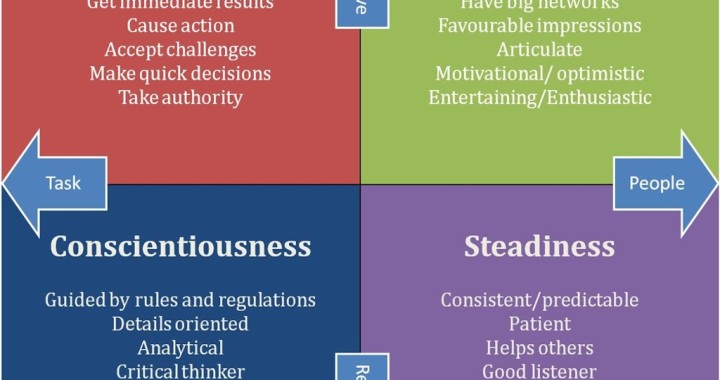
The four behavioural types are Dominance, Influence, Steadiness and Conscientiousness.

 
Those with Dominance and Influence behavioural types are more ASSERTIVE.
 
Those with Steadiness and Conscientiousness behavioural types are more RESERVED.
 
Those with Influence and Steadiness behavioural types are more PEOPLE focused.
 
Those with Dominance and Conscientiousness behavioural types are more TASK focused.


This graphic illustrates this more effectively.

 
Over the coming ‘Thursday Think Tanks’ we will delve more into these behavioural types and how they can help you to develop your emotional intelligence and practical wisdom.
 
In the meantime Stay Frosty!!!
 
Aaron Garth

Aaron Garth

Aaron Garth is a Melbourne-based youth worker, social worker, and mental health practitioner with over two decades of experience supporting young people across Australia. As Executive Director of Ultimate Youth Worker, he leads a team dedicated to training, coaching, and developing professionals in the youth sector.

A graduate of RMIT University and current PhD candidate, Aaron has worked across some of the most challenging areas of youth services — from homelessness and mental health to drug and alcohol outreach and residential care. He is a sought-after speaker, educator, and advocate for a more professionalised youth workforce, and has taught at institutions including RMIT, Chisholm Institute, and Eastern College Australia.

Aaron's work is driven by a simple belief: when youth workers are better supported, young people get better outcomes.

More Posts - Website

Follow Me:Add me on FacebookAdd me on LinkedInAdd me on PinterestAdd me on YouTubeAdd me on Instagram

Behaviour not personality = Great youth work.

We have all heard the saying “the road to hell is paved with good intentions“. No more have I seen this than in the human services. Hopefully we have all come into the sector with a passion to work with broken individuals. Sometimes however, this passion gets in the way of our reason and we take on more projects than we can deliver on. For me there have been many times where I have accepted a spot on a committee, group or panel with the best intentions of delivering amazing results for them. However, when push comes to shove and the work with my young people begins to suffer I have to step aside. Usually having caused a major issue for the group, panel or committee. I see this happen in my personal life too. Because I commit to being on a board or committee it takes time from my family and causes strain on my resources and relationships. Are my intentions noble and just??? Of course! But what about my behaviours???
 
In youth work we all to often reward our young people for setting a goal or agreeing to attend a meeting. We do it with our colleagues as well. How many times have you seen a youth worker take a hit for the team only to have to deal with the issue again at a later date. You know the situation… you are in a team meeting and the boss says that you need to report to a funding body on your progress. No one wants to do the data collection and a noble colleague says they will do it. Two weeks later the team is thrown into chaos because the worker did not get around to it because of some other more pressing concern. When that happens we never judge them on their intentions… She was so noble and she really wanted to get it done. We judge them on their behaviour… She left it to the last minute and now I have to do it anyway.


All too often we judge ourselves by our intentions and others by their behaviour. Guess what they judge you on your behaviour. When issues then arise in the team we hear about the work pressures or family issues or hear those dreaded words… It’s just who they are. Many organisations bring in Psychologists to deal with issues of personality (If I have to do another Myers-Briggs I may kill someone!) as that is seen as the overarching issue. Lets be clear!!! It is not their personality that is the issue, it is their behaviour! Or more specifically their lack of behaviour.

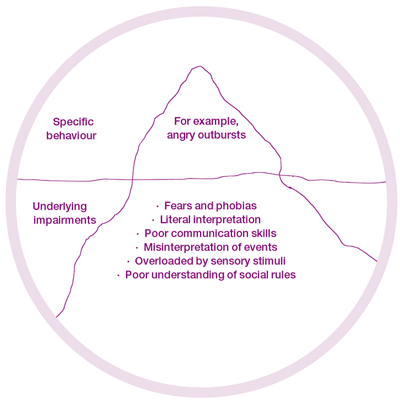
What we recommend at Ultimate Youth Worker is that we move towards a behaviourist approach to dealing with people. Whether the young people we work with, our colleagues or others we may work with along the way we should develop a lens of behaviour through which to judge our interactions.  Don’t get us wrong, the Myers-Briggs and other personality profiles are a great tools. But for us to be effective in running groups, providing support to our young people or dealing with colleagues means understanding their behaviours and how to work with them to utilise their strengths.

Over the coming weeks we will begin to look at how to develop a behavioural lens to work from. A lens that will help you understand peoples strengths and weaknesses, how to speak to them in a way that will help you develop your relationship with them and ultimately strengthen your work with everyone you come across.


In the meantime… Stay Frosty.

What are your thoughts???

Leave us a comment below or post a comment on facebook and twitter.

Aaron Garth

Aaron Garth

Aaron Garth is a Melbourne-based youth worker, social worker, and mental health practitioner with over two decades of experience supporting young people across Australia. As Executive Director of Ultimate Youth Worker, he leads a team dedicated to training, coaching, and developing professionals in the youth sector.

A graduate of RMIT University and current PhD candidate, Aaron has worked across some of the most challenging areas of youth services — from homelessness and mental health to drug and alcohol outreach and residential care. He is a sought-after speaker, educator, and advocate for a more professionalised youth workforce, and has taught at institutions including RMIT, Chisholm Institute, and Eastern College Australia.

Aaron's work is driven by a simple belief: when youth workers are better supported, young people get better outcomes.

More Posts - Website

Follow Me:Add me on FacebookAdd me on LinkedInAdd me on PinterestAdd me on YouTubeAdd me on Instagram

Relational youth work

The importance of good professional supervision

Over the course of my career I have had over a dozen supervisors throughout half a dozen or so specialities. Some of these supervisors were Youth Workers, some Social Workers, some Pastors and some drug and alcohol workers. Their qualifications had ranged from Diploma level to Masters degrees and one had no formal welfare qualifications at all. Not an unknown factor to those of us in the youth sector.

In Australia there is no requirement for a supervisor to have a professional qualifications. As a Degree qualified Youth Worker and soon to be Masters qualified Social Worker I have never attended a class on supervision, i have never heard a lecture on what constitutes good supervision practice and i have never had a supervisor who had either. At best my supervisors had attended a 2 day course in supervision and at worse my supervisors had less than a year more experience in the field than i had. So if there are only a few courses for supervisors and most of these less than a week long, how do you become a good supervisor???

The best supervisors I have had came from both ends of the spectrum. One was a qualified Social Worker with over a decade of experience who regularly attended courses on supervision. The other was a Youth Worker who had no qualifications but was an avid reader of supervision texts and attended every professional development opportunity focussed on supervision. The skill set that both of these supervisors had in common was and eager appetite to better their own practice as supervisors and a great ability to listen. The styles they used were different, the theoretical focus wide and varied and the outcomes specific to the needs of myself and my clients.

Maidment & Beddoe (2012) believe that supervision must be placed at the core of professional development for staff, “We want to place supervision at the heart of professional development, which is career-long and where, via diverse learning activities, practitioners refine and augment their knowledge, develop skills, and undertake supervision to enhance critically reflective practice“.

Do your supervisors support your development? If not you might be in the market for an external supervisor! What ever your situation if you want longevity in the sector studies show that you need a good supervisor.

Apply for supervision today

Aaron Garth

Aaron Garth

Aaron Garth is a Melbourne-based youth worker, social worker, and mental health practitioner with over two decades of experience supporting young people across Australia. As Executive Director of Ultimate Youth Worker, he leads a team dedicated to training, coaching, and developing professionals in the youth sector. A graduate of RMIT University and current PhD candidate, Aaron has worked across some of the most challenging areas of youth services — from homelessness and mental health to drug and alcohol outreach and residential care. He is a sought-after speaker, educator, and advocate for a more professionalised youth workforce, and has taught at institutions including RMIT, Chisholm Institute, and Eastern College Australia. Aaron's work is driven by a simple belief: when youth workers are better supported, young people get better outcomes.

More Posts - Website

Follow Me:Add me on FacebookAdd me on LinkedInAdd me on PinterestAdd me on YouTubeAdd me on Instagram