Last Thursday we began a looking at the individual quadrants within the DISC behavioural profiling system with “Observe the D in DISC for youth worker’s“. We are half way through our overview seriesand hope that you have been able torecognise some DOMINANCE behavioural styles in those around you. In this blog we continue the series with an overview of the INFLUENCE behavioural style.
One of the most exciting behavioural style to be around (and it is my secondary behavioural style) is that of INFLUENCE. The social butterfly or life of the party, people with thisbehavioural type often have large networks and seem to draw people to themselves. They are talkative, they over communicate, are born performers, are style setters, in teamsthey are the idea generators and they are very quick-witted. They are the most enthusiastic and active people you will ever meet and develop relationships quickly. They are fast starters and begin project with gusto. All of these positive adjectives are often linked to a person who is exhibiting a INFLUENCEbehavioural trait. On the other hand you have probably seen their negative behaviours as well. They work off intuition without reason. Theycan be highly emotional. They are sporadic and scattered. They start fast but rarely finish. They have too many projects on the go. If they were a slogan they would be Nokia: Connecting People.
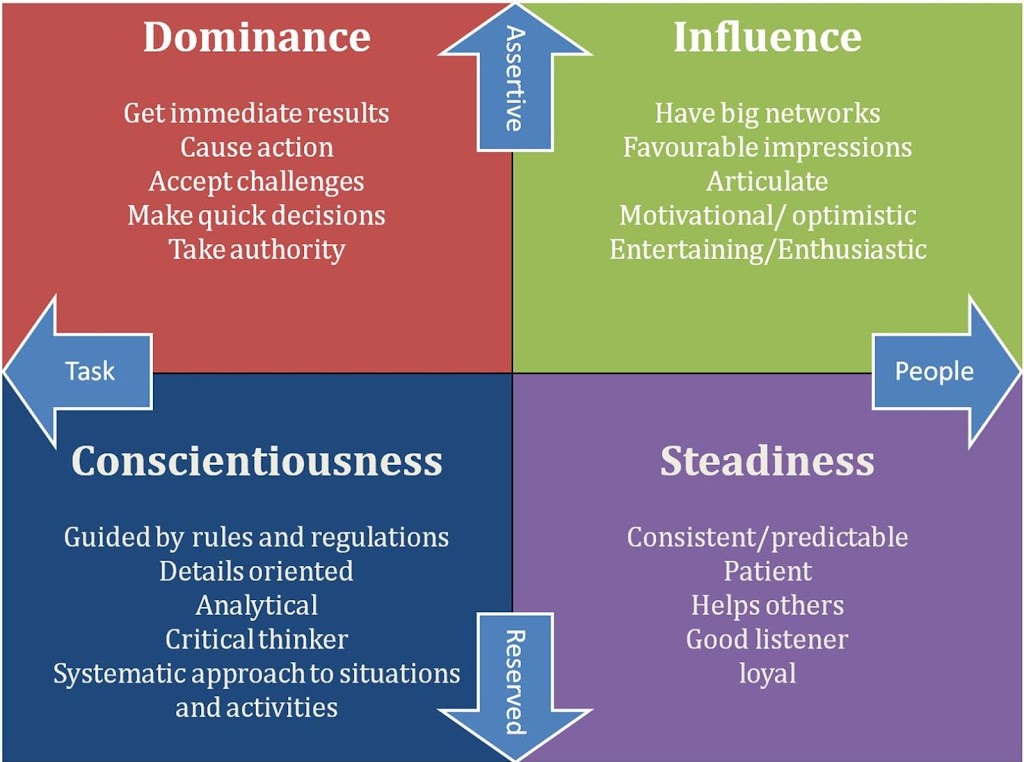
A person with a high level of INFLUENCE in their behaviour speaks in a way that about 75% of us struggle to keep up with. They sell ideas with an inspiring style. They talk a lot at the 50,000 foot view but struggle to get down in the grass. They avoid bringing up difficult subjects but give good constructive feedback. They enjoyinteraction and focus on the feelings of their subject intently. They get enthusiastically involved in discussions and often talk too much. They may not assess what is being said and can loseconcentration and get sidetracked easily. They speak in stories and anecdotes often from personal experience. They are prone to exaggeration and when excited they speak really fast and approachyou closely using lots of facial expression.
Most of us struggle to get a word in edgeways with a High I and we are confronted at the speed and tangential thinking present in their conversation… but we do enjoy their conversation. They do respect a smile, a pat on the back and seven conversations at once. So how do we work with these people when their excitement is off the charts and you are not really sure which conversation you are having with them?
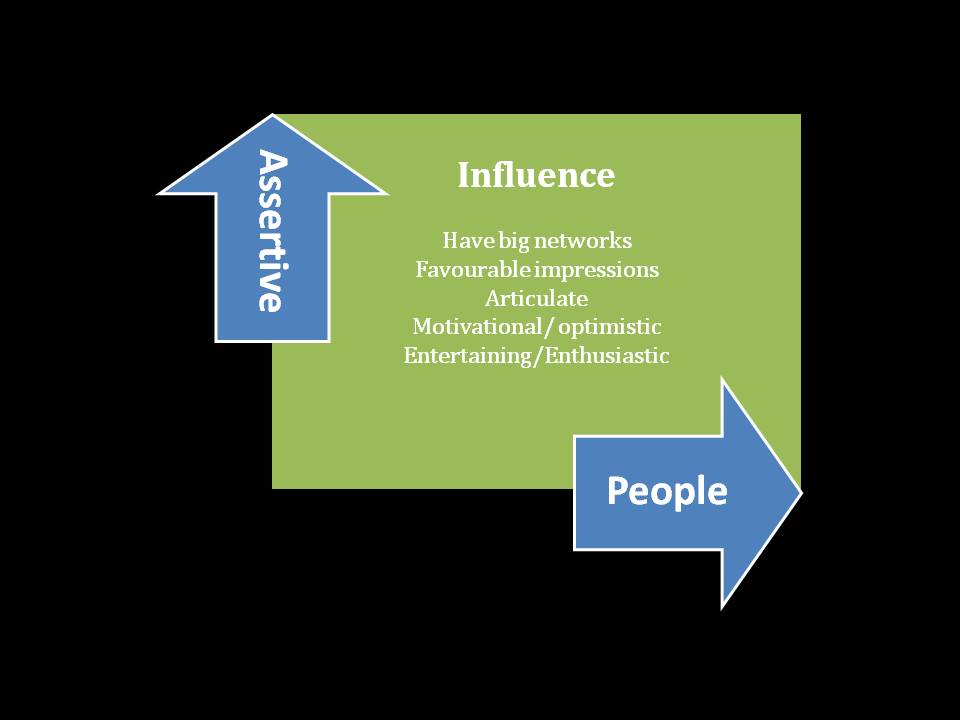
Here are our top six tips for working with people with INFLUENCE behaviour traits:
Approach them informally. These guys and girls hate feeling constrained. A meeting in an office with suits and ties and a policy document may just make them explode. A brief chat on the way to lunch or even a confab at their desk is the best way to get them on side. Do not start with facts and stats or a policy document it will make them throw a toddler tantrum.
Be relaxed and sociable. Even if you need to pull them into line be chilled out. These guys take their reputation seriously and if you are not sociable they will take it as a sign that you hate them.
Let them tell you how they feel and how awesome they are. Yes the sun doth shine from their backside and you would do well to acknowledge this with a hearty nod of the head. They are the centre of attention and you are a tool for propping up their ego. Whilst they care about people it is hard to notice them through their haze of awesomeness.
Keep the conversation light. Remember, they are up there in the clouds in the land of big dreams. It is a place where balloons pop very easily. You want to be a fluffy cloud and sharp grass. Details are the enemy. There is no pressure here. It should be like a trip to Tahiti.
Provide written details to focus their attention. As those with INFLUENCE behaviours can be flighty and forgetful write things down and get them to take notes. It also helps when they begin to go on a tangent if their KPI’s are written down as you can steer them back on course.
Use humour. Everything has a funny side… even paperwork!!! Try to lighten the mood by making a joke or finding a humourous take on the situation. If all else fails steal a Robin Williams skit. It will diffuse any tension and let them see you have a pulse.
Here are just a few people you might have seen on a TV that have INFLUENCE in their behavioural style.

Bill Clinton

Oprah Winfrey

Richard Branson

Dolly Parton

Robin Williams

Shane Warne (Cricketer)

Hamish Blake (Australian TV and Radio Personality)

Han Solo
Ellen DeGeneres
Leave us a comment below or post a comment on facebook and twitter.
Aaron Garth is a Melbourne-based youth worker, social worker, and mental health practitioner with over two decades of experience supporting young people across Australia. As Executive Director of Ultimate Youth Worker, he leads a team dedicated to training, coaching, and developing professionals in the youth sector.
A graduate of RMIT University and current PhD candidate, Aaron has worked across some of the most challenging areas of youth services — from homelessness and mental health to drug and alcohol outreach and residential care. He is a sought-after speaker, educator, and advocate for a more professionalised youth workforce, and has taught at institutions including RMIT, Chisholm Institute, and Eastern College Australia.
Aaron's work is driven by a simple belief: when youth workers are better supported, young people get better outcomes.
We asked our followers recently what they would like us to talk about on the blog and one topic stood out as a major one to start on… Youth Justice. Over the years I have had a number of jobs either in or supporting the youth justice system in Australia. I must confess I struggled working in the sector. Not because the young people are difficult (in fact they were some of the most responsive young people I have ever worked with), but because of the community perception and the subsequent policy directives. The young people I worked with often lacked direction, struggled with education and were wary of anyone who showed concern for their welfare. The community saw liars, thieves and violent offenders who should be hauled over the coals.
It is hard to ignore the crimes that some of these young people have committed, and you know what we shouldn’t!!! These young people have been detained because of what they have done and will pay for their crime. However there are a couple of ways that this can happen depending on your point of view. Is detention there for retribution or restoration??? The young people did the crime and they should do the time. We believe that JUSTICE requires it. However, the question we should ask is what happens to them between the first day behind bars and their last day to develop them so that they do not continue back through the revolving door?
In many youth justice systems and support agencies here in Australia there has been a push towards more restorative practices. This has been met by mixed responses from the community. Governments are still stuck in limbo between retribution and restoration. To provide a measure of punishment for their crime, but to also provide opportunities to develop skills for post-release. The rise in victim-offender mediation and group conferencing has been amazing and the opportunities through NGO’s such as Whitelion and Jesuit Social Services to name a couple, for young people to gain employment and social skills has definitely changed the landscape.
But what does it all mean for us as youth workers??? Many writers have said that a core tenet of youth work is social justice. I ask whether we are being social just to the young people we incarcerate??? Earlier this year I spent some time in Tasmania visiting Port Arthur (if you ever get the chance you simply have to go). Port Arthur was one of the original penal colonies when the British began transporting convicts to Australia. In particular I was fascinated by Point Puer the first ever boys prison in the British empire. The punishments were severe and boys as young as nine were incarcerated there, however they also taught the boys some skills. Some became so skilled they were employed straight from detention to the detriment of other qualified tradesmen who hadn’t been incarcerated. Can you imagine if our incarcerated young people were taught trades in the same way??? Being taught excellence in your handy work. Being so highly sought after that you could walk out of detention and straight into a well paying job???
(A sample of the young boys handy work… It could hold over 1000 people.)

As a youth worker it is our responsibility to advocate for our young people. The current system still lets our young people down. We still have those who believe in retribution in positions of power in the youth justice system and we still have young people following in their adult counterparts footsteps… Dancing through the revolving door. There will always be crime as long as people are on the earth. How we deal with the crime is what is in question.
We believe in RESTORATION here at Ultimate Youth Worker. This does not mean being soft on crime, on the contrary. It does mean providing every opportunity for the young person to make something of themselves. To throw off the social, economic and cultural ties that bind them. To make amends and for them to be given the opportunity to live as free men and women. We believe that the best way to deal with crime is to deal with the social issues which lead to crime. We believe that the best way to deal with offenders is to develop them as whole people! To do this we need to address all the failings of society which led to their incarceration… and restore them to their community. Reflect on this:
“Youth workers are facilitators of restoration not social controllers.”
If you take on the challenge to provide a restorative environment for young offenders then you may find yourself having to become a canny outlaw. It is hard to fight for whats right in the face of the easy way of following the rules. Our young people need you to speak for them. They need your actions and support. They need you to be practically wise. They need restoration.

For more info on restorative justice see Howard Zehr below.
What are your thoughts???
Leave us a comment below or post a comment on facebook and twitter.
Aaron Garth is a Melbourne-based youth worker, social worker, and mental health practitioner with over two decades of experience supporting young people across Australia. As Executive Director of Ultimate Youth Worker, he leads a team dedicated to training, coaching, and developing professionals in the youth sector.
A graduate of RMIT University and current PhD candidate, Aaron has worked across some of the most challenging areas of youth services — from homelessness and mental health to drug and alcohol outreach and residential care. He is a sought-after speaker, educator, and advocate for a more professionalised youth workforce, and has taught at institutions including RMIT, Chisholm Institute, and Eastern College Australia.
Aaron's work is driven by a simple belief: when youth workers are better supported, young people get better outcomes.
We have all heard the saying “the road to hell is paved with good intentions“. No more have I seen this than in the human services. Hopefully we have all come into the sector with a passion to work with broken individuals. Sometimes however, this passion gets in the way of our reason and we take on more projects than we can deliver on. For me there have been many times where I have accepted a spot on a committee, group or panel with the best intentions of delivering amazing results for them. However, when push comes to shove and the work with my young people begins to suffer I have to step aside. Usually having caused a major issue for the group, panel or committee. I see this happen in my personal life too. Because I commit to being on a board or committee it takes time from my family and causes strain on my resources and relationships. Are my intentions noble and just??? Of course! But what about my behaviours???
In youth work we all to often reward our young people for setting a goal or agreeing to attend a meeting. We do it with our colleagues as well. How many times have you seen a youth worker take a hit for the team only to have to deal with the issue again at a later date. You know the situation… you are in a team meeting and the boss says that you need to report to a funding body on your progress. No one wants to do the data collection and a noble colleague says they will do it. Two weeks later the team is thrown into chaos because the worker did not get around to it because of some other more pressing concern. When that happens we never judge them on their intentions… She was so noble and she really wanted to get it done. We judge them on their behaviour… She left it to the last minute and now I have to do it anyway.
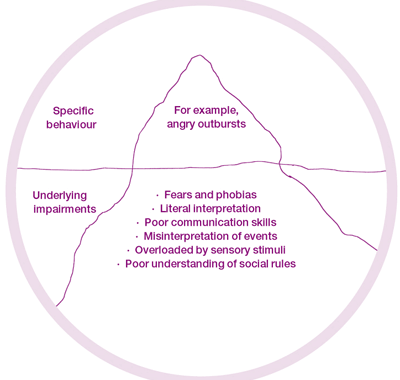
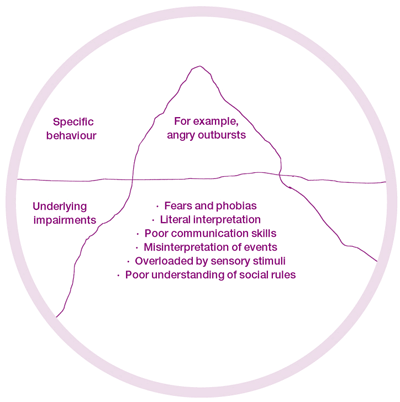
All too often we judge ourselves by our intentions and others by their behaviour. Guess what they judge you on your behaviour. When issues then arise in the team we hear about the work pressures or family issues or hear those dreaded words… It’s just who they are. Many organisations bring in Psychologists to deal with issues of personality (If I have to do another Myers-Briggs I may kill someone!) as that is seen as the overarching issue. Lets be clear!!! It is not their personality that is the issue, it is their behaviour! Or more specifically their lack of behaviour.
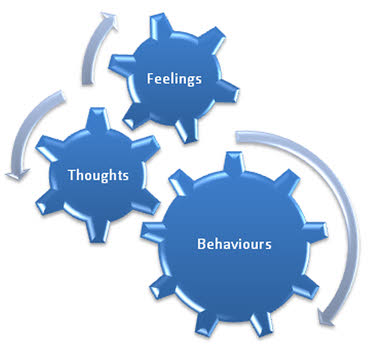
What we recommend at Ultimate Youth Worker is that we move towards a behaviourist approach to dealing with people. Whether the young people we work with, our colleagues or others we may work with along the way we should develop a lens of behaviour through which to judge our interactions. Don’t get us wrong, the Myers-Briggs and other personality profiles are a great tools. But for us to be effective in running groups, providing support to our young people or dealing with colleagues means understanding theirbehaviours and how to work with them to utilise their strengths.
Over the coming weeks we will begin to look at how to develop a behavioural lens to work from. A lens that will help you understand peoples strengths and weaknesses, how to speak to them in a way that will help you develop your relationship with them and ultimately strengthen your work with everyone you come across.
In the meantime… Stay Frosty.
What are your thoughts???
Leave us a comment below or post a comment on facebook and twitter.
Aaron Garth is a Melbourne-based youth worker, social worker, and mental health practitioner with over two decades of experience supporting young people across Australia. As Executive Director of Ultimate Youth Worker, he leads a team dedicated to training, coaching, and developing professionals in the youth sector.
A graduate of RMIT University and current PhD candidate, Aaron has worked across some of the most challenging areas of youth services — from homelessness and mental health to drug and alcohol outreach and residential care. He is a sought-after speaker, educator, and advocate for a more professionalised youth workforce, and has taught at institutions including RMIT, Chisholm Institute, and Eastern College Australia.
Aaron's work is driven by a simple belief: when youth workers are better supported, young people get better outcomes.
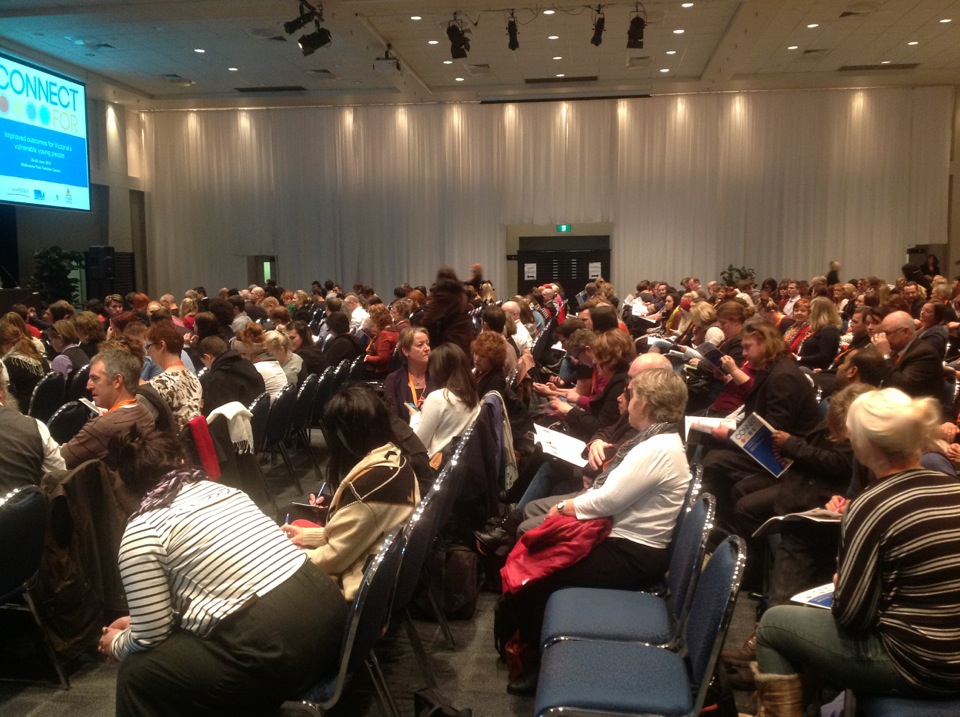
A couple of months ago I attended a conference where Professor Rob White from the University of Tasmania stated that the key attribute of a youth worker is their identity first and foremost as a youth worker. I have been thinking about this a lot lately as I am coming to the end of my masters degree and wonder what it will mean for my future professional Identity.
As a young man I began my studies in youth ministry. I was working for a local Baptist Church and was looking at gaining a qualification for my future work in the Church. A couple of years later I went on to study at RMITas I wanted to expand my understanding of youth work and the youth services sector. During this time I also had the opportunity to gain a Certificate in Alcohol and Other Drug work. After a few years and some interesting conversations I decided to go back and study for a master of social work. All of these courses have informed my practice as a youth worker over the years and have shaped who I am as a person.
Over the years I have had a number of jobs in the youth services field from drug and alcohol outreach to school based youth worker. I have also had a number of other social work roles such as in adult homelessness services and family services. Depending on whom I was talking too and what specialities my role required I would determine what I would tell a person when they asked what it was I did. For the most part I would tell people that I was a youth worker and deal with questions of my knowledge base if they arose later.
I was asked by a mate recently if I would start calling myself a social worker when I graduate from the masters. Without a second thought I said NO. Whilst I will be qualified as a social worker my heart is in youth. Truth be told I only did the qualification because I was sick of the politics and hierarchy of the welfare field in Australia and wanted “a piece of paper” that said I was as good as the rest. In my heart of hearts I am a youth worker and I am proud of it.
There is a discussion in the field about professionalism and a concurrent discussion on the idea of specialisation Vs generalisation in the field. When the chips are down it doesn’t matter if you have a specialisation or not. A specialisation does not make the professional. Our identity is not in our specialisation it is in our initial focus… working with young people. When we are the best at the core stuff that is when the sector sees us as professionals. Our professional identity hinges on our ability to do our job better than anyone else and that is something that we can be proud of. We resonate with Professor White’s statement that the key distinguishing attribute of a youth worker is indeed their identity first and foremost as a youth worker.
Aaron Garth is a Melbourne-based youth worker, social worker, and mental health practitioner with over two decades of experience supporting young people across Australia. As Executive Director of Ultimate Youth Worker, he leads a team dedicated to training, coaching, and developing professionals in the youth sector.
A graduate of RMIT University and current PhD candidate, Aaron has worked across some of the most challenging areas of youth services — from homelessness and mental health to drug and alcohol outreach and residential care. He is a sought-after speaker, educator, and advocate for a more professionalised youth workforce, and has taught at institutions including RMIT, Chisholm Institute, and Eastern College Australia.
Aaron's work is driven by a simple belief: when youth workers are better supported, young people get better outcomes.
Over the last few months I have been encouraged to imagine what youth work might look like in the future. This has been an exciting process, however it has also had a disheartening effect on me. You see when you look forward you inevitably return to the present and you may even glance to the past.
As I look into the past I lament the neo-liberal focus on professionalisation as meaning only having qualifications. I also lament the removal of practice wisdom from our day to day work and the replacement with rules and regulations. I lament that we have been so divisive in how we have dealt with each other as youth workers instead of banding together. We have made progress but we have also spent a lot of the time LOST in the wilderness navigating from glimpses of someone else’s map.
In their inspiring book “practical wisdom” Barry Schwartz and Kenneth Sharpe believe that we need to re-imagine our work as neither rules based or incentive driven but as being driven by practical wisdom. They call for us to become ‘canny outlaws’ who buck the trend of standardisation and become more empathetic and learn from the collective wisdom of the sector. In their view we need to become wise through mentoring and practice development without the constrains of standardisation and rote learning.
As I gaze into the future of youth work I imagine a profession unlike any other. One where we mentor our new colleagues and share practice wisdom freely. One where gaining a qualification is inconsequential but where ongoing education is the benchmark. A profession where our work is so exceptional that we are envied by others and where it is so unique that it is not so easily quantifiable.. or dismissed as it is currently. I see a profession of diverse skills, qualifications and theories that work in harmony to support young people as a whole person. I see a bright future. To get there we must stop tearing ourselves apart and begin to develop our own professional identity free from the constraints of other professions and those that have been imposed on us by governments and the neo-liberal agenda.
Aaron Garth is a Melbourne-based youth worker, social worker, and mental health practitioner with over two decades of experience supporting young people across Australia. As Executive Director of Ultimate Youth Worker, he leads a team dedicated to training, coaching, and developing professionals in the youth sector.
A graduate of RMIT University and current PhD candidate, Aaron has worked across some of the most challenging areas of youth services — from homelessness and mental health to drug and alcohol outreach and residential care. He is a sought-after speaker, educator, and advocate for a more professionalised youth workforce, and has taught at institutions including RMIT, Chisholm Institute, and Eastern College Australia.
Aaron's work is driven by a simple belief: when youth workers are better supported, young people get better outcomes.
I was recently chating with a bunch of social workers about their professional association and it became clear to me that even after all the work that has gone into the AASW as a professional association their membership still have the professional standing of a monkey with an organ grinder.
Why do I think this you may ask??? Basically because anyone can call themselves a social worker and there is nothing that they can do about it. For all intents and purposes the AASW is a registration board for all those social workers who want to be members. there is no requirement of them to be members and no legislative power to make it a requirement. Â
The difference in a professional association such as the APS, the Victorian Institute of Teachers or the Nurses Board of Victoria is that they are legislated and mandated by the Government and as such are able to “register” and “qualify” their membership. You cannot call yourself a Psychologist, Teacher or Registered Nurse if you are not one, and you can be held accountable by the law if you do so without their authority. It also means that you can be removed from practice if you are deemed to have broken the rules of the association. Â
If Youth Workers are to reach the level of PROFESSIONALS we need to take our campaign to the next level. Social workers are starting to move this way through the provision of Medicare provider numbers to those in their membership who qualify, however even this needs to go a step further. Members must be required to register with the association to practice. Â
This is the same for Youth Work. At the present anyone can call themselves a Youth Worker. Some of my best mates and closest colleagues are unqualified Youth Workers, however if we are to become a body of professional workers then we need to be required to register. Â
The only way a person can be required to register before practice is if they are legislated to do so. You don’t often see people practicing as a doctor without registration for long before they are caught and arrested. The same should be said for Youth Workers and Social Workers. Â
We need to advocate for this intervention if we are ever to be taken seriously as a profession. What extra standing will I have if Youth Workers professionalise? Little if any, because at the moment the current form of association in Victoria will render us little more than a club.
Aaron Garth is a Melbourne-based youth worker, social worker, and mental health practitioner with over two decades of experience supporting young people across Australia. As Executive Director of Ultimate Youth Worker, he leads a team dedicated to training, coaching, and developing professionals in the youth sector.
A graduate of RMIT University and current PhD candidate, Aaron has worked across some of the most challenging areas of youth services — from homelessness and mental health to drug and alcohol outreach and residential care. He is a sought-after speaker, educator, and advocate for a more professionalised youth workforce, and has taught at institutions including RMIT, Chisholm Institute, and Eastern College Australia.
Aaron's work is driven by a simple belief: when youth workers are better supported, young people get better outcomes.