keep great youth workers

9 ways to keep great youth workers

keep great youth workersHow do you keep great youth workers?

Youth work is one of the most difficult professions around. You tend to work with some very difficult clients who are generally not showing their best side. Managers know this, yet it still boggles my mind how often I have heard managers complaining about their lack of ability to keep great youth workers. The kicker is that they really do have something considerable to complain about.

There isn’t much more costly or disruptive as your best people walking out the door. The managers I have spoken with over the years tend to blame their turnover problems on everything under the sun, but with turnover in excess of 21% across the sector we need to face some hard truths.

Here are nine very simple things every team leader and manager can do to make sure they retain the very best youth workers in their organisation.

Don’t overwork people

The one thing that has become more obvious to me over the years is that the work of youth work has become a lot harder. We are dealing with more trauma, more responsibility and more paperwork than ever before. Governments have decreased funding while increasing our KPI’s. The stress factors have risen significantly. Our people are already working hard, so don’t add to the work load unnecessarily.

If we add to the workload significantly it can be counterproductive to the goal. You can only work them so long until they leave for better pastures. An increase in position or pay can help at least in the short term… however, in our experience this has a six month shelf life.

Recognise and reward

If managers could only do one thing to minimise retention issues and keep great youth workers this might be the one thing. A pat on the back goes a very long way. So do the words ‘well done’. Recognise great staff everywhere. in meetings, to donors, to the board, throughout the sector. Reward them where you can too. This may cost money… but its a lot less than having to hire new staff or deal with an employee who leaves because of psychological distress. Give a great worker an extra week of holidays. A night out for them and their special person. Buy them a book. Pay for course fees. Write them a card. The point is just do something.

Care about your employees

Every management role I have ever held hinged on the people who worked for me. I knew my successes were only able to come to fruition if they were fully committed to me and the mission. The best way for this to happen is to get to know your staff. Not just the professional but the personal too. I knew my staffs partners, children, birthdays, work anniversaries, work history, courses they had done, their illnesses and pains as well as their hopes and dreams. I would spend a minimum of half an hour one on one with my team and let them know I was there to bat for them. Knowing your staff is the key to care.

Hire and promote the right people

Hiring the right people is the most important part of a managers job. Getting the right person to fit the team, the organisational mission and then expecting them to have the right skill set means doing a good job at recruitment. Many of the interviews I have had lasted less than 30 minutes and many of the youth workers I speak with would say the same. It is not nearly enough. Hiring is the single most difficult task a manager has to learn to do if they want to keep great youth workers. Working with duds is a major demotivator for those stuck working alongside them. Ultimate Youth Workers want to work with equally awesome people. Oh, and promoting a dud is even more a slap in the face. Get the right people and they will stay.

Help people pursue their passionskeep great youth workers

The most talented youth workers are passionate people. Providing opportunities for them to pursue their passions improves their productivity and job satisfaction. Support them to develop their passion. Help with fundraisers, hook them up with networks, give them the opportunity to expand their horizon.  It will not only fill their passion but will reap exponential productivity time and brownie points for the tough times.

Further develop peoples skills

When we speak to youth workers and their managers we are appalled at the minimal amount of money and time spent developing staff. If you want to keep your best people you have to invest in them. At the very least you need to listen to your youth workers and provide them with feedback. It is the role of every manager to  educate their staff, find areas to develop in them. Read, do webinars, join peak bodies, further your education and become better.

Engage their creativity

You hired the best people, right? Then why do you want to hold them back and stick them in a box.  These amazing youth workers want to change the world and see everything they touch turn to gold. Why would you want to squash this? Let them off the leash a little. Expect reports but let them do things in their way. Guide and challenge your staff but let them use their talent and their skills to do the job you hired them for in the first place.

Challenge youth workers intellectually

This comes as a surprise to many people but youth workers are thought workers. We think a lot. Its a mentally draining job. When I used to push my students they would bemoan my making them think more… But in the field they are the ones who others look too. If you don’t make your great staff think and reflect they will most definitely get bored. If they get bored you won’t be able to keep great youth workers. If you haven’t done a degree yet, Check this one out.

Love them all!

If you don’t love your staff they will know it. If you love one or two, the others will know it. If you don’t love your team you won’t go the extra mile for them. Managers who go the extra mile will always keep the best staff. Love, Love Love!


This post was based off an article by Dr travis Bradberry on HuffingtonPost

Aaron Garth

Aaron Garth

Aaron Garth is a Melbourne-based youth worker, social worker, and mental health practitioner with over two decades of experience supporting young people across Australia. As Executive Director of Ultimate Youth Worker, he leads a team dedicated to training, coaching, and developing professionals in the youth sector. A graduate of RMIT University and current PhD candidate, Aaron has worked across some of the most challenging areas of youth services — from homelessness and mental health to drug and alcohol outreach and residential care. He is a sought-after speaker, educator, and advocate for a more professionalised youth workforce, and has taught at institutions including RMIT, Chisholm Institute, and Eastern College Australia. Aaron's work is driven by a simple belief: when youth workers are better supported, young people get better outcomes.

More Posts - Website

Follow Me:Add me on FacebookAdd me on LinkedInAdd me on PinterestAdd me on YouTubeAdd me on Instagram

Youth work: The professional relationship

I have been rereading “Youth Work Ethics” by Professor Howard Sercombe lately. I forgot how good a read it is. Clear, concise and straight to the point. What got me was a really interesting discussion of professions being a relationship. Particularly, that by building this professional relationship we build trust in our clients allowing them to be vulnerable in our presence. Sercombe states, “Youth work creates spaces within which that can happen well, and walks with young people through the process of it happening“.

DSCF0809

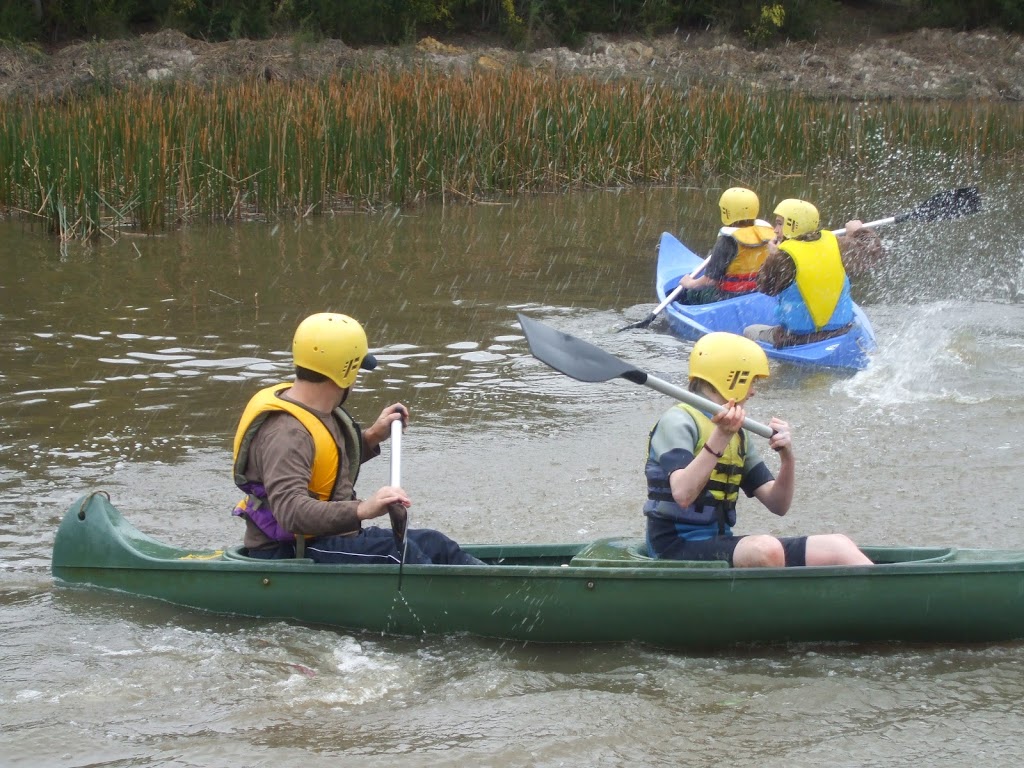
Professional relationship at its best

As a youth worker I have been involved in the discussion of professionalising our sector for over a decade. All too often the focus of professionalising is setting us apart from our clients. It is putting in rules and policies which hold them at arms length from us. Other ‘professions’ such as psychology and nursing are often held up as benchmarks because of this ‘professional distance’ from their clients. We look to them and attempt to emulate their style because we live in a notion of professionalism which is rooted in the sociological view of professions from the 1950’s. However, many youth workers around the world struggle with this as it further separates us from our clients. It empowers us and further oppresses them.

If we as a fledgling profession decide to follow in the tired old footsteps of professions gone before us we will continue to further push our clients away. This goes completely against the grain of our core values. Youth work is a relational profession! Building professional relationship is at the core of all our work. As Sercombe says, “It is a partnership within that space – a covenant… in which youth worker and young person work together to heal hurts, to repair damage, to grow into responsibility, and to promote new ways of being“.

This is the joy I have when I think about our profession. We are partners in the journey with our young people. We walk alongside them in joy and sadness, lows and highs. Looking towards a bright new day. That is a professional relationship!

Aaron Garth

Aaron Garth

Aaron Garth is a Melbourne-based youth worker, social worker, and mental health practitioner with over two decades of experience supporting young people across Australia. As Executive Director of Ultimate Youth Worker, he leads a team dedicated to training, coaching, and developing professionals in the youth sector. A graduate of RMIT University and current PhD candidate, Aaron has worked across some of the most challenging areas of youth services — from homelessness and mental health to drug and alcohol outreach and residential care. He is a sought-after speaker, educator, and advocate for a more professionalised youth workforce, and has taught at institutions including RMIT, Chisholm Institute, and Eastern College Australia. Aaron's work is driven by a simple belief: when youth workers are better supported, young people get better outcomes.

More Posts - Website

Follow Me:Add me on FacebookAdd me on LinkedInAdd me on PinterestAdd me on YouTubeAdd me on Instagram

Why are you a youth worker?

This week sees the launch of National Youth Week here in Australia. It is about this time every year that I spend some time reflecting on why I am a youth worker. Seeing young people reach their full potential, many against great odds always makes me excited to see youth work at its best. 

When I was younger it was only the support and guidance of a couple of great youth workers that stopped my path towards Jail or death. I saw the worst and best of myself unfold due to their gentle ministering and was given a picture of what life could be like on the other side of my pain and strife. I saw that the life I was surrounded by was not necessarily the life that I had to live for the rest of my days.

It is this sense, that there is more to life than meets the eye, that I hope to impart upon the young people I work with. To help them see past the next five minutes of their existence to a future that glows and excites. This is why I am a youth worker. Why are you?

Leave us a comment below. 
Aaron Garth

Aaron Garth

Aaron Garth is a Melbourne-based youth worker, social worker, and mental health practitioner with over two decades of experience supporting young people across Australia. As Executive Director of Ultimate Youth Worker, he leads a team dedicated to training, coaching, and developing professionals in the youth sector. A graduate of RMIT University and current PhD candidate, Aaron has worked across some of the most challenging areas of youth services — from homelessness and mental health to drug and alcohol outreach and residential care. He is a sought-after speaker, educator, and advocate for a more professionalised youth workforce, and has taught at institutions including RMIT, Chisholm Institute, and Eastern College Australia. Aaron's work is driven by a simple belief: when youth workers are better supported, young people get better outcomes.

More Posts - Website

Follow Me:Add me on FacebookAdd me on LinkedInAdd me on PinterestAdd me on YouTubeAdd me on Instagram

Ongoing professional development: Its all about your budget.

I have been in a number of agencies throughout my youth services career and only one of them had a written down budget for youth work professional development. In this organisation I had one of the largest budgets for professional development I had ever had… $1000. However in most organisations I worked in a professional development budget was at best ad hoc and at worse non-existent. 

I have heard of a number of ways to divide up a professional development budget and to tell you the truth I have not put much credence in most of them. How long you have been in the organisation? Your role requirements? Your agencies needs? None of them make any sense when you are talking about longevity in the field. When you want to develop workers to sustain your organisation and the sector you have to think outside the box, and for most organisations that means spending money.

In the mining industry here in Australia some of the best mines realised that they were losing workers because they had no reason to stay. The money was good, The work wasn’t to hard but still they were losing staff… Until they started putting money in the right place. They set up great internet, provided training opportunities and expected staff to develop themselves through courses. Everything from first aid to business development. It was open to the newest of staff and the long tremors. From the lowest paid to the highest paid. The expectation was that you did something.

At Ultimate Youth Worker we would love to offer an unlimited budget for professional development but like every youth organisation we have to balance our budget too. In our case we devote 3% of our yearly budget for staffing to professional development. If you earn $50,000 you have a professional development budget of $1,500. We ask our staff to develop a professional development plan that has some things for us as an organisation and some areas that they want to work on. If they want to work on something that is outside the purview of the work we do we ask them to demonstrate how it would support the work we do in the future. If it would support us or the sectors development we are happy to provide the finances within the 3%. We also offer employees further development above the 3% as needed however as a minimum that 3% is always in our budget.

What does your organisation do? Perhaps you can start providing a guarantee for your employees!  

Leave us a comment below!
Aaron Garth

Aaron Garth

Aaron Garth is a Melbourne-based youth worker, social worker, and mental health practitioner with over two decades of experience supporting young people across Australia. As Executive Director of Ultimate Youth Worker, he leads a team dedicated to training, coaching, and developing professionals in the youth sector. A graduate of RMIT University and current PhD candidate, Aaron has worked across some of the most challenging areas of youth services — from homelessness and mental health to drug and alcohol outreach and residential care. He is a sought-after speaker, educator, and advocate for a more professionalised youth workforce, and has taught at institutions including RMIT, Chisholm Institute, and Eastern College Australia. Aaron's work is driven by a simple belief: when youth workers are better supported, young people get better outcomes.

More Posts - Website

Follow Me:Add me on FacebookAdd me on LinkedInAdd me on PinterestAdd me on YouTubeAdd me on Instagram

Guest post on drownthenoise.com

Our guest post is being published on drownthenoise.com today – it’s an open look at the idea of vocation in youth work. Feel free to post in the comments about how witty, insightful and amazing it is!!!

If you’ve come to Ultimate Youth Worker after already reading the post on drownthenoise.com  – WELCOME!!! We hope you found it witty, insightful and amazing too!

We’re really glad you’ve come to check us out. Here’s a quick guide to us as a company:

Our Blog

You should already be on our blog page, so you can scroll down and read some of our recent posts. To see older posts, there are a few ways of doing this:
  • Click on “older posts” at the bottom of this page
  • Click on one of the categories on the right hand side of the page to read specific types of posts (e.g. professional identity, youth work, self care etc)
  • Use the “blog archive” on the right 

Our Website

We are currently developing a website to showcase what we believe and what we do! Check us out.

Connect with us!

We’d love to connect with you in the following ways:

  • Subscribe to receive our posts via email (you can do it on the right hand side of this post) – you’ll receive one email a week with that week’s post(s). Don’t worry, we’ll never spam you or sell your details.
  • Follow us on Twitter
  • Like us on Facebook

Once again, thanks for visiting Ultimate Youth Worker! We hope you find some useful stuff on our blog. If you know any youth workers or youth pastors, we’d love for you to tell them about us – each week we provide a new post so keep on coming for more thoughts on youth work.
Aaron Garth

Aaron Garth

Aaron Garth is a Melbourne-based youth worker, social worker, and mental health practitioner with over two decades of experience supporting young people across Australia. As Executive Director of Ultimate Youth Worker, he leads a team dedicated to training, coaching, and developing professionals in the youth sector. A graduate of RMIT University and current PhD candidate, Aaron has worked across some of the most challenging areas of youth services — from homelessness and mental health to drug and alcohol outreach and residential care. He is a sought-after speaker, educator, and advocate for a more professionalised youth workforce, and has taught at institutions including RMIT, Chisholm Institute, and Eastern College Australia. Aaron's work is driven by a simple belief: when youth workers are better supported, young people get better outcomes.

More Posts - Website

Follow Me:Add me on FacebookAdd me on LinkedInAdd me on PinterestAdd me on YouTubeAdd me on Instagram

The stupidity of calling youth work science will limit our effectiveness!

If I hear another person talk about the science behind youth work or the best-practice “research” that has been done I will scream. This pervasive discourse of youth work through a scientific lens, to the detriment of practice wisdom and individuality, will lead to the destruction of our sectors most central ideologies. 

Putting people in comfortable boxes has never been central to the work of a youth worker, until recently. To have clear diagnoses, a cookie cutter support plan and a “best-practice” set of interventions is the way of the medical, psychological and scientific sectors. There has been a lot written about the divide between the art and science of youth work with much more over the past decade focusing on the scientific. This does not take into account the the complexities that coalface youth workers deal with on a daily basis. “Becoming a professional when one’s discipline is people/young people requires more than technical knowledge; it requires a way of being that is relational, emergent, flexible, dialogic, participatory, and contextualised (Fusco 2013).

Youth work is a flexible, fluid profession. We have historically steered clear of generalising how we work with individuals as it limits our fluidity. We seek to support young people in their context with their individual needs. When we begin to use the frameworks of economic rationalism and the sciences to frame our practice we begin to see people view our practice wisdom and philosophy as weak hokum. Where science seeks fact and answers to problems, we seek to delve into the human condition through questions and journeying with our young people.

There is no doubt that the scientific has bolstered youth work. What we know of brain and psychosocial development has become integrated into our practice kitbag. But, there is a big difference between using the knowledge of a profession and subscribing to its framework and philosophy. If we allow governmental managerialism and our own inadequacies to force us to give up what makes us unique we will regret it.

Let us know your thoughts. Leave us a comment.

Aaron Garth

Aaron Garth

Aaron Garth is a Melbourne-based youth worker, social worker, and mental health practitioner with over two decades of experience supporting young people across Australia. As Executive Director of Ultimate Youth Worker, he leads a team dedicated to training, coaching, and developing professionals in the youth sector. A graduate of RMIT University and current PhD candidate, Aaron has worked across some of the most challenging areas of youth services — from homelessness and mental health to drug and alcohol outreach and residential care. He is a sought-after speaker, educator, and advocate for a more professionalised youth workforce, and has taught at institutions including RMIT, Chisholm Institute, and Eastern College Australia. Aaron's work is driven by a simple belief: when youth workers are better supported, young people get better outcomes.

More Posts - Website

Follow Me:Add me on FacebookAdd me on LinkedInAdd me on PinterestAdd me on YouTubeAdd me on Instagram

99% attitude and 1% skill: youth work students need to realise!

I have recently been reviewing the student placements of a number of youth work students. I have been speaking with their supervisors and have come to the conclusion that there is one thing that all youth work students need to know before they go on placement… it doesn’t matter how much you know or don’t know it is almost all about your attitude.
 
Many of the supervisors stated that they did not care how much the students knew they just wanted willingness to learn and a positive attitude. The students who showed these qualities were given great marks and amazing opportunities. For those that didn’t have the right attitude they were shunned and treated with reservation.

When you have students come into your organisation for placement gently remind them that their attitude is important to their overall success in their placement and in the sector. Skills are the 1%ers which can be taught. Attitude is the thing that will get them through every time.
Aaron Garth

Aaron Garth

Aaron Garth is a Melbourne-based youth worker, social worker, and mental health practitioner with over two decades of experience supporting young people across Australia. As Executive Director of Ultimate Youth Worker, he leads a team dedicated to training, coaching, and developing professionals in the youth sector. A graduate of RMIT University and current PhD candidate, Aaron has worked across some of the most challenging areas of youth services — from homelessness and mental health to drug and alcohol outreach and residential care. He is a sought-after speaker, educator, and advocate for a more professionalised youth workforce, and has taught at institutions including RMIT, Chisholm Institute, and Eastern College Australia. Aaron's work is driven by a simple belief: when youth workers are better supported, young people get better outcomes.

More Posts - Website

Follow Me:Add me on FacebookAdd me on LinkedInAdd me on PinterestAdd me on YouTubeAdd me on Instagram

Developing leaders in youth work: Its crucial to mentor.

Many years ago after finishing my degree I asked one of my professors for some guidence with an piece of work I was doing. Without hesitation she said that she would be delighted as we need to develop more leaders in the youth sector. This short statement has meant a lot to me over the years but I never fully understood its importance until this year.
As a teacher of youth work students I can see the passion and future potential colliding every day I teach. The students of today will be the managers in a decade. The work we do now will pay dividends in a generation. Sadly though, it seems that there is little happening post the education of youth workers.
We who have been in the sector for a while need to mentor those coming through. Whether you are a coalface worker, a Manager or a CEO you need to support the next generation coming through. If we truly want to see audacious youth workers in an excellent sector then we need to impart our practice wisdom to those who are going to be the leaders of the future. Every organisation which employs youth workers should mentor them. Every professional association should develop a register of potential mentors. Most of all it should become part of our core responsibilities to the sector.
If one youth worker supports one other youth worker per year through their career then we will see a revolution. Imagine mentoring 30-50 other youth workers who in turn support another 30-50. We would have a highly supported and trained workforce for generations.


Our challenge to you:


If you have five years or more in the sector, find one person you could potentially mentor for the next 12 months.


Let us know how you go! Leave us a comment below or post a comment on facebook and twitter.

If you haven’t yet, sign up for our newsletter to find out all the goings on at Ultimate Youth Worker. (Sign up here)

Aaron Garth

Aaron Garth

Aaron Garth is a Melbourne-based youth worker, social worker, and mental health practitioner with over two decades of experience supporting young people across Australia. As Executive Director of Ultimate Youth Worker, he leads a team dedicated to training, coaching, and developing professionals in the youth sector. A graduate of RMIT University and current PhD candidate, Aaron has worked across some of the most challenging areas of youth services — from homelessness and mental health to drug and alcohol outreach and residential care. He is a sought-after speaker, educator, and advocate for a more professionalised youth workforce, and has taught at institutions including RMIT, Chisholm Institute, and Eastern College Australia. Aaron's work is driven by a simple belief: when youth workers are better supported, young people get better outcomes.

More Posts - Website

Follow Me:Add me on FacebookAdd me on LinkedInAdd me on PinterestAdd me on YouTubeAdd me on Instagram

Is youth work suffering the death of a thousand cuts?

Over the past weekend I spent some time reading about the professionalisation debate which has swept the global youth work fraternity. I read that as an industry it is required of us to become more professionalised in order to cement our place in the human services sector. I read that we must become more stringent on who we let in and what we do to those who do not conform to the new ways. I read that we need associations to manage our professionalism in the same vain as nurses, psychologists and lawyers. I read and I wept.
 
There are few in the youth services industry which would not argue that we need to become more professional. There are even fewer who would argue that we don’t need more stringent requirements on those we allow into the sector. The issue that we see in the current professionalization argument is that we are forsaking youth work to be seen as equal to every other generic profession.


Youth work needs to stand up and be counted. There is little good in us becoming like every other cookie cutter profession. In doing so we will suffer the death of a thousand cuts. Every time we give up a little of our innovation or uniqueness to become more like other professions we die a little. When we become more like everyone else we lose something of ourselves.
 
Recently I was speaking with a youth work student who believed whole heartedly that the only way to do youth work was case management. She believed that the way she had been taught to do youth work over her studies was leading her into a case management role. This limited view came to bear as her lecturers sought to instil that case management was the highest form of professional youth work.
 
We are at the crossroads, and as I was told as a child we need to look both ways before moving forward. So far, most of the literature has not asked what the down side of professionalism might be… and this is the question that we most need to discuss. Because after all the fate of our sector rests on the decisions we make today.
 

You can also leave us a comment below or post a comment on facebook and twitter.


If you haven’t yet, sign up for our newsletter to find out all the goings on at Ultimate Youth Worker. (Sign up here)

 
Aaron Garth

Aaron Garth

Aaron Garth is a Melbourne-based youth worker, social worker, and mental health practitioner with over two decades of experience supporting young people across Australia. As Executive Director of Ultimate Youth Worker, he leads a team dedicated to training, coaching, and developing professionals in the youth sector. A graduate of RMIT University and current PhD candidate, Aaron has worked across some of the most challenging areas of youth services — from homelessness and mental health to drug and alcohol outreach and residential care. He is a sought-after speaker, educator, and advocate for a more professionalised youth workforce, and has taught at institutions including RMIT, Chisholm Institute, and Eastern College Australia. Aaron's work is driven by a simple belief: when youth workers are better supported, young people get better outcomes.

More Posts - Website

Follow Me:Add me on FacebookAdd me on LinkedInAdd me on PinterestAdd me on YouTubeAdd me on Instagram

Local government youth work: Placation or proliferation?

In my illustrious career I had the privilege of being a coordinator of a small local government youth service for the lengthy duration of seven months. As I was transitioning to this role I was warned by a number of colleagues that this would be a difficult role for me to hold due to my own philosophical and professional beliefs in youth work. I wish I had have listened to my advisers then. Whilst I made some amazing friends and worked wit some extremely dedicated staff the constriction on youth service provision made the role untenable.
 
I have spoken to a number of my youth work colleagues who have worked for councils and have had a mixed response to my feelings. Many of my colleagues stated that council youth work provided them with the best possible framework for strengthening young people and providing opportunities for growth and development. That advocacy and participation are held as core duties and that programs work fills a gap in service provision.
 
I have also spoken to a number of youth workers who see council youth work as no more than placating residents and disenfranchised young people. They see the idea of program work and generalist work as proliferating disenfranchisement in young people. That at best council youth services provide a way of keeping young people off the streets and at worst provide an oppressive program keeping young people out of public life.

From my own experience I would say that the later is probably a bit far fetched, however many councillors and senior managers in local government have little understanding of the importance of young people in their municipalities. Local government youth workers need to be less constrained than they are at the moment so that they can provide locally focused responses to local issues. Youth workers in local government are often reminded that their client isn’t their community it is their councillors. This does place a clear line in the sand that youth workers must grapple with… especially when our profession believes that young people are our primary client.
Aaron Garth

Aaron Garth

Aaron Garth is a Melbourne-based youth worker, social worker, and mental health practitioner with over two decades of experience supporting young people across Australia. As Executive Director of Ultimate Youth Worker, he leads a team dedicated to training, coaching, and developing professionals in the youth sector. A graduate of RMIT University and current PhD candidate, Aaron has worked across some of the most challenging areas of youth services — from homelessness and mental health to drug and alcohol outreach and residential care. He is a sought-after speaker, educator, and advocate for a more professionalised youth workforce, and has taught at institutions including RMIT, Chisholm Institute, and Eastern College Australia. Aaron's work is driven by a simple belief: when youth workers are better supported, young people get better outcomes.

More Posts - Website

Follow Me:Add me on FacebookAdd me on LinkedInAdd me on PinterestAdd me on YouTubeAdd me on Instagram