Deep engagement in youth work

All too often in youth work we are forced to commit ourselves to shallow engagements with young people. Whether because of funding, policy or staffing constraints we are required to put aside relationship building to satisfy paperwork for bureaucrats. More and more young people are crying out for real support from youth workers, and more and more the squeeze of the bureaucrat tears our loyalty and professionalism in two. How can young people trust us when we can’t offer them the basis of trust…time?
 
In my mid twenties I was seconded to a small rural drug and alcohol rehabilitation centre as their Assistant Manager. I was excited. However that excitement barely lasted my first week. I was tasked with transforming the service into a dual diagnosis rehabilitation facility by our government benefactors within very stringent time lines and policy environments. One of my constraints was that a maximum stay with our service was eight weeks with many young people leaving before the sixth week. The government saw this as young people having an inability to stick at rehabilitation. I saw young people who did not trust the staff and could not develop lasting relationships in six weeks being oppressed by a system set up to help them.
 
 
I advocated for a change to our constrained time frames and was blocked. We showed client feedback and were countered by vagueties and innuendo. We even provided cost benefit analysis to the minister showing the need. Nothing. The idea of engaging with young people beyond a surface level was one which we just could not get the bureaucracy to understand. This led me to become as Schwartz and Sharpe (2011) a canny outlaw, Trading conventional wisdom for practical wisdom. I found every opportunity to keep a young person on for a second stay. I developed links to supported accommodation and provided staff to outreach to the young people. My rationale was that if we were to really effect change in our young peoples lives then we had to gain their trust and that required a deeper engagement than six weeks could provide. It was during this time that I began to develop my understanding of the need for deep engagement as a pillar of successful youth work practice.
 
Young people are seeking genuine care from youth workers. Care built on developed trust. To build this trust we must share life with our young people and this can only happen by spending time with them. I have worked in many corners of the youth sector, government departments, residential care, family services, homelessness and ministry; the same issue exists in every one of them. Policy constraints, lack of funding and a lack of trust from our young people. If we wish to turn the tide of societal disintegration we have to step into the gap. Our identity as youth workers places us in that gap. We believe that young people should have every opportunity to develop and the best way for that is to engage as deeply with them as possible. Sharing in their struggles, triumphs and developing a trust that can only come from a shared path.


We are accountable to many stakeholders as youth workers. In this role we must hold our accountability to our young people as our highest duty. To provide the best practice possible to our young people we must engage deeply and build trust. But how do we do it I hear you say? It is no easy feat. We will have to move counter culturally to the norm of current youth work practice. We must spend more time with our young people in meaningful activities rather than one hour appointments.
 
Deep engagement is difficult in our current service system however, it is the only way to build the foundation to work with young people to change their trajectory. Deep engagement is the benchmark for youth services provided by the team at Ultimate Youth Worker. It is also the central concept in all of our teaching, supervision and coaching around client engagement. We believe this so intensely that we routinely pass up work that is not geared towards enhancing engagement with young people. This is our number one imperative when working with young people. If you are not willing or able to engage deeply with young people do not engage at all! 
 
In coming months we will discuss how to engage deeply with young people, however it may require you to shirk the ‘rules’ imposed on you. Are you willing to become a ‘canny outlaw’ to support young people more effectively?
 

If you haven’t yet sign up for our newsletter, find out all the goings on at Ultimate Youth Worker by signing up using the form at the top right of this page. It is all you need to do.


 You can also sign up to have our blog posts sent straight to your email by adding your email to the subscribe button on your right.


You can also leave us a comment below or post a comment on facebook and twitter.

Aaron Garth

Aaron Garth

Aaron Garth is a Melbourne-based youth worker, social worker, and mental health practitioner with over two decades of experience supporting young people across Australia. As Executive Director of Ultimate Youth Worker, he leads a team dedicated to training, coaching, and developing professionals in the youth sector. A graduate of RMIT University and current PhD candidate, Aaron has worked across some of the most challenging areas of youth services — from homelessness and mental health to drug and alcohol outreach and residential care. He is a sought-after speaker, educator, and advocate for a more professionalised youth workforce, and has taught at institutions including RMIT, Chisholm Institute, and Eastern College Australia. Aaron's work is driven by a simple belief: when youth workers are better supported, young people get better outcomes.

More Posts - Website

Follow Me:Add me on FacebookAdd me on LinkedInAdd me on PinterestAdd me on YouTubeAdd me on Instagram

Accountability through ongoing learning

Throughout my career I have met hundreds if not thousands of youth workers with varying levels of expertise, varying knowledge bases and within differing organisations. Whether they are eighteen or eighty (yes I have met an eighty year old youth worker) they all brought their understanding and experiences to their practice. The ones who I respected the most were the ones who had the guts to say they didn’t know something and asked how to do it. Whether it was looking at a new theory and not knowing how to translate it to theory or developing a program and not knowing the best evaluation methods recognising your limitations and seeking to gain education to fix this is the mark of a true Ultimate Youth Worker.
 
 
Recently I have met a handful of youth worker’s who have spent more than a decade in the field. These youth workers are in positions of leadership throughout the sector. They also have a limited understanding of youth work basics. They do not hold qualifications and believe that their knowledge level is ok. These workers are not held accountable for their practice by anyone. Because of their lack of accountability these youth workers have not been required to develop their skillset, their practice or their ethics.
 
One such worker stated to me that after thirty years in the field she did not know how to evaluate a program properly. She followed that comment up by saying that it was ok because she would leave program evaluation to her staff. I don’t believe that you need to know everything as a supervisor but you should have a basic level of understanding. This worker did not see her deficit as needing to be addressed. If she had stated that she wanted to know how to evaluate a program or that she was looking into some articles about evaluation this post may not have been written. We need to aim for excellence in youth work. We owe it to our clients, coleagues and community. Anything else is slack.
 
 
The fact is it is easy to fix. I do not know everything. I am the first to admit it. The rest of the team hear at Ultimate Youth Worker do not hold the ticket of all knowledge. Together we are not bad but we still don’t know it all. But we do ask questions, we read widely and attend every piece of training that we possibly can. The first step is to identify where there is a deficit in your practice. The second step is to seek a way to fix this deficit and to be a sponge of any knowledge you can find to aid you in this mission.  
A way to get your professional learnings right on your phone, tablet or computer
Until recently I had never written a social media marketing plan. I spoke to friends and colleaguews in the communications field. I read articles and blogposts and anything else I could get my hands on. I spent endless nights slaving over the keyboard and eventually I wrote my first social media marketing plan. I have also been working with a young youth worker who is developing his first project proposal. When we first spoke about what it would entail before he could open the doors to his first project he almost fell off his chair. The task seemed so big. It was unknown. A few chats and a couple of articles later and the task didn’t seem to scary. Knowledge is a powerful tool.
 
The other side to this coin is to have someone who will keep you accountable to ongoing learning. If you are blessed (or cursed as I may be) you may have multiple people who get you to think about multiple areas of your practice. The point is you never become an expert… you just become a life long learner. The education of an Ultimate Youth Worker is a life long commitment and a duty to be fulfilled. But more on that next week.


If you haven’t yet sign up for our newsletter to find out all the goings on at Ultimate Youth Worker. The form at the top right of this page is all you need to do.


You can sign up to have our blog posts sent straight to your email by adding your email to the subscribe button on your right.


You can also leave us a comment below or post a comment on facebook and twitter.

Aaron Garth

Aaron Garth

Aaron Garth is a Melbourne-based youth worker, social worker, and mental health practitioner with over two decades of experience supporting young people across Australia. As Executive Director of Ultimate Youth Worker, he leads a team dedicated to training, coaching, and developing professionals in the youth sector. A graduate of RMIT University and current PhD candidate, Aaron has worked across some of the most challenging areas of youth services — from homelessness and mental health to drug and alcohol outreach and residential care. He is a sought-after speaker, educator, and advocate for a more professionalised youth workforce, and has taught at institutions including RMIT, Chisholm Institute, and Eastern College Australia. Aaron's work is driven by a simple belief: when youth workers are better supported, young people get better outcomes.

More Posts - Website

Follow Me:Add me on FacebookAdd me on LinkedInAdd me on PinterestAdd me on YouTubeAdd me on Instagram

Behavioural observation is the key to best practice youth work.

A few weeks ago we stated that we would look at how to develop a behavioural lensto inform how you work with young people and colleagues. A lens that will help you understand peoples strengths and weaknesses, how to speak to them in a way that will help you develop your relationship with them and ultimately strengthen your work with everyone you come across. This week we show you the framework.

A while ago I interviewed for a managementposition. One of my interviewers was someone that if I got the role I would supervise. In the interview I was able to answer the questions and got along well with two of the three interviewers. The third interviewer was a blank slate. I couldn’t read him at all. The worst part was that he was going to be my direct. I was freaking out and needed a way to break through their blank persona.

A few years earlier I was managing a youth drug andalcohol rehab. I had a young person come to us straight from jail with a personality bigger than Ben Hur. Everyone thought he was great, the life of the party. He was a lot of fun to work with, but he was also really frustrating. He never followed through on anything!!!

These are just two people and a snapshot of their behaviour, but I am sure you can all imagine people like this that you have come across. Before I was shown this simple but most important framework people showing these behaviours were extremely difficult for me to understand or work with. Afterwards, with a little work, I have become a better judge of character and supportive youth worker.
 

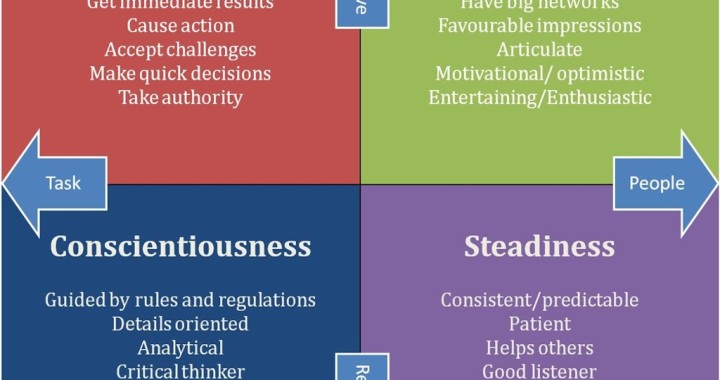
DISC

 
DISC is a quadrant behavioral model based on the work of Dr. William Moulton Marston (1893–1947) to examine the behavior of individuals in their environment or within a specific situation (otherwise known as environment). It therefore focuses on the styles and preferences of such behaviour. For most, these types are seen in shades of grey rather than black or white, and within that, there is an interplay of behaviors, otherwise known as blends. The determination of such blends starts with the primary (or stronger) type, followed by the secondary (or lesser) type, although all contribute more than just purely the strength of that “signal”. Having understood the differences between these blends makes it possible to integrate individual team members with less troubleshooting. In a typical team, there are varying degrees of compatibility, not just toward tasks but interpersonal relationships as well. However, when they are identified, energy can be spent on refining the results.


The four behavioural types are Dominance, Influence, Steadiness and Conscientiousness.

 
Those with Dominance and Influence behavioural types are more ASSERTIVE.
 
Those with Steadiness and Conscientiousness behavioural types are more RESERVED.
 
Those with Influence and Steadiness behavioural types are more PEOPLE focused.
 
Those with Dominance and Conscientiousness behavioural types are more TASK focused.


This graphic illustrates this more effectively.

 
Over the coming ‘Thursday Think Tanks’ we will delve more into these behavioural types and how they can help you to develop your emotional intelligence and practical wisdom.
 
In the meantime Stay Frosty!!!
 
Aaron Garth

Aaron Garth

Aaron Garth is a Melbourne-based youth worker, social worker, and mental health practitioner with over two decades of experience supporting young people across Australia. As Executive Director of Ultimate Youth Worker, he leads a team dedicated to training, coaching, and developing professionals in the youth sector. A graduate of RMIT University and current PhD candidate, Aaron has worked across some of the most challenging areas of youth services — from homelessness and mental health to drug and alcohol outreach and residential care. He is a sought-after speaker, educator, and advocate for a more professionalised youth workforce, and has taught at institutions including RMIT, Chisholm Institute, and Eastern College Australia. Aaron's work is driven by a simple belief: when youth workers are better supported, young people get better outcomes.

More Posts - Website

Follow Me:Add me on FacebookAdd me on LinkedInAdd me on PinterestAdd me on YouTubeAdd me on Instagram

Youth Work Project Management

Welcome to our first ever Thursday Think Tank. Here we will discuss tips, tools, frameworks and systems that will help you deliver the best services to your young people that you possibly can.

 
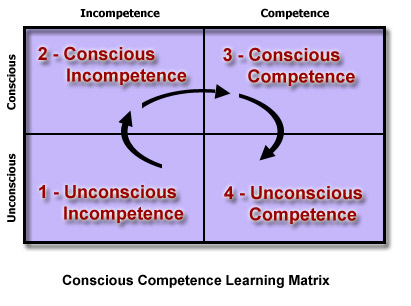
Over the years I have managed many projects as a youth worker. You may consider the idea of project management to be foreign to the idea of youth work but it is something that we do every day. The issue is for the most part we are Unconsciously Incompetent… We don’t know what we cant do. What we want to see is Ultimate Youth Worker’s who are Unconsciously Competent… We know what we are doing so intrinsically that we don’t realise we are doing it, Just like breathing. If you run a group, lead a team or have an event to run this framework will help you reach your goals.
 
 
I have friends in many different sectors of employment. One area that has always astounded me is project management. I have one friend who is a project manager for a large construction firm. He holds a diploma level qualification (2 years at a tertiary institute) and is 30 years old. he has been in the role for 2 years and in the last tax year he grossed over $100,000 dollars. We caught up last week and spoke about his role. In our discussions we spoke about his way of managing projects, theories of project management and issues both positive and negative that impact of project completion. You know what 99% of what he spoke about was a complete waste of time. It blew my mind to know that my friend who earns double what I do actually could not explain how he keeps a project on track.
 
I shared with him how we at Ultimate Youth Worker recommend and teach people to manage projects. Its boring, simple, unsexy and it works like a charm. We won’t go into it all here but rest assured over the coming years we will cover it all. All our advice however is built on the foundation of our first rule of managing a project:
 

WHO is responsible for WHAT and by WHEN

Pretty simple right!!! WRONG. Whether it is running a team meeting, developing a strategic plan, running a youth group or putting on a gig for local high school students this foundation can keep you on track, but only if you use it. Too many people do not have a framework for developing their project and get into trouble because they do not know what is going on. Over the years I have seen projects like a conference or a concert fail because it went over budget or people were not invited. I have seen teams flail through years of mismanagement begging for direction. I have seen organisations crash because people were not held accountable for their decisions and to their responsibilities. Our project mantra helps the project leader to steer the group to success.
 

Here is a simple table that you can use to make any project work.

This is a simple team meeting proforma.


WHO

WHAT

WHEN

Aaron spoke with FINANCE this week and has been informed that we need to reconcile our accounts.

All Staff

Reconcile accounts

By close of business Thursday

Nick discussed a meeting he attended with local service providers. The meeting provided many opportunities to network and develop partnerships

Nick and Team leader


Team leader


Network with local youth agencies


Inform manager of opportunities for partnerships

Throughout April


In weekly one on one meeting this week

Sarah is developing a local gig for young people in our area. She is putting together a committee of young people to help. The gig will be at the end of November.

Sarah


All staff

Engage young people for committee


Promote committee to our clients

By end of October


By end of October

Now this is just a basic template and you can most definitely expand upon it. I have used these in many different formats including team meetings, group design, organisational restructure and even planning blog posts. However, if you use the basics you will be well on your way to delivering your objective in a timely strategic way. The best part about this framework is that it gives the project leader the ability to track issues and deal with them quickly and track your progress at a glance. But more on that next time.
 
Stay frosty.
 

Aaron Garth

Aaron Garth

Aaron Garth is a Melbourne-based youth worker, social worker, and mental health practitioner with over two decades of experience supporting young people across Australia. As Executive Director of Ultimate Youth Worker, he leads a team dedicated to training, coaching, and developing professionals in the youth sector. A graduate of RMIT University and current PhD candidate, Aaron has worked across some of the most challenging areas of youth services — from homelessness and mental health to drug and alcohol outreach and residential care. He is a sought-after speaker, educator, and advocate for a more professionalised youth workforce, and has taught at institutions including RMIT, Chisholm Institute, and Eastern College Australia. Aaron's work is driven by a simple belief: when youth workers are better supported, young people get better outcomes.

More Posts - Website

Follow Me:Add me on FacebookAdd me on LinkedInAdd me on PinterestAdd me on YouTubeAdd me on Instagram

Behaviour not personality = Great youth work.

We have all heard the saying “the road to hell is paved with good intentions“. No more have I seen this than in the human services. Hopefully we have all come into the sector with a passion to work with broken individuals. Sometimes however, this passion gets in the way of our reason and we take on more projects than we can deliver on. For me there have been many times where I have accepted a spot on a committee, group or panel with the best intentions of delivering amazing results for them. However, when push comes to shove and the work with my young people begins to suffer I have to step aside. Usually having caused a major issue for the group, panel or committee. I see this happen in my personal life too. Because I commit to being on a board or committee it takes time from my family and causes strain on my resources and relationships. Are my intentions noble and just??? Of course! But what about my behaviours???
 
In youth work we all to often reward our young people for setting a goal or agreeing to attend a meeting. We do it with our colleagues as well. How many times have you seen a youth worker take a hit for the team only to have to deal with the issue again at a later date. You know the situation… you are in a team meeting and the boss says that you need to report to a funding body on your progress. No one wants to do the data collection and a noble colleague says they will do it. Two weeks later the team is thrown into chaos because the worker did not get around to it because of some other more pressing concern. When that happens we never judge them on their intentions… She was so noble and she really wanted to get it done. We judge them on their behaviour… She left it to the last minute and now I have to do it anyway.


All too often we judge ourselves by our intentions and others by their behaviour. Guess what they judge you on your behaviour. When issues then arise in the team we hear about the work pressures or family issues or hear those dreaded words… It’s just who they are. Many organisations bring in Psychologists to deal with issues of personality (If I have to do another Myers-Briggs I may kill someone!) as that is seen as the overarching issue. Lets be clear!!! It is not their personality that is the issue, it is their behaviour! Or more specifically their lack of behaviour.

What we recommend at Ultimate Youth Worker is that we move towards a behaviourist approach to dealing with people. Whether the young people we work with, our colleagues or others we may work with along the way we should develop a lens of behaviour through which to judge our interactions.  Don’t get us wrong, the Myers-Briggs and other personality profiles are a great tools. But for us to be effective in running groups, providing support to our young people or dealing with colleagues means understanding their behaviours and how to work with them to utilise their strengths.

Over the coming weeks we will begin to look at how to develop a behavioural lens to work from. A lens that will help you understand peoples strengths and weaknesses, how to speak to them in a way that will help you develop your relationship with them and ultimately strengthen your work with everyone you come across.


In the meantime… Stay Frosty.

What are your thoughts???

Leave us a comment below or post a comment on facebook and twitter.

Aaron Garth

Aaron Garth

Aaron Garth is a Melbourne-based youth worker, social worker, and mental health practitioner with over two decades of experience supporting young people across Australia. As Executive Director of Ultimate Youth Worker, he leads a team dedicated to training, coaching, and developing professionals in the youth sector. A graduate of RMIT University and current PhD candidate, Aaron has worked across some of the most challenging areas of youth services — from homelessness and mental health to drug and alcohol outreach and residential care. He is a sought-after speaker, educator, and advocate for a more professionalised youth workforce, and has taught at institutions including RMIT, Chisholm Institute, and Eastern College Australia. Aaron's work is driven by a simple belief: when youth workers are better supported, young people get better outcomes.

More Posts - Website

Follow Me:Add me on FacebookAdd me on LinkedInAdd me on PinterestAdd me on YouTubeAdd me on Instagram

Build your youth work network

One of the main differences between a good youth worker and a great youth worker is their ability to get things done in a timely manner for the young people they support. Whether it is helping them find work, get a medical check up, enter a rehab facility or any other thing we do being able to refer them on to other agencies and have the agency get to them is an art… or is it???


On the 21st of February 2012 I posted on Facebook, “How big is your network? a good youth worker has a wide and varied group that they can call upon in need.“. What I didn’t say was how a youth worker could do it. So many people I speak to think that building a network is something for the extraverts and party people. They say things like, “I wish I had a bigger network, but I don’t know who to ask” or “If only I knew someone at (insert service) it would make my life so much easier…but I don’t“. Most think that to build a network you have to have been born with an innate ability to attract people. The good news is that is a crock. Anyone can do it!
 
Build your network


The most difficult part is having the guts to do it. I know it is hard. PEOPLE ARE SCARY. Its why we like email more than a phone call and love it compared to going face to face. But if we can get past our fear of other people our network can grow daily!!! Think of all the people you meet every day. The people on your train to work. The Barrista who makes your coffee. The other service providers in your building. The school staff at your kids school. The doctors at your local clinic. HOW MANY PEOPLE DO YOU SEE EVERY DAY???
 
Once you realise that you meet people everywhere everyday the next part is easy. With the courage you have been plucking up you stick out your hand and say “Hi i’m …..”! I was in a cafe about a month ago waiting to meet a volunteer. The cafe is a regular haunt and I have gotten to know some of the staff but I was in during lunch which is a time I don’t usually go in. There was a waiter I had seen a couple of times in the evening who seemed to be running things during lunch. After I met with my volunteer the waiter mentioned that he had seen me in the cafe a bit over the last few months and asked what I did. After a brief chat I stuck out my hand and said “By the way i’m Aaron”. We chatted for a bit longer and it turned out the guy had just brought the cafe and was spending a couple of months learning the ropes. Since that time I have never paid for a coffee for a volunteer and we have found a new place to hold our volunteer get togethers.
 
 
Once you do this a dozen times you will have a pretty good idea of how to do it and what to say. From here the next part is a cake walk. If you are at a conference, stick out your hand. If you are at a multidisciplinary meeting, stick out your hand. If you are in a cafe, stick out your hand. Everywhere you go stick out your hand and introduce yourself. Remember the person’s name!!! Write it down if you have to. Get a business card if they have one. The main point is to do it everywhere. Yeah you will meet some people you will never meet again (I once met a professional telemarketer, I annoyed her during her dinner:)) but you will have a card book full of contacts that you will be able to develop into your network.
 
When I was working in a youth drug and alcohol rehab we expected that the young people coming into our centre had completed a detox for at least a week. A former colleague gave me a call to book her young person in but couldn’t get him a detox stay for at least 2 months. Knowing my colleague and her practice style I knew the young person was at a crucial stage and would bail on her before 2 months so I asked her to leave it with me. I rang a guy I had met a few weeks earlier at a conference who managed a youth detox service. We didn’t really know each other but I asked if we could catch up for a coffee. Two days later over coffee I mentioned how difficult my former colleague was finding a place for her young people to detox and before I finished my sentence he said that I should get her to call him. Three weeks later the young person came to my rehab after a week stay at my new friends detox.
 
 
Build your network!!! It can help you or someone you know as in the case above, but most of all it can help your young people. My network has mechanics, financial planners, allied health staff, a pilot and many others who I stay in contact with and get to know whenever I can. It doesn’t matter who you meet but in the words of Nike, JUST DO IT. To learn more about building your network you can listen to our friends Mike and Mark talk about it in more details on their podcast. 

If you have any questions drop us an email or chat to us on facebook and twitter.
Aaron Garth

Aaron Garth

Aaron Garth is a Melbourne-based youth worker, social worker, and mental health practitioner with over two decades of experience supporting young people across Australia. As Executive Director of Ultimate Youth Worker, he leads a team dedicated to training, coaching, and developing professionals in the youth sector. A graduate of RMIT University and current PhD candidate, Aaron has worked across some of the most challenging areas of youth services — from homelessness and mental health to drug and alcohol outreach and residential care. He is a sought-after speaker, educator, and advocate for a more professionalised youth workforce, and has taught at institutions including RMIT, Chisholm Institute, and Eastern College Australia. Aaron's work is driven by a simple belief: when youth workers are better supported, young people get better outcomes.

More Posts - Website

Follow Me:Add me on FacebookAdd me on LinkedInAdd me on PinterestAdd me on YouTubeAdd me on Instagram

Accountability

As I said a few weeks back the team at Ultimate Youth Worker are currently developing our “Model of Effective Youth Work Practice“, which will guide how we work as youth workers and how we teach youth work to those in the industry. We are creating this guide for the development of practice excellence for youth workers as a step towards framing good ethical practice that every youth worker can do…not just those with a qualification. Our first pillar of successful youth work that we hold to is that of reflective practice. Our Second pillar of successful youth work is Accountability.
 
Accountability has gained a bad name in the human services sector particularly over the years that the neo-managerialist approach has entered the fray. Many of us have felt the prying eyes of government agencies and funding bodies who seek to impose their ideologies and boundaries on us and our services whilst asking us to do more. We have seen our supervisors change from reflective supervisors to hamstrung managers. We have seen our multitude of practices being whittled down to be pigeon holed in best practice manuals and funding agreements.
 
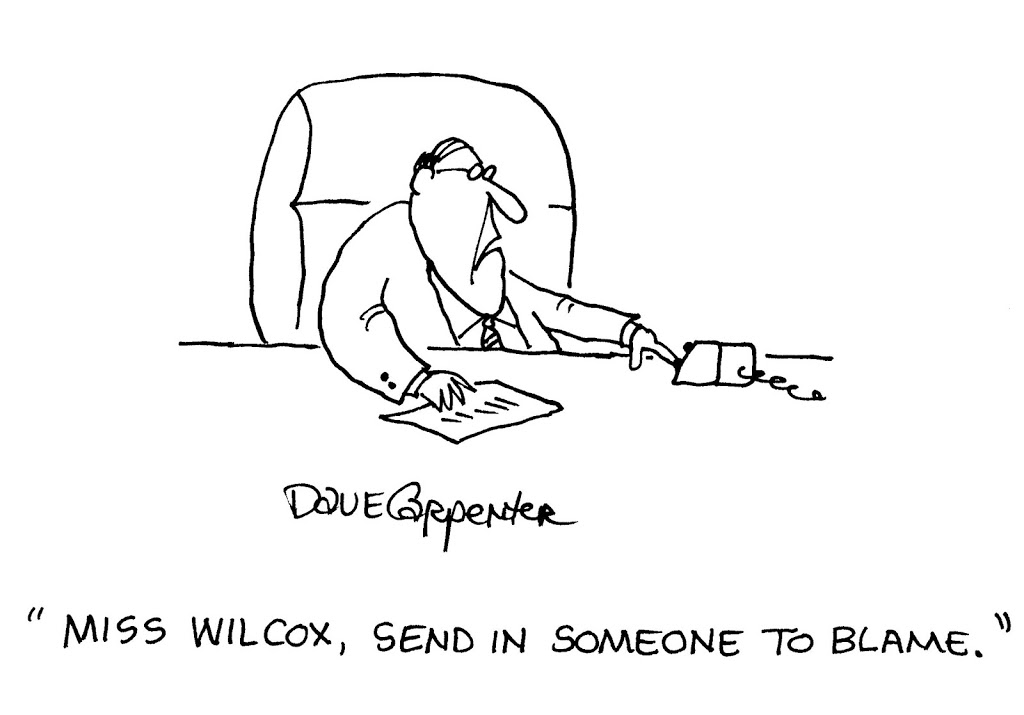
Accountability in our eyes is not the boss hanging over your shoulder making sure you follow the company line. Accountability is a set of checks and balances designed to support you as a person, your practice, your clients and your longevity in the field. Accountability means being open to many people. Your boss, your organisation, your clients, your husband/wife/partner, your supervisor, your mentors etc. Accountability is the glue which holds your goals together and brings focus for the future.
 
One of the best pieces of accountability I have ever had was initially imposed on me and is now one I can’t do without. In the early days of my career a really switched on youth minister mate of mine said I should get a mentor. Someone outside of the work I do but who understands the sector. Someone that i can vent to, ask for advice and who will make sure I keep some balance in my life. The guy who mentors me knows more about me than almost anyone else and isn’t afraid to tell me how it is. Do you have a mentor??? If not get one!
 
Over this past weekend myself and two other seasoned youth workers began a think tank support group for a young youth minister in Melbourne. We spent an afternoon together getting to know each other and hearing her vision for the local community she is working in. We asked her to become accountable to a process of ongoing support and development where we will push her to become the best she can be. Accountability in this situation means trusting a group of people from different areas of practice to guide her through strength and weakness to develop her skills to support her community.
 
Not all of us have great bosses and even more importantly good supervisors. This does make it hard to trust them with accountability. However to have balance at work we must be transparent and accountable. There may be time when we need to be ‘Canny Outlaws’ however we must also work within the systems we find ourselves in. If your boss or supervisor isn’t open to accountability that is more than managerialism ask them to help you. If they still aren’t there DO IT YOURSELF!!! Start a small reflective practice group. Develop your own practical wisdom. Find a mentor. Get external supervision. try, try, try. Be open to managerialism but do not let that be the benchmark, SEEK EXCELLENCE.
 
Being accountable means being open to people probing your practice as well as your person. Just this week my supervisor asked me to think about how my personality (which can be a dominant one) comes across in meetings and service delivery. I didn’t like having my person stripped bare but I accepted the criticism and actively sought out discussion with colleagues and mentors on how I can work on this. Being accountable means being active. You cant say you are willing to work on your practice and person and then kick up a stink when people call you on it.
 
Being accountable has many facets and more discussion is necessary. Be aware of your limitations and the boundaries which are imposed on you. Be the best you can be and don’t be afraid to open your practice and your person up to ongoing development. Accountability is what sets apart great youth workers and those we all roll our eyes over.
 

If you have any questions drop us an email or chat to us on facebook and twitter.

Aaron Garth

Aaron Garth

Aaron Garth is a Melbourne-based youth worker, social worker, and mental health practitioner with over two decades of experience supporting young people across Australia. As Executive Director of Ultimate Youth Worker, he leads a team dedicated to training, coaching, and developing professionals in the youth sector. A graduate of RMIT University and current PhD candidate, Aaron has worked across some of the most challenging areas of youth services — from homelessness and mental health to drug and alcohol outreach and residential care. He is a sought-after speaker, educator, and advocate for a more professionalised youth workforce, and has taught at institutions including RMIT, Chisholm Institute, and Eastern College Australia. Aaron's work is driven by a simple belief: when youth workers are better supported, young people get better outcomes.

More Posts - Website

Follow Me:Add me on FacebookAdd me on LinkedInAdd me on PinterestAdd me on YouTubeAdd me on Instagram

Youth Worker Identity

A couple of months ago I attended a conference where Professor Rob White from the University of Tasmania stated that the key attribute of a youth worker is their identity first and foremost as a youth worker. I have been thinking about this a lot lately as I am coming to the end of my masters degree and wonder what it will mean for my future professional Identity.

As a young man I began my studies in youth ministry. I was working for a local Baptist Church and was looking at gaining a qualification for my future work in the Church. A couple of years later I went on to study at RMITas I wanted to expand my understanding of youth work and the youth services sector. During this time I also had the opportunity to gain a Certificate in Alcohol and Other Drug work. After a few years and some interesting conversations I decided to go back and study for a master of social work. All of these courses have informed my practice as a youth worker over the years and have shaped who I am as a person.

Over the years I have had a number of jobs in the youth services field from drug and alcohol outreach to school based youth worker. I have also had a number of other social work roles such as in adult homelessness services and family services. Depending on whom I was talking too and what specialities my role required I would determine what I would tell a person when they asked what it was I did. For the most part I would tell people that I was a youth worker and deal with questions of my knowledge base if they arose later.

I was asked by a mate recently if I would start calling myself a social worker when I graduate from the masters. Without a second thought I said NO. Whilst I will be qualified as a social worker my heart is in youth. Truth be told I only did the qualification because I was sick of the politics and hierarchy of the welfare field in Australia and wanted “a piece of paper” that said I was as good as the rest. In my heart of hearts I am a youth worker and I am proud of it.

There is a discussion in the field about professionalism and a concurrent discussion on the idea of specialisation Vs generalisation in the field. When the chips are down it doesn’t matter if you have a specialisation or not. A specialisation does not make the professional. Our identity is not in our specialisation it is in our initial focus… working with young people. When we are the best at the core stuff that is when the sector sees us as professionals. Our professional identity hinges on our ability to do our job better than anyone else and that is something that we can be proud of. We resonate with Professor White’s statement that the key distinguishing attribute of a youth worker is indeed their identity first and foremost as a youth worker.

Stay Frosty.
Aaron Garth

Aaron Garth

Aaron Garth is a Melbourne-based youth worker, social worker, and mental health practitioner with over two decades of experience supporting young people across Australia. As Executive Director of Ultimate Youth Worker, he leads a team dedicated to training, coaching, and developing professionals in the youth sector. A graduate of RMIT University and current PhD candidate, Aaron has worked across some of the most challenging areas of youth services — from homelessness and mental health to drug and alcohol outreach and residential care. He is a sought-after speaker, educator, and advocate for a more professionalised youth workforce, and has taught at institutions including RMIT, Chisholm Institute, and Eastern College Australia. Aaron's work is driven by a simple belief: when youth workers are better supported, young people get better outcomes.

More Posts - Website

Follow Me:Add me on FacebookAdd me on LinkedInAdd me on PinterestAdd me on YouTubeAdd me on Instagram

Reflective practice: Why we should journal.

The team at Ultimate Youth Worker are currently developing our “Model of Effective Youth Work Practice” which will guide how we work as youth workers and how we teach youth work to those in the industry. We believe that excellence mean being effective and innovative and as such we are creating a guide for the development of practice excellence. One of the pillars of successful youth work we hold to is that of reflective practice.


Reflective practice is by no means a new idea in the field but it is one that is not widely implemented. Reasons for this are wide and varied but are mostly end up being because people do not know how to do it or what it would look like. In university courses there is often discussion about being critically reflective and aware of your work however when a student becomes a staff member the critical thinking is left behind an ever growing wall of bureaucracy and paperwork. This often leads to frustration on the part of the staff member and in more extreme cases a complete break down in effective service delivery.

Now I hear some of you saying ‘yeah, but isn’t that what supervision is for?’, and quite a valid point you make. in a perfect world supervision would provide an opportunity for staff to reflect on their practice. However, the world is rarely ever perfect. Many of the youth workers we speak to rarely have a supervision session if any. Those that do have them often speak of them as robotic and machinistic, or as one youth worker told us ‘just a way for the organisation to tick another box to cover their butts‘. For the rare few there are times provided for them to think critically about their practice and its effect on them and their client and learn from their experience. We believe that critical reflection should not be a little bit tacked on to the end of a supervision session for the lucky few, but a whole of practice approach to every aspect of what we do!!!
Boud (2001) states, “Reflection involves taking the unprocessed, raw material of experience and engaging with it to make sense of what has occurred. It involves exploring often messy and confused events and focusing on the thoughts and emotions that accompany them. It can be undertaken as an informal personal activity for its own sake, or as part of a structured course“. Reflective practice comes in many shapes and formats and depending on your organisation, the resources available to you and your level of expertise this can look very different in one setting over another. Over the coming months we will discuss some of the ways individuals, organisations and the youth work sector as a whole can implement reflective practices into their daily structures. However, for today we will begin by looking at something every individual youth worker can do to develop their own reflective practice… Journaling.

When I was a young youth worker I completed an internship with a small organisation that trained youth workers to work in schools. One of the most interesting aspects of the internship (and the one I most struggled with) was a forced weekly journalling session. Some of my best reflections on where I was at as a youth worker, what I needed to work on and how I practiced came during this time. However, I struggled with the exercise because I was not given a reason to do it. I struggled because I was not given a format or template to do it. But most of all I struggled because critical reflection was not something that had been instilled in me as a youth worker either in practice or study.

Moon, in her 1999 article, states the following reasons why journaling helps in the process of learning from experience:
  • To deepen the quality of learning, in the form of critical thinking or developing a questioning attitude 
  • To enable learners to understand their own learning process
  • To increase active involvement in learning and personal ownership of learning
  • To enhance professional practice or the professional self in practice
  • To enhance the personal valuing of the self towards self-empowerment
  • To enhance creativity by making better use of intuitive understanding
  • To free-up writing and the representation of learning
  • To provide an alternative ‘voice’ for those not good at expressing themselves
  • To foster reflective and creative interaction in a group

Journaling provides a great base for the individual worker to begin to develop their reflective practice. Here is one template i have come accross that has worked over the years to help me reflect on my practice.

  1. Identify and describe the experience/issue/ decision/incident
  2. Identify your strengths as a practitioner
  3. Identify your feelings thoughts; values, feelings and thoughts of others involved
  4. Identify external and internal factors; including structural/oppressive factors etc
  5. Identify factors you have influence or control over and those you don’t ( do others?)
  6. Identify knowledge used:
    1. factual
    2. theoretical
    3. practice
  7.  Develop an action plan: what do I need to do first, second and third and so on
 Impliment your action plan, then do it all over again.

Let us know how you go on facebook and twitter.
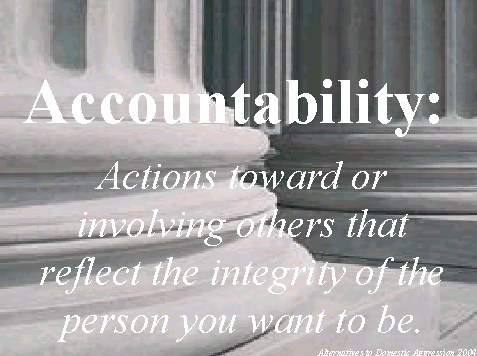
 

References

Boud, D. (2001). Using journal writing to enhance reflective practice. In English, L. M. and Gillen, M. A. (Eds.)Promoting Journal Writing in Adult Education. New Directions in Adult and Continuing Education No. 90. San Francisco: Jossey-Bass, 9-18.
Moon, J. (1999). Reflection in Learning and Professional Development. London: Kogan Page

Let us know how you go on facebook and twitter.

 

Aaron Garth

Aaron Garth

Aaron Garth is a Melbourne-based youth worker, social worker, and mental health practitioner with over two decades of experience supporting young people across Australia. As Executive Director of Ultimate Youth Worker, he leads a team dedicated to training, coaching, and developing professionals in the youth sector. A graduate of RMIT University and current PhD candidate, Aaron has worked across some of the most challenging areas of youth services — from homelessness and mental health to drug and alcohol outreach and residential care. He is a sought-after speaker, educator, and advocate for a more professionalised youth workforce, and has taught at institutions including RMIT, Chisholm Institute, and Eastern College Australia. Aaron's work is driven by a simple belief: when youth workers are better supported, young people get better outcomes.

More Posts - Website

Follow Me:Add me on FacebookAdd me on LinkedInAdd me on PinterestAdd me on YouTubeAdd me on Instagram

What post-qualifying education might look like!!!

I have been thinking a lot lately about the need for ongoing professional development and post-qualifying education for youth workers. for us to be the best, the Ultimate Youth Worker’s, we must continue to learn and develop as we progress through our career. However, in Australia there is no requirement for a person who works with young people to hold a qualification, let alone attend professional development!!!

In Australia there is currently no national professional association and very few states have fledgling professional associations for youth workers. Currently, these associations have limited memberships and do not require their membership to have ongoing professional development to maintain their membership. My wife is a psychologist and as such is required to meet a level of ongoing professional development to maintain her registration with her professional association. Some of my mates are social workers and they too have to meet a level of ongoing professional development for registration. Why not youth workers???
One of the main difficulties is pitching the professional development to a sector that has such a wide range of qualifications. In Victoria over %50 of “Youth Workers” hold a Certificate IV (a one year TAFE qualification) or less. There is a smaller percentage who hold a Diploma (2 years) and an even smaller percentage who hold a degree (3 years) and an almost unmentionable number who hold post-graduate qualifications. What often happens is that training groups pitch their training at the lowest common denominator or bastardise their training to meet the needs of a select few… meeting the needs of only a small proportion of workers. In effect most professional development courses rehash knowledge from TAFE level courses which does not bode well for CONTINUING professional development. 
Another reason is that it is easier to rehash old course material than to think outside the box and develop good ongoing training. There is a train of thought which states that if you have done your course and passed then you are competent and therefore do not need to learn other techniques and ideologies. The problem with this is that the profession stagnates. Imagine if doctors did that??? We would still be curing infection by chopping limbs off and alienating people with skin conditions like leprosy. We need fresh ideas thrown into the mix for the profession to grow and flourish. We need them for workers to gain a clear foundation for their practice.

But what would this continuing professional development look like???

First of all it means a minimum level of education for all Youth Workers. This is a contentious subject in Victoria as what would the minimum level be??? Many want a degree level qualification to be the minimum. However, those with TAFE qualifications are livid about the prospect of being excluded. However the idea of being professionals means stating that there is a group of people who can do a certain job and a group that can not. (see Jethro Sercombe Part 1 & Part 2).
Second, it means that Post-Qualifying education and continuing professional development must be more than rehashing old course material. We need researchers devoting themselves to the future of youth work. We need academics looking for the newest best practice theories to guide our practitioners. We need practitioners brave enough to challenge the status quo and say that we need to be better for the sake of our young people.
Finally, we need to develop a culture of excellence in the face of mounting Neo-Liberalism. When governments say it is better to have more people who are less qualified than having the best qualified workforce we need to say ‘Not good enough’. When employers skimp on professional development because their budgets are shrinking we need to say ‘Not good enough’. When our colleagues say to us that they won’t go to training because they don’t need it we need to say ‘Not good enough’. When professional development groups put forward substandard training at top dollar we need to say ‘Not good enough’. Expect more of our profession, our colleagues and ourselves! Do not settle for mediocre, it is not why you got into this work. Be the best you can be and expect it from others.
Youth work is an honourable profession. It requires passion and skills to be balanced for the best outcomes of our young people. I know you have passion, it is why you began the journey. Lets gain skills that will take youth work into the next century as a leading force in social services and community welfare.
Aaron Garth

Aaron Garth

Aaron Garth is a Melbourne-based youth worker, social worker, and mental health practitioner with over two decades of experience supporting young people across Australia. As Executive Director of Ultimate Youth Worker, he leads a team dedicated to training, coaching, and developing professionals in the youth sector. A graduate of RMIT University and current PhD candidate, Aaron has worked across some of the most challenging areas of youth services — from homelessness and mental health to drug and alcohol outreach and residential care. He is a sought-after speaker, educator, and advocate for a more professionalised youth workforce, and has taught at institutions including RMIT, Chisholm Institute, and Eastern College Australia. Aaron's work is driven by a simple belief: when youth workers are better supported, young people get better outcomes.

More Posts - Website

Follow Me:Add me on FacebookAdd me on LinkedInAdd me on PinterestAdd me on YouTubeAdd me on Instagram