Over the years I have become a keen survivalist. Not the crazy people with guns coming out their wazoo that you see on American YouTube videos, More like a less fit Bear Grylls. I can start fire by rubbing sticks together, get water to drink and build a place to live out of the materials around me. This means I am fairly self sufficient in the bush, A great comfort to me and my family when we go away. I still have a bunch of great gear that makes a hike more pleasant but I know that if stuff goes pear shaped I am able to deal with the ensuing issues.
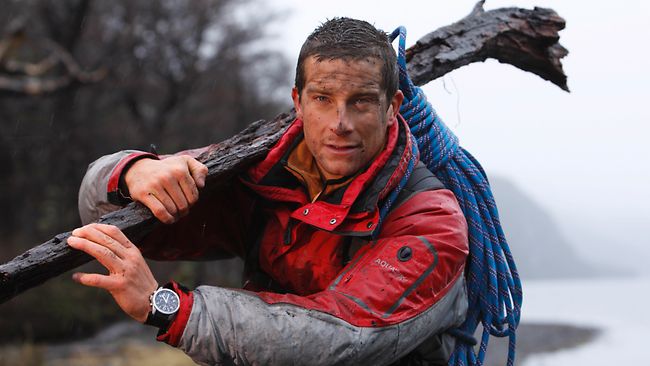
I didn’t learn these skills the first time I tried them. It took practice and patience and the consumption of a lot of knowledge. I practiced and I read. I tried and I watched videos. I trialed theory and spoke to experts. I developed the basics and built on them. And I learnt that the basics of wilderness survival apply to youth work just as well as in the bush.
Food, Fire, Shelter and Water
In wilderness survival you need to be able to source or find Food, Fire, Shelter and Water from any source you can to sustain and protect you. If you do not have these skills then the only thing you can rely on is what you have in you pack and the hope that you will stumble across a McDonald’s. Not exactly the best way to go into the wilderness.
The same goes for the wilderness that is youth work. As a youth worker you can either endure it with knowledge to help you survive or you can go in blind and live in hope.
Food
In Survival Food is often the last thing you need. It is most often the easiest to find. You can survive upwards of thirty days without food however, having it gives you the energy to keep going when the situation is bleak. There are many types of edibles plant and animal which provide sustenance and each of them is found to have its own flavour and texture.
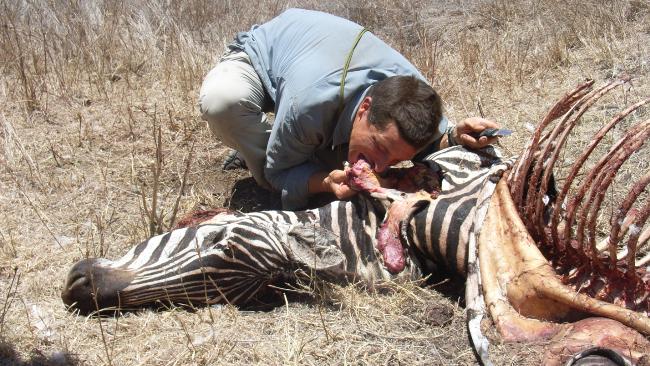
In the wilderness that is youth work our food is usually the “food for thought”. We need to fill our minds with knowledge…food for thought. Like real food we can go a substantial period of time without it, but it does provide us with sustenance for the journey. Read a book, a blog or even a journal. Do a course, attend a seminar or a webinar. If all else fails have a coffee and a chat with a bunch of colleagues about a topic that has some meat.
Fire
Fire provides a place to cook, scares off the beasts and keeps you warm. Fire is almost always in the first two things I do when surviving in the wilderness. You get a sense of extreme joy and peace when your fire finally comes together. It lights up the darkness and takes away your fears.
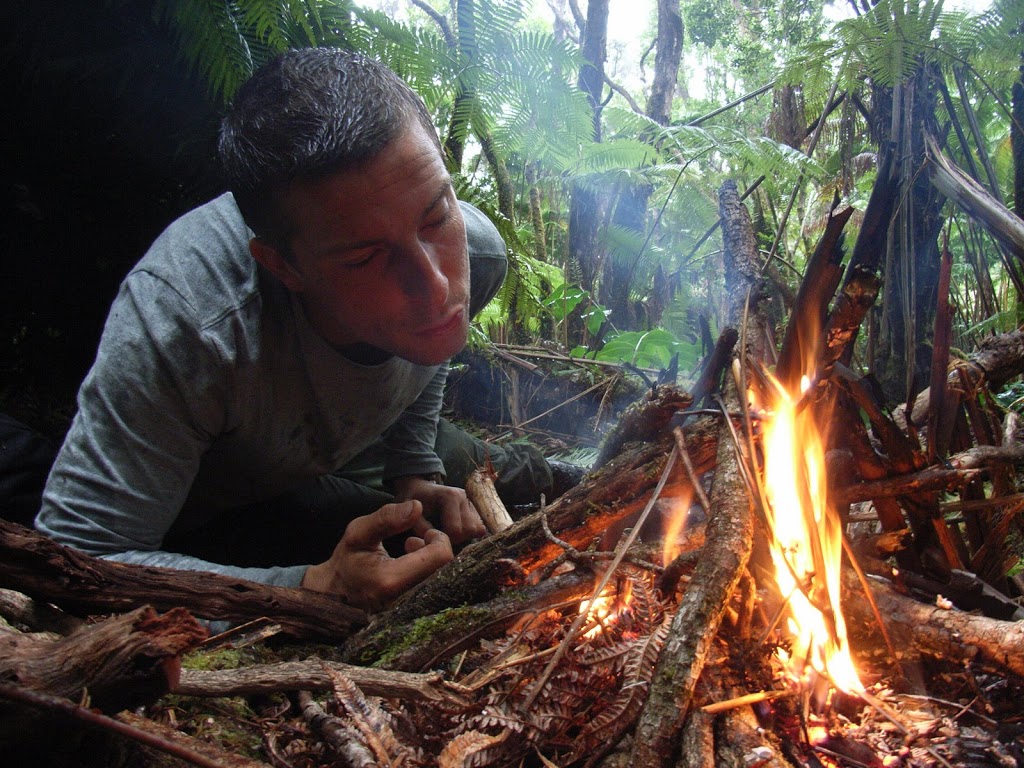
It is similar to having good mentors and supports. A good mentor is hard to find but when you do they make you work…stoking the fire. You can rest your fears on them. They provide light on dark paths. They marinate your food and warm your heart. They also provide a place to sit with your thoughts were you can reflect.
Shelter
Depending on the situation shelter is either a small net to keep the flies away or a solid structure which takes days to build to suppress the elements. Shelter provides safety from the nasties and a place to regain your energy. Shelter is the only thing between you and the elements which could take your life in seconds.
Good policies and procedures provide the same role. They cover your backside from the elements. They keep small niggling pests at bay and provide clear walls and boundaries for your practice. When storms arise…and they will, policies and procedures keep the crazies outside while you are safe inside.
Water
Is the life giving elixir that you can’t do without. It cools you when your hot. It washes away the grime from the day. It eliminates waste and helps you digest your food. It is not always easy to find but is often the most important. If it is not number one it is usually number two on my list.
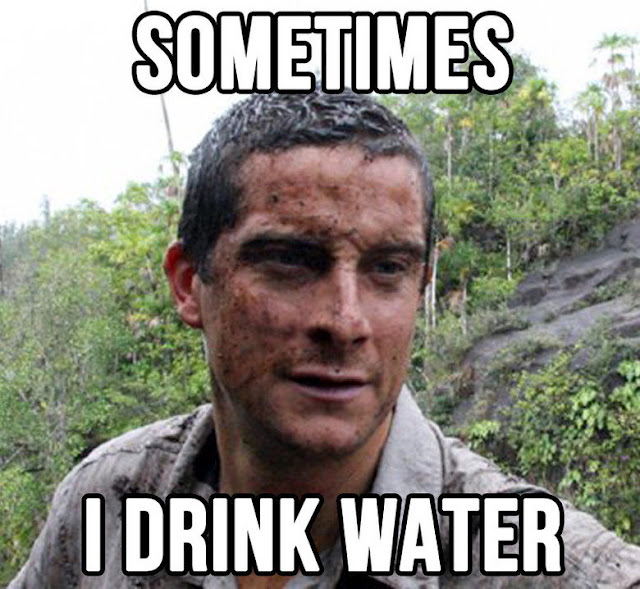
Water is similar to your values. You can’t do without them. The make you live. They cool you off when things get hot. When you feel uneasy (read dirty) about a decision your values will wash away the dirt. When you are packing on the responsibilities your values will help you to eliminate wasted effort. Your values make the knowledge you gain palatable and sustaining. Like water they take a bit of work to find and purify, but that makes them all the sweeter when you drink them in. Without your values you can not live for very long.
So there you have it. to survive the wilderness of youth work feed yourself as much knowledge as you can. Warm yourself by the fire of a good mentor. Shelter yourself in policy and procedures. Seek the life giving water that is your value system. With a little knowledge on survival you will stay alive in the wilderness for a long time. Same goes for youth work.
Aaron Garth is a Melbourne-based youth worker, social worker, and mental health practitioner with over two decades of experience supporting young people across Australia. As Executive Director of Ultimate Youth Worker, he leads a team dedicated to training, coaching, and developing professionals in the youth sector.
A graduate of RMIT University and current PhD candidate, Aaron has worked across some of the most challenging areas of youth services — from homelessness and mental health to drug and alcohol outreach and residential care. He is a sought-after speaker, educator, and advocate for a more professionalised youth workforce, and has taught at institutions including RMIT, Chisholm Institute, and Eastern College Australia.
Aaron's work is driven by a simple belief: when youth workers are better supported, young people get better outcomes.
The team at Ultimate Youth Worker are currently developing our “Model of Effective Youth Work Practice” which will guide how we work as youth workers and how we teach youth work to those in the industry. We believe that excellence mean being effective and innovative and as such we are creating a guide for the development of practice excellence. One of the pillars of successful youth work we hold to is that of reflective practice.
Reflective practice is by no means a new idea in the field but it is one that is not widely implemented. Reasons for this are wide and varied but are mostly end up being because people do not know how to do it or what it would look like. In university courses there is often discussion about being critically reflective and aware of your work however when a student becomes a staff member the critical thinking is left behind an ever growing wall of bureaucracy and paperwork. This often leads to frustration on the part of the staff member and in more extreme cases a complete break down in effective service delivery.
Now I hear some of you saying ‘yeah, but isn’t that what supervision is for?’, and quite a valid point you make. in a perfect world supervision would provide an opportunity for staff to reflect on their practice. However, the world is rarely ever perfect. Many of the youth workers we speak to rarely have a supervision session if any. Those that do have them often speak of them as robotic and machinistic, or as one youth worker told us ‘just a way for the organisation to tick another box to cover their butts‘. For the rare few there are times provided for them to think critically about their practice and its effect on them and their client and learn from their experience. We believe that critical reflection should not be a little bit tacked on to the end of a supervision session for the lucky few, but a whole of practice approach to every aspect of what we do!!!
Boud (2001) states, “Reflection involves taking the unprocessed, raw material of experience and engaging with it to make sense of what has occurred. It involves exploring often messy and confused events and focusing on the thoughts and emotions that accompany them. It can be undertaken as an informal personal activity for its own sake, or as part of a structured course“. Reflective practice comes in many shapes and formats and depending on your organisation, the resources available to you and your level of expertise this can look very different in one setting over another. Over the coming months we will discuss some of the ways individuals, organisations and the youth work sector as a whole can implement reflective practices into their daily structures. However, for today we will begin by looking at something every individual youth worker can do to develop their own reflective practice… Journaling.
When I was a young youth worker I completed an internship with a small organisation that trained youth workers to work in schools. One of the most interesting aspects of the internship (and the one I most struggled with) was a forced weekly journalling session. Some of my best reflections on where I was at as a youth worker, what I needed to work on and how I practiced came during this time. However, I struggled with the exercise because I was not given a reason to do it. I struggled because I was not given a format or template to do it. But most of all I struggled because critical reflection was not something that had been instilled in me as a youth worker either in practice or study.
Moon, in her 1999 article, states the following reasons why journaling helps in the process of learning from experience:
To deepen the quality of learning, in the form of critical thinking or developing a questioning attitude
To enable learners to understand their own learning process
To increase active involvement in learning and personal ownership of learning
To enhance professional practice or the professional self in practice
To enhance the personal valuing of the self towards self-empowerment
To enhance creativity by making better use of intuitive understanding
To free-up writing and the representation of learning
To provide an alternative ‘voice’ for those not good at expressing themselves
To foster reflective and creative interaction in a group
Journaling provides a great base for the individual worker to begin to develop their reflective practice. Here is one template i have come accross that has worked over the years to help me reflect on my practice.
Identify and describe the experience/issue/ decision/incident
Identify your strengths as a practitioner
Identify your feelings thoughts; values, feelings and thoughts of others involved
Identify external and internal factors; including structural/oppressive factors etc
Identify factors you have influence or control over and those you don’t ( do others?)
Identify knowledge used:
factual
theoretical
practice
Develop an action plan: what do I need to do first, second and third and so on
Impliment your action plan, then do it all over again.
Boud, D. (2001). Using journal writing to enhance reflective practice. In English, L. M. and Gillen, M. A. (Eds.)Promoting Journal Writing in Adult Education. New Directions in Adult and Continuing Education No. 90. San Francisco: Jossey-Bass, 9-18.
Moon, J. (1999). Reflection in Learning and Professional Development. London: Kogan Page
Aaron Garth is a Melbourne-based youth worker, social worker, and mental health practitioner with over two decades of experience supporting young people across Australia. As Executive Director of Ultimate Youth Worker, he leads a team dedicated to training, coaching, and developing professionals in the youth sector.
A graduate of RMIT University and current PhD candidate, Aaron has worked across some of the most challenging areas of youth services — from homelessness and mental health to drug and alcohol outreach and residential care. He is a sought-after speaker, educator, and advocate for a more professionalised youth workforce, and has taught at institutions including RMIT, Chisholm Institute, and Eastern College Australia.
Aaron's work is driven by a simple belief: when youth workers are better supported, young people get better outcomes.